I have an unshakable passion for Yorùbá culture—so deep that it often keeps me awake at night.
There are moments when I can’t rest until I’ve poured my thoughts into an article or delved into some research.
It’s a restless drive, only soothed when I’ve completed a cultural project.
Over the years, Yorùbá culture has suffered immense damage, and sadly, Yorùbá Nollywood has contributed to this by misrepresenting aspects of our rich heritage.
Since the year 2016, I’ve written hundreds of articles on Yorùbá culture and history.
Many were originally published on my former website, but they’re now available on my website, johnsonokunade.com.
Despite my dedication to cultural preservation, I never considered reviewing movies or critiquing harmful portrayals—until I watched House of Ga’a.
The glaringly misleading history and cultural inaccuracies in that film were too much to ignore.
Writing that first review not only drew attention but also opened doors to exciting opportunities.
Báálẹ̀ Jaiyéọlá Báíyéwùwọ́n, the great-great-grandfather of the current king of Ògbómọ̀ṣọ́, Oba Afọlábí Ọláoyè, served as the Sọ̀ún of Ògbómọ̀ṣọ́ from 1833 to 1847.
During his tenure, the city faced relentless attacks from the Fulanis of Ìlọrin, who launched seventeen assaults with the aim of spreading the Koran and Islam to the sea coast. Despite their efforts, these invasions proved unsuccessful.
To protect his beloved city from these persistent threats, Báálẹ̀ Jaiyéọlá orchestrated the construction of Ẹnuọ̀kọ̀ or Ogunọ̀jàlú, a formidable fortress renowned for its invincibility.
The city became known for its exceptional defence; when Ògbómọ̀ṣọ́ was threatened, either the attack would be thwarted or the city would emerge victorious.
Sensing their failure to subdue Ògbómọ̀ṣọ́, the Ìlọrin forces shifted their strategy in 1840. They turned their attention to Òṣogbo, a major Yorùbá town, hoping to divert Ògbómọ̀ṣọ́’s focus and strike at home to break their defences.
In response, and in line with the Yorùbá constitutional agreement to defend their territory, Ògbómọ̀ṣọ́ allied with Ìbàdàn under the leadership of Aláàfin Àtìbà.
The alliance was bolstered by Balógun Ọdẹ́rìnlọ’s army from Ìbàdàn and many distinguished warriors from Ògbómọ̀ṣọ́, including Kúọlá, Lálùdé, and Bọ́lántà.
The Battle of Òṣogbo in 1840 marked a decisive defeat for Ìlọrin. For the first time, Ìlọrin suffered a substantial loss at the hands of a superior opponent.
This defeat shattered the Fulanis’ hopes of conquering the Yorùbás and put an end to their expansionist ambitions.
Following this pivotal battle, Ìbàdàn emerged as the preeminent leader and defender of Yorùbá interests for the remainder of the 19th century, until the arrival of colonial powers in the region.
The BEST way to support us is by providing funding to enable us continue this good work:
Bank: Guarantee Trust Bank (GTBank)
Account Name: Johnson Okunade
Naira Account: 0802091793
Dollar Account: 0802091803
Pounds Account: 0802091810
Euro Account: 0802091827
John Nanzip Shagaya was a Nigerian senator and former senior military officer who was elected in April 2007 to represent the People’s Democratic Party (PDP) in Plateau State as a member of the Nigerian Senate for Plateau South.
John Nanzip Shagaya ran for reelection in April 2011 on the Labour Party (LP) platform but was defeated by Victor Lar of the PDP. As a non-commissioned officer (NCO) with the 2nd Reconnaissance Squadron in Abeokuta, he participated in the Nigerian counter-coup of 1966.
Early Life and Education
John Nanzip Shagaya was Born on 2nd September 1942 at Danburam Langtang II to MalIam Sikji Miri-Wazhi alias Shagaya and Mrs Maryamu Zwancit.
He attended his primary school at Nyer and later SUM Primary School, Langtang between 1952-1959, and later the Nigerian Military School (NMS) Zaria in 1960-1964.
After graduation from the Nigerian Military School, Zaria, he was posted to the Nigerian Army Armoured Corps then (Recce Squadron).
Between 1964 and 1966 when John Nanzip Shagaya rose to the enviable rank of a corporal and an instructor in the squadron in Communications, Gunnery, and D & M.
Shagaya, then a Corporal with the 2nd Reconnaissance Squadron in Abeokuta, was one of the many soldiers of northern Nigerian origin (including 2nd Lieutenant Sani Abacha, Lieutenant Muhammadu Buhari, Lieutenant Ibrahim Bako, Major Theophilus Danjuma, Lieutenant Colonel Murtala Muhammed, and Lieutenant Ibrahim Babangida among others), who staged what became known as the Nigerian counter-coup of 1966 because of grievances they felt towards the administration of General Aguiyi Ironsi’s government which quelled the January 15, 1966 coup
In 1967, Shagaya attended the first short service combatant course in NDA Kaduna and was posted to 3 Marine Commandos upon commissioning in the rank of second lieutenant where he participated in the Nigerian civil war 1967-1970
Career and Achievements
After the civil war, John Nanzip Shagaya started a long and successful march to command a West Africa Multi-National Force (ECOMOG) in 1993 in the field rank of a Major General, having commanded 1st Mechanized Division of the Nigerian Army between 1992-1993 and all lower commands in the Nigerian army including platoon, company, battalion, and brigade.
To date, he is the country’s longest-serving Federal Minister of Internal Affairs and a member Armed Forces Ruling Council. Member of the Police Council, all between August 1988-December, 1989.
Shagaya served as Chairman of the controversial Organization of Islamic Conference (OIC) committee at the time this country would have been torn to pieces because of religious crises in 1987 allegedly associated with Nigeria’s Permanent Membership of OIC.
Between this same period as Minister of Internal Affairs, he served as the Chairman of the Ministers of Internal Affairs of the ECOWAS sub-region to draft ECOWAS PROTOCOLS l, ll & III.
Because of his interest in military history, in 1984-1986, he was made the Chairman of the National War Museum and a member of the National Commission for Museum and Monuments.
His efforts resulted in the historic Umuahia complex of the National War Museum and the National Museum of Colonial History at Aba in Abia State.
Other important military appointments he held include:
The Military Secretary Army, Army Headquarters.
Directing Staff Command and Staff College-Jaji,
Director of Cadets-Nigerian Defence Academy Grade lIl,
Staff Officer, Nigeria School of Infantry-Jaji.
He was described throughout his career by his superiors and assessors as the soldiers
John Nanzip Shagaya was one of the few Nigerian Military Officers who between 2nd Lieutenant and Brig. General attended every professional course commensurate to that age and rank.
His performances at military institutions in the USA earned him the Honorary citizenship of six states.
At the Royal College of Defense Studies (1990), he became the Second Nigerian to earn an academic prize for his research work, the first being the late General l.D. Bissalla in 1974.
On November 17, 1993, General Sani Abacha became head of state after a military coup. Abacha distrusted Brigadier John Shagaya and other “IBB boys” loyal to Babangida. Within a few days, Shagaya was recalled from Liberia, demoted from Major General to Brigadier General and then retired from the army.
On 16th November 2000, John Nanzip Shagaya was conferred with a National Honour of the Officer of the Order of the Federal Republic (OFR) by the President, Commander-ln-Chief of the Armed Forces of Nigeria, Chief Olusegun Obasanjo.
In addition to being an active politician, Brig. General Shagaya was Director of Lion Bank (Nig) Plc From 1998 to 2003
Shagaya was a founding member of the United Nigeria People’s Party (UNPP), running unsuccessfully for the Senatorial seat of Plateau South in the 1999 elections.
Before the 2003 elections, he joined the All Nigeria People’s Party (ANPP) but was defeated again.
As of 2003, he was working on a book, “The Tarok History“ having published in 1990 “The Ministry of Internal Affairs, an Overview.“
John Nanzip Shagaya has participated in many international seminars on “Peace Keeping “The ECOMOG Experience and Conflict Resolutions.”
Some of the traditional titles he held include:
Danburam Langtang II,
Akaraka I of Ibeku and
Otun-Akogun I of Ikosi – Kosofeland, Lagos.
Shagaya had converted from a military officer to a politician, earned the title of a moderate, and was elected as Senator for Plateau South in April 2007, running on the platform of PDP.
His election was challenged, and nullified by the elections petition tribunal, but in December 2008 a Court of Appeal in Jos overthrew this decision and ordered the Independent National Electoral Commission (INEC) to immediately issue a Certificate of Return to Shagaya.
In June 2009, Shagaya warned that offering an amnesty to the Niger Delta militants might not end the violence. The militants might hide their best weapons, and return only disused and damaged ones.
In an interview in October 2009, he defended the various military interventions since Nigeria gained independence, and stated that the influence of generals in politics since 1999 simply reflected their training and discipline.
John Nanzip Shagaya was involved in a car accident on the 11th of February 2018 while returning to Jos from Langtang, at a time when he was involved in reconciling the quarrelling North of Nigeria.
He was succeeded by John Nanzip Shagaya Jnr.
MAY HIS SOUL REST IN PEACE!
Interview and Talks about “The Langtang Mafia” and “IBB Boys”
The Military historian and former West African peacekeeping force, ECOMOG Commander, Brig-General John Nanzip Shagaya (rtd). In this encounter with Louis Achi in Jos on March 8, 2003, the former internal affairs minister under General Ibrahim Babangida reveals why he was summarily withdrawn from Liberia as ECOMOG Commander, demotion and unceremonious retirement by Late General Sani Abacha. He also talks on several persistent naughty labels like ‘IBB Boy’, ‘Langtang Mafiosi’, as well as gives some insight into his life’s momentous journey…
“What might qualify as the very low point of my military career would be that unfortunate incident of General Sani Abacha announcing my retirement on the CNN and BBC”, Brig. Gen John. Shagaya continues: “Simply because he (Abacha) had called me on December 19, 1993, to seek my co-operation and support for the coup against Shonekan and I told him I was not going to do that.”
Providing more insight to his role, or lack of one, in the murky intrigues that preceded the ouster of the interim presidency of Chief Ernest Shonekan, Shagaya talked about how the late Military Supremo General Abacha told him he would proceed with the upstaging of Shonekan all the same.
“I said if he did I was going to quit the service. I was not ready to subordinate myself under an armed forces we all had taken a vow to allow a democratic system to exist. Quite a few officers have acknowledged this position in their write-ups”, he further disclosed.
As it turned out seven days after the Abacha palace putsch sacked Shonekan on December 26, 1993, Shagaya was unceremoniously retired from an army he had served for over three decades. Before this move, the Kano-born goggled general withdrew Shagaya from the Liberian civil war theatre where he commanded the ECOMOG peace force and demoted him from a Major-General to Brig-General.
Observes the one-time internal affairs minister under General Ibrahim Babangida, “I was not surprised at my retirement. I knew the implications of the position I had expressed. My surprise was more at the information medium that was used to communicate that decision. This lowest point of my career all the same never killed my morale.”
Having shared the lowest point of his career with THISDAY, it was only natural that the Langtang general recall his happiest moment: “My happiest moment in life was that day, that hour, I was being decorated Major-General to go and head ECOMOG forces which later became an enlarged Continental force under OAU, now African Union, AU.”
Shagaya’s scholarly mien, insight, and articulation could make him easily pass for an academician. But the steely glint in his eyes and barely concealed vibrations of command give him away as a soldier.
In attempting to deconstruct one of the Nigerian army’s most brilliant combatant soldiers and something of a military historian, a writer would first need to rescue him from some popular stereotypes: an IBB boy’ and a member of the shadowy Langtang mafia’. In grappling with this bracing task, Shagaya himself provides some assistance.
Ensconced in his Spartan Jos office as CEO of Viewpoint Communications Ltd, he shares some insights into these somewhat naughty labels which have found fashionable perches on the necks of several Babangida military loyalists on one hand, and ex-military top shots of Langtang extraction in Plateau State, on the other.
“There is nothing wrong in friendship or to my mind, to be loyal to a friend and superior. If it is what has attracted to me and several other colleagues the label of IBB boys’, then I take it very kindly because I see it as very complimentary,” Shagaya reveals.
And more… “I was asked this same question when I returned from Liberia in December 1993. My reaction to the media was that I was proud to be associated with a government to the extent that I was being called IBB boy’, knowing fully well he is not my father. That label is a compliment to the fact that we were loyal to ourselves.”
Stating that if it was providence that made IBB and himself master and boy, then it was all well and good. Shagaya further reveals that following Abacha’s sacking of the Shonekan interim government and retirement of himself and some of his colleagues at the excuse of their being called IBB Boys, he had offered prayers for the new Commander-in-Chief. “I prayed that he enjoys the level of loyalty that IBB enjoyed from both his military colleagues and civilian subordinates who served under him that would warrant them being called IBB boys.”
But alas, regrets Shagaya, “He (Abacha) was not that fortunate to have had the likes of us to be called his boys. So I believe once you have friends they should be loyal to each other.
Once in authority, subordinates should be very loyal to bosses. If that is the interpretation Nigeria would run very well.” Expressing his sympathies to the then President Olusegun Obasanjo because “in all his subordinates I have not seen one who is loyal to him because he believes in what he is doing or because they believe in getting Nigeria out of the woods,” Shagaya restated that he was proud to be called an IBB boy.
“I belonged to his administration. I am happy I enjoyed the confidence of IBB throughout my service as minister of internal affairs. The resultant effect of that level of confidence and related support could be seen in the difference from when I left the ministry of internal affairs and what has become of the same ministry.”
In decades of successful march through the Machiavelian jungle of the Nigerian army, Shagaya has rightly, or wrongly garnered his own share of fables woven around this martial career. One is that he is a member of the shadowy Langtang Mafia. Langtang is a patch of real estate inhabited by the Taroks of Southern Plateau State in the Middle Belt.
More importantly, the area is top-heavy with retired and serving brass of the Nigerian army. A quick check-list-Air Marshall Wuyep (CAS), Lt-Gen. Jeremiah Useni (rtd), Lt-Gen Domkat Bali (rtd), Air Cmdr Bernard Banfa (rtd), Lt-Gen. Joshua Dogonyaro (rtd), Brig-Gen. Yakubu Rindam (rtd), Late Major-Gen. Joe Garba (rtd) and many others.
The impact this crop of soldiers has made on the nation’s socio-political history is hardly debatable. Perhaps, it was only natural that a matching mystique evolve to appropriately position them in the geo-political pantheon of forces that shape the country’s future.
What really is the Langtang mafia and is Shagaya a member? “That’s a very difficult question, but I will attempt an answer,” responds the mafiosi
According to Shagaya, “When the accident of progress and promotions made them meet at certain points and times in their career, it was not a deliberate plan. So he (IBB) defended his position in having a lot of Christians, if not the majority as members of his cabinet. He also had a lot of the so-called Middle- belters enjoying the commands of the formations of the Nigerian army.”
The ‘IBB boy’ then delivers his punchline: “And so if Langtang belongs to the sub-region called Middle belt, the detractors of IBB were then supposed to see it differently, because they thought and believed at the time that exclusive enjoyment of power or the control of power was in the hands of some particular group.
If that is what is being referred to as the Langtang mafia then one is happy that I belonged to a certain group and grade of officers at a certain time that run this country. It was fortunate or unfortunate that a majority happened to come from a particular sub-region (Langtang/Middle Belt) where I come from.”
Having delved into the origin of that enduring construct, ‘Langtang Mafia’, Shagaya went further to clarify what he felt were some misperceptions about IBB’s tenure and unfair flak from the Middle Belt itself. “Having spoken at length on the so-called Langtang Mafia and the way some Northern Moslem citizens saw IBB at the time, I would also say that in as much as I have admitted we have enjoyed the name Langtang Mafia, you will be surprised to also know that even in the Middle Belt itself, IBB was not spared.” And more…
“Difficult in the sense that IBB (General Ibrahim Badamosi Babangida rtd) being a Muslim stood being accused by the core Islamic North for surrounding himself with Southerners and of course Middle belters. His explanation at the time was that people joined the service at different times.
“He was being accused and I think till today some political leaders in the Middle Belt are still accusing him to the effect that the Middle Belt were his boys. They served and he used and dumped them. I want to say here that it is false. False, because at the time the man exited the seat of power almost all the formations of the Nigerian army were commanded by Middle Belters.”
Deploying statistics to shore up his contention Shagaya recalls, “I was in 1 Division, Major-Gen. Chris Garuba was in 82 Division, Late Major-Gen. John Inienger was in 2 Div. Major-Gen. Ishaya Bamaiyi was in Lagos. They were all Christians. And so, if the man left this crop of officers to run the formations, he couldn’t have also been responsible for using them to overthrow Shonekan.”
At this point, Nigeria’s longest-serving Minister of Internal Affairs has a word of advice to anybody who wants to become the country’s president “So what one will say here is that one common central feature to all this is that a large portion of Nigerians recognise that IBB had certain loyalists.
That he had a very strong hold in the Middle Belt sub-region and especially his friends in the South and South-South which I will advocate is desirable for anybody who wants to become the President of the Federal Republic of Nigeria.”
With a faraway look in his eyes, Shagaya recalls the philosophy that has guided his life this far. “One thing my upbringing dictates for me to do is to be upright, be truthful in whatever I do. In my relationship with other beings and lesser mortals. one has to do so with fairness.”
“And in carrying out the challenges of duty and responsibilities one should do so as a good ambassador. This has been all I have tried to do hard work, truthfulness, honesty-some-times to a fault. I also set very high standards and expect that subordinates and colleagues would take on and achieve results.”
“I am one of those who believe that we have seen enough deceit from 1959 till date and that some of us should come in and add value and quality. One decided to join politics to be able to contribute qualitatively to the way the game of politics is being played. Especially in my sub-region and my community, Langtang.”
A foundation member of the United Nigeria Peoples Party (UNPP), Shagaya makes it clear he did not join politics because of certain immediate needs like seeking political office or appointment- “Far from it.
I would continue to participate, represent the little community I belong to and above all give advice nationally and within the state level where I believe this would be useful to advance the polity. For now, I have not taken a decision to seek elective office.”
In a parting message to the Nigerian youths who represent the future of the soldier, he said:
“Young Nigerians are too much in a hurry to acquire material wealth. A meaningful future should be rooted in honesty, sincerity, and hard work.”
The BEST way to support us is by providing funding to enable us continue this good work:
Bank: Guarantee Trust Bank (GTBank)
Account Name: Johnson Okunade
Naira Account: 0802091793
Dollar Account: 0802091803
Pounds Account: 0802091810
Euro Account: 0802091827
Sir Joseph Ntung Ari was born on the 21st of December, 1960. He is a prominent Nigerian who has facilitated a lot of positive outcomes in the Nigerian Nation as a whole and more importantly for the younger generation.
He is a holder of the West African School Certificate, Diploma in Broadcast Journalism, Post Graduate Diploma in Journalism and Post Graduate Diploma in Management.
Sir Joseph Ntung Ari also holds a degree in Law (LL B (Hons.), a Masters Degree in Law LLM, and Masters Degree in Business Administration (MBA).
His working career spans a period of over two decades, covering different spheres of disciplines and human endeavour.
Sir Ari started broadcasting from the scratch at the Plateau Broadcasting Corporation as a News Reporter/Presenter; had a stint with the Federal Radio Corporation of Nigeria Lagos as a Newscaster and subsequently moved over to the Nigerian Television Authority (NTA) as a News Editor/Caster.
His working career took him to the National Insurance Corporation of Nigeria,(NICON) where he was the Public Relations Manager, North.
Sir Joseph Ari was also the Director of Press and Public Affairs to two Governors of Plateau State before his appointment as the Sole Administrator and later General Manager of the Plateau Publishing Company, (PPC) Jos.
Thereafter, he was reassigned to the Plateau Radio Television Corporation, (PRTVC), as General Manager. To date, he remains the first Plateau citizen to have headed the two-state media outfits at different times.
Sir Ari completed the cycle of his public service at the state level when he was appointed Permanent Secretary in charge of the Government House Administration; a position he held until his appointment by the Federal Government as a Director in the Department of Public Relations, External Affairs and Publicity of the Industrial Training Fund, ITF, a grade ‘A’ Federal Government Parastatal under the aegis of the Federal Ministry of Industry, Trade and Investment.
As the Director of Public Relations, Sir Joseph Ntung Ari introduced the re-branding philosophy which saw members of staff re-oriented to provide quality service to Clients of the Fund.
The policy also engaged external stakeholders, thus paving the way for increased support and collaboration for the smooth implementation of the ITF Act. Sir Joseph Ntung Ari was also at different times the Director of the Administration and Human Resource Department, Corporate Planning Department and the Director of Business Training Development Department at the ITF Headquarters.
Sir Joseph Ntung Ari is a member of the Nigeria Union of Journalists, NUJ, a member of the Nigerian Institute of Management, a member of the Advertising Practitioners Council of Nigeria, APCON, a Fellow of the Corporate Administration Institute and a Fellow of the Nigerian Institute of Public Relations, NIPR.
Recently, he concluded two terms as a member of the Institute’s Governing Council. He has attended various management and professional courses both within and outside the country. He has also bagged many awards of professional excellence from different Agencies, bodies, and organisations.
Sir Joseph Ntung Ari is with no doubt a philanthropist, he has donated so much to charity and he doesn’t care what it takes from him. He puts his other people first before himself.
These good deeds of his and numerous more have so elevated him in status that he is being recommended by the nation Nigeria as the man of the year.
Asides that, Sir Joseph Ari has received numerous awards in all ramifications of life one of the recent awards is AUPCTRE which he collected along sides Governor Lalong and 5 other prominent Nigerian leaders.
Recently, it was rumoured that he is also running for the office of Plateau state governor until he came out to debunk the news as untrue and baseless.
A devout Christian, Sir Ari, is a Knight of the Catholic Church of the Order of St.Mulumba (KSM), where he has held positions as Chancellor and Grand Knight of the Order.
His works of charity are numerous, but he prefers to engage in such activities quietly and with little publicity.
Married to Lady Victoria Ari with five boys, his watchword is humility, while his motto is “This too shall pass away”’ drawn from a biblical verse.
Domkat Yah Bali was loyal to his country and he spent decades in active service proving just that. Bali served as minister of defence and member of the supreme military council, and the armed forces ruling council of 1985 to 1990. He was joint chief of staff between 1984 and 1985 when President Muhammadu Buhari was head of state.
Early Life
Born on February 27, 1940, in Zamko, Langtang, Plateau State, to the family of Hassan Bali Tabut and Yinkat Bali, he attended elementary schools at Mban and Langtang and the Provincial Secondary School, Kuru, from 1955 to 1960. His military career began when he entered the Nigerian Military Training College, Kaduna in April 1961.
Domkat Bali was 20 years old when Nigeria became independent. As a young man, he saw the new nation’s transition from colonial rule through internal self-government and finally its attainment of full sovereignty as a republic.
His decision to join the Nigerian Army in 1961 could be said to have been influenced by patriotism which ensued from internal self-satisfaction and the joys inherent in the nationhood of his fatherland.
He later attended the Royal Military Academy, Sandhurst, England from 1961 to 1963 earning his commission as a lieutenant in 1964 and had further military training at the Gunnery Staff Course, Larkhill, the UK in 1968; Staff College, Camberley, Surrey, and the Royal College of Defence, Cowdon, UK.
Career as a Military Man
Bali joined the Nigerian Army in 1961 when he joined the Nigerian Military Training College. He rose through the rank and became a lieutenant and troop commander in 1964, and a captain in 1965.
He undertook further military courses at Camberley, London. In 1966, as mentioned above. He was battery commander during the Nigerian Civil War and was made major in 1968.
Between 1970 and 1971, Bali was commander, of the Corps of Artillery and later became a colonel at the Second Infantry Division in Ibadan.
In 1973, he was posted to Akure as the commander of the 9th Infantry Brigade, he was adjutant general Nigerian army in 1975, commander Corps of Artillery in 1976 and in 1978, he was the GOC of the First Infantry Division, Kaduna.
He was Commandant of the Nigerian Armed Forces Command and Staff College from 1981 to 1983 and later director of army training and operations and was made Defense Minister in 1985.
Domkat Bali was one of the arrowheads of the December 31, 1983, coup led by then General Muhammadu Buhari, which truncated the second republic headed by Shehu Shagari of the defunct National Party of Nigeria (NPN). He also played an active role in the August 27, 1985 coup led by Ibrahim Babangida that toppled Buhari’s regime.
The General Who Broke Taboo in Nigeria’s Military
In December 1989, the then military head of state General Ibrahim Babangida, reshuffled his cabinet and removed Bali as minister of defence and chief of defence staff, two positions he had combined since 1984.
While Domkat Bali was on holiday in Jos, it was announced that Babangida has moved Bali to the Interior Ministry. He felt his new position was a demotion and decided to quit, rather than bear the indignity and remaining in office.
Major General Domkat Bali did what many officers dared not do in those days. He wrote a letter of resignation and couriered it to Babangida in Lagos, his resignation was announced by Babangida himself.
It was taboo in those days for a military officer to walk out on the military head of state, the practice at the time was that you must wait to be kicked out but Bali opted out and nothing happened to him. The heavens did not fall and the military lords did not hound him.
Domkat Bali will also be remembered for offering a reflection on one of the phantom coups that occurred during the Babangida years and the carnage that followed.
It was the so-called Mamman Vatsa plot said to have been uncovered in late 1985, in which at the end of some trial in 1986, Vatsa and many young military officers were executed. Bali, as chief of defence staff, made the announcement of guilt and execution.
Many years later, Bali harboured doubts about whether the action was right. He did not hesitate to voice his concern.
“To be very frank with you, the Ministry of Internal Affairs is a very important ministry, but that was not my problem.
My problem was that as a military officer, I was senior both to Babangida and Buhari, but I served under both as Minister of Defence and Chairman, Joint Chiefs of Staff.
I could accept that they were heads of state. You cannot remove the fact that I was a senior to both of them. And when Babangida came, he said, ‘ok, you are no longer Chief of Defence Staff, but Chairman, Joint Chiefs of Staff.
If I am not that, then I am also junior to all other military people other than the Head of State, which I would not accept,” Bali said in a 2006 interview with The NEWS.
“I could accept that I was junior to the Head of State but to accept that I was also junior to other junior officers to me, that was unacceptable. That was the main reason that I had to leave.
Not because I was made the Minister of Internal Affairs. Some people said it was because I was taking over from John Shagaya who was also a junior officer. Those were not the issues at all.”
“My regret is that up till now, I am not sure whether Vatsa ought to have been killed because whatever evidence they amassed against him was weak. My only regret is that I cannot say, don’t do it’. I am not so sure whether we were right to have killed him”, he said in an interview with TheNEWS in 2006.
Domkat Bali Prevented a Genocide
Speaking during Bali’s 80th birthday party in Abuja, Yakubu Gowon, former head of state, said the army general’s loyalty and discipline saved the lives of hundreds of civilians by preventing a genocide hours to the end of the Nigerian civil war of 1967 to 1970.
According to him, Gowon, who did not mention the particular military operation at the time, said that he (Gowon) called Bali and instructed him to cancel the operation after preparations were concluded for the final onslaught and he (Bali) obeyed without any argument.
“We owe Domkat Bali a lot for averting what would have been a genocide by the Nigerian army during the civil war,” Gowon said.
“His loyalty and discipline saved the lives of hundreds of civilians who would have died in the final onslaught planned to take place 24 hours before the war ended. I called him and gave him the instruction to stand down. He obeyed without any question and that was how the war ended on ‘no victor no vanquished note“
Major-General Domkat Bali, A Perfect Gentleman
Gen Bali’s former colleague and Defense Minister, Lieutenant-Gen.Theophilus Yakubu Danjuma, recalling their glorious days and how their paths crossed in service of their fatherland, said: “Domkat Bali served as my Artillery commander in 1 Brigade, Nigerian Army throughout our advance from Nsukka to Umuahia.k
“As his Brigade Commander on the war front, I had ample opportunity to observe and appreciate his military skills and capability closely. After the civil war, our paths crossed again when I became the Chief of Army Staff and Bali the Inspector of Artillery. Consequently, I can justifiably claim to have written more annual evaluation reports on Bali than anybody else throughout his military career.
“Bali is a perfect gentleman, an excellent and brave soldier. His humble and unpretentious disposition may be mistaken for docility but at critical moments, Bali’s true nature comes to the fore. He would assert himself and defend his position without mincing his words. Bali is humane and he mixes easily across religious and tribal boundaries, but he does not suffer fools gladly.
“At Army Headquarters, I found Bali as a dependable and loyal officer. He was diligent in the performance of his duty and he was honest and transparent in his handling of public funds. I rated him as a possible future Chief of Army Staff in my last and final report on him. I was not surprised when he eventually surpassed that and ended his career as a four-star general. He fully earned every one of those stars.”
Ponzhi Tarok, the paramount ruler of the Tarok People
In December 2010, Bali emerged as Ponzhi Tarok, the paramount ruler of the Langtang in Plateau state.
Ponzhi Tarok, the paramount ruler of the Langtang in Plateau state
The Tarok People of Langtang in Plateau State are famous for producing senior military officers. The fact that the Tarok people are fond of military service is a topic that should be looked into closely and examined.
The Tarok tribe in Langtang North and South local government areas of Plateau State is said to be a tribe of warriors and known as the ethnic group with the highest number of military personnel in the North Central.
Every household/family (nuclear or extended) in Langtang has military personnel; it could be a senior or junior officer/other ranks, a fact that has been confirmed to be in fact true over the years.
In December 2010, he was selected by the Tarok kingmakers headed by the Madakin Langtang, HRH Daniel Lamda Bongtur to succeed the Lt. Hrm. Edward Cirdap Zhattau (OON.) as the Ponzhi Tarok, the paramount ruler of the Tarok people of the Plateau state.
In 2011, Bali rejected the national merit award of the commander of the federal republic (CFR) given to him by ex-President Goodluck Jonathan. Justifying his rejection of the honour, Bali said he had earlier been conferred a higher title, adding that accepting that of the CFR would amount to demoting him.
He said: “It makes no sense to me. I saw the recent national merit award given to me as an insult to my personality.
They told me the 2011 honour awarded me is Commander of the Federal Republic, CFR. But the Federal Government of Nigeria gave me in the past a higher national merit honour as Grand Commander of the Order of the Niger, GCON, which is the second-highest national honour in Nigeria.
So what this current government offers me in the 2011 National Merit Award is inferior to what I have before now,”
“So I said, let them give the CFR to someone else who deserves that. I don’t deserve that because I had a higher one. That was the reason why I refused to attend the programme because my appearance there in Abuja will mean my acceptance to be demoted.”
In the interview with TheNEWS, Bali was asked if he had concerns that Nigeria would witness another civil war and he said: “I honestly have none. The first one was even a mistake to have happened at all. I dread that another one should happen. I don’t know of any country that has survived too many civil wars.
“And I am a strong believer in one Nigeria. I tell you what, I come from a small tribe – the Tarok tribe in Langtang.
It is a small tribe within a small group. If the North secures independence from the rest of the country, the Hausa/Fulani will be so dominant that they will lord it over us whether we like it or not. A bigger Nigeria will check such excesses. So the bigger Nigeria is, the freer the tribe and myself will be.”
Legacy
According to President Buhari, Bali’s 30 years of record in public service were “most historic in the political and economic development of Nigeria”
President Buhari upon hearing about the death of the great man said: “the records of bravery and patriotism of Gen. Bali, the Ponzhi Tarok, will continue to inspire young military officers, while the foundation he laid in all the commands he headed will always be remembered.”
The life of General Bali holds out to emergent leaders and young Nigerians with a rich lesson that education remains the key to a progressive future. His path through academic institutions, including Junior Primary School at Mban and Provincial Middle School, Kuru, exposed his thirst for knowledge, which marked him as a bright and precocious pupil with leadership qualities.
Standing up to his father’s apparent indifference to western education with determination and perseverance, Bali’s personal sacrifices at a very young age helped him to attain lofty heights in life.
Although many people believe that Bali was an accidental soldier, given the fortuitous circumstances that propelled his enlistment into the Army, his thirst for knowledge and academic brilliance did not lose its lustre as he served with monumental distinction in his different military assignments.
In most of the pioneering and responsible positions he occupied within his 30 years of troubadour in the military, his deft application of sound character and arcane intellect bequeathed his professional calling those qualities that succeeded in making him a General’s General.
It was a mark of the popular acclaim of his shining service records that as at the time he attained 30 years in service, he shunned powerful pressures to remain by resigning from service at age 50, only to be promoted to a General after his eventual retirement.
Some of the institutions and military courses he attended that helped to shape his worldview and excellent personality include Gunnery Staff Course, Larkhill, UK, 1968-1969; Staff College Camberley, Surrey, England, 1972; Royal College of Defence Studies, United Kingdom, 1980; US Army School of Artillery, Oklahoma, USA.
His elite haul of epaulettes from a distinguished career contains the following, Grand Commander of Order of Niger (GCON), Officer of the Order of the Federal Republic (OFR), Defence Service Medal, National Service Medal, Republic Service Medal, General Service Medal and Forces Service Star, among others.
Domkat Yah Bali has been listed as a noteworthy military officer by Marquis Who’s Who.
After his resignation from the Army in 1990, Bali became the Chairman of HFP Engineering, the building construction firm that gave Lagos the iconic Victoria Garden City. Now, at 80, General Domkat remains one of Nigeria’s ornaments of harmony and beauty in diversity.
Bali as a soldier was taciturn and for a long time, he was a chain smoker.
He was also not thickset like many soldiers. Like Muhammadu Buhari, Bali was a lanky officer.
But what he lacked in physical frame, he compensated for in his lion heart, his unbelievable courage as a true Tarok man
General later took up farming, Golf, reading, and chess as a hobby.
General Domkat Yah Bali (GCON) Joined his Ancestors on December 4, 2020.
Domkat Bali was married to Esther Bali an educationist who recently launched a book about the great man titled: Gen. Domkat Yah Bali As Ponzhi Tarok: A Contextual Analysis Of The Imbroglio (1990-2020). They have two children, Nanna and Ponfa.
Mr. Sunday Garba Biggs hails from Panyam district in Mangu Local Government Area of Plateau State –Nigeria.
Born October 29th, 1966, the 55 Years old Permanent Secretary, Government House Administration, and Technocrat has been a great grassroots politician and civil servant for over two decades
Mr. Sunday Garba Biggs attended Ekan Primary School, Mangu, from 1975 –1981 where he obtained his First School Leaving Certificate.
After that, he then preceded to Government Secondary School Mangu, from 1981–1986 for his General Certificate of Education (GCE) O’Level.
In 1988, he went to Nasarawa State University, Keffi (NSUK) School of Preliminary Studies [SPS] where he obtained his Interim Joint Matriculation Board (IJMB) A’Level Certificate.
Thereafter, he went to the prestigious University of Jos in 1990 to study Sociology. Mr. Sunday Garba Biggs has a Master’s degree in Sociology from the University of Jos.
A better part of his work experience has been dedicated to the Plateau State Civil Service. As a technocrat, he has worked for over 20 years in the Government house thereby amassing a wealth of experience making him the right candidate for the 2023 Governorship elections.
Mr. Sunday Garba Biggs has worked tirelessly with successive administrations in the state since the restoration of democracy in 1999.
Mr. Sunday Garba Biggs
He has held various positions/offices and rose to the position of Director of Protocol and Permanent Secretary, of Government House Administration.
On Wednesday 9th of March, 2022 declared interest to contest the Plateau governorship seat at the 2023 general elections under the APC party at Mangu Local government Council of the state.
Before his declaration of interest, the mantra “Bigg Things Coming” was seen in different strategic places on posters and banners across Plateau State.
This kept many wondering what it was really about and many went ahead to check the website captured on the posters; www.biggthingscoming.org
Since Mr. Sunday Garba Biggs’ Declaration of Interest to run for the office of Governor, Plateau State, He has been trending on various websites and his use of social media portrays him as a young, “happening“, and Information Technology oriented Governorship candidate.
He told his supporters to also address other governorship candidates with respect and behave as responsible individuals in the course of campaigning and drumming for support in contesting as the next Governor of Plateau State.
Mr Garba Sunday Biggs
In His Manifesto, he said:
“My life’s work is hinged on a basic principle: no matter your start in life, you deserve an equal opportunity to succeed – a decent livelihood, a safer and promising future you can look forward to.
“As someone who was raised up in a family rooted in agriculture and caring for the land, my humble upbringing instilled in me the virtues of hard work and integrity; the values of strength in the face of challenges and adversity; diligence in loving and helping people, family, and neighbors, and pride in hard work and service.
“Given my exposure as a bureaucrat of over twenty years, I possess a good knowledge of how government works, what it takes to heal and unify our citizens, build bridges of mutual understanding and cooperation amongst and between our people, and hence the ability to reposition our state on the cusp of social and economic transformation.
“I am running for Governor because I believe in our state and the importance of making Plateau a more peaceful, secure, and safer place to live, work, and raise a family.
“I credit much of my leadership abilities and knowledge to having remarkable and wise role models who instilled in me the value of taking action, being fair to everyone, fighting for justice, while stressing the significance of first, listening with an open heart, and mind to a wide range of perspectives and ideas.“
Mr. Sunday Garba Biggs is married to Mrs. (Pharm) Dorothy S. Biggs and they are blessed with three children.
His life’s work is hinged on a basic principle:
“No matter your start in life, you deserve an equal opportunity to succeed – a decent livelihood, a safer and a promising future you can look forward to.”
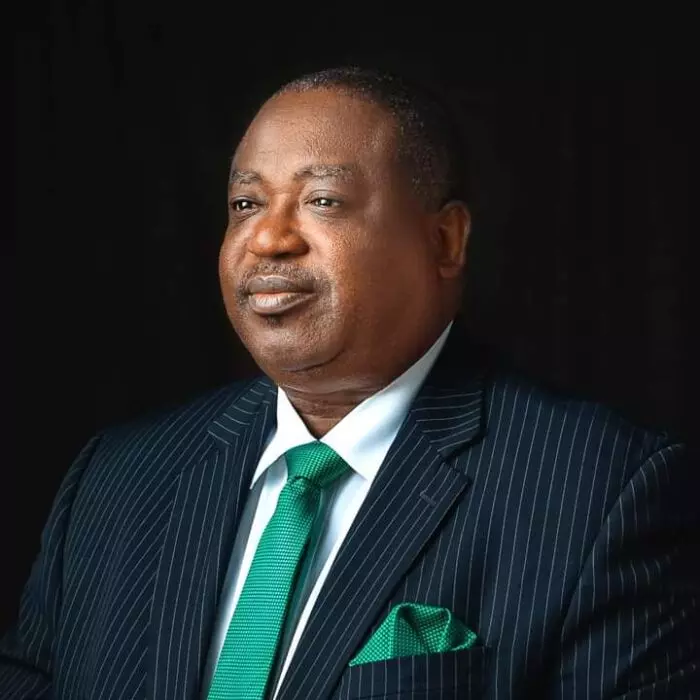
Barrister Caleb Manasseh Mutfwang was born on March 12th, 1965, in Wussasa, Zaria.
Over the years, his exposure has compelled him to seek answers across known divides in order to establish an enabling atmosphere for peaceful coexistence, while respecting the inherent borders of consanguinity imposed by history, in order to ensure the prosperity of the Plateau’s varied peoples.
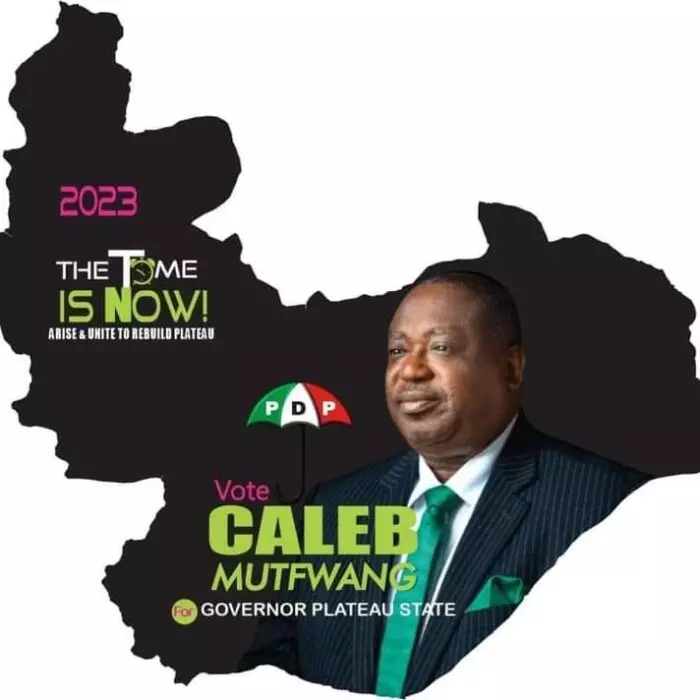
He is the former chairman of Mangu Local Government Area of Plateau State, and also a Barrister Caleb Mutfwang was among the Governorship contestants in Plateau State for the 2023 election, he won the Peoples Democratic Party, PDP, governorship primary ticket of the State.
After finishing from Boys Secondary School, Gindiri in 1982, he worked briefly with the then Federal Office of Statistics and the defunct Nigerian Bank for Commerce of Industry (NBCI) before continuing his educational pursuit at the School of Preliminary Studies, Keffi from 1983 to 1984.
He then attended the University of Jos from 1984 to 1988 and the Nigerian Law School from 1988 to 1989, after which he was admitted to the Nigerian Bar as a Solicitor and Advocate of the Supreme Court on December 14, 1989.
Caleb Mutfwang Career
From 1990 until 1995, he worked as a private and active lawyer for the Kaduna-based law company BYOMA, ICHABA & CO (FIDELITY CHAMBERS).
On the 21st of March, 1996, he founded Caleb Mutfwang & Co, a firm of legal practitioners registered with the Corporate Affairs Commission.
From 2002 to 2004, he worked as the Deputy General Manager, Legal & Secretarial Services at Peugeot Automobile Nigeria Limited in Kaduna.
From 2003 to 2004, he served as Acting Company Secretary. The Nigerian Bar Association, particularly the Section on Business Law, the International Bar Association, the Christian Lawyers’ Fellowship of Nigeria, the Christian Legal Society of America, and the Nigerian Institute of Management are among the professional bodies to which he belongs.
He’s also a graduate of Hawaii’s famous Haggai Institute for Leadership Development. In addition to serving on the boards of various firms, he provides legal services to individuals, corporations, federal ministries, international agencies, and governments.
Barr Caleb Mutfwang Served the mandatory National Youth Service Corps (NYSC) programme in Kaduna State during which he was elected by his colleagues as the President of the Nigerian Christian Corpers’ Fellowship in Kaduna State.
From secondary school to NYSC, he had several leadership positions. Served on the Endowment Fund Committee of the Karl Kumm University formed by the Church of Christ in Nations, among other positions of leadership in the Church and society (COCIN).
Caleb Mutfwang: The Great Politician
In pursuit of this noble objective; to guarantee the prosperity of the diverse peoples on the Plateau, in 2011 he offered to represent the good people of Mangu/Bokkos in the House of Representatives, under the platform of the Peoples Democratic Party (PDP).
Mutfwang narrowly lost the primary election to the eventual winner, however in furtherance of his belief in politics without bitterness, and in demonstration of team spirit; he actively mobilised resources for the eventual victory of his opponent at the primaries, as well as other PDP candidates in the general elections which enhanced his popularity greatly.
Unsurprisingly, he was literarily called upon by the great people of Mangu Local Government Area in 2014, to run for the office of the Chairman of the Local Government Council; which he overwhelmingly won in all but two of the polling units with an unprecedented vote margin of over 70 thousand votes!
He was elected as the Secretary of the Association of Local Governments (ALGON) in Plateau State, a body that has remained cohesive within the PDP in the State.
On March 10, 2022 in Mangu Local Government Area, he declared his intention to run for the governorship election under the Peoples Democratic Party (PDP) in Plateau to provide enduring security that will stabilize the economy of the state for the prosperity of the people.
He encouraged Plateau people to remain united and chase the All Progressives Congress (APC) out of power in Plateau and at the national level in 2023. He noted that the Plateau people will not be disappointed if given the mandate to lead them in 2023 as their governor.
The Plateau PDP had 18 gubernatorial aspirants of which Dr. Timothy Golu, Chief Latep Dabang, Pastor Vincent Nanle, and Mr. Jack Yakubu Pam withdrew from the contest.
Bode Ogunmola, the returning officer who declared the result, claimed that Mr. Mutfwang received 252 votes to win the governorship primary over the other 13 candidates that ran in the election.
Mr. Ogumlnmola made the announcement that Kefas Ropshik received 113 votes and finished in second place. He also noted that 604 delegates were scheduled to take part in the election; however, only 601 of them showed up and cast their votes.
In addition to this, he mentioned that out of the total votes cast, 593 were genuine votes while only eight were invalid votes.
He made the announcement, “Mr. Caleb Mutfwang having scored the highest votes is today declared governorship candidate of the Peoples Democratic Party in Plateau.” [He] said this because Mr. Mutfwang received the most votes.
According to the results that were revealed, Alfred Damial finished in third place with 92 votes, which was followed by Dauda Gotiring who received 88 votes, and Jonathan Akuns who received 16 votes. Nine people voted for Satu Jewun, while four people voted for Shedrack Best and four people voted for Bagudu Hirse.
On June 22, 2022, Mrs. Josephine Piyo, a grassroots politician is a former Chairperson of Riyom local government area of the State as well as a former lawmaker in the state house of assembly was unveiled as Barr Caleb Mutfwang running mate ahead of the 2023 general elections.
The Achievements (Feats) of Caleb Mutfwang
His term in office was unfairly shortened by the APC-led government after he was elected for a three-year term. Despite this move backward, during his brief term of one year and three months, he was able to accomplish the following:
Purchased from a source and dispersed over 30 trucks of fertilizer to farmers in polling units, with a subsidy of 40% off the market price;
Over 30 law school students received allowances, and one impoverished Mangu LGA law school student received full tuition;
Assisted a number of others, including Mangu LGA extraction PhD students.
Long vacation lessons were organized for Mangu LGA SSCE students.
Backlog of worker leave and study allowances has been cleared;
About 50 kilometers of rural roads were graded;
12 youngsters were sponsored to attend the Peugeot Training School with the goal of establishing a modern mechanic village in Mangu;
Several women and girls were sponsored for skill acquisition training in Mangu and Jos.
The LGA’s Chairman’s Guest House was remodeled;
Within Mangu town, I was in charge of supervising and ensuring the completion of a 5-kilometer road network;
Transformers were purchased to improve rural energy supply to several locations;
Planned and hired consultants for the construction of a new ultra-modern agro-allied market in Mangu as part of a public-private partnership;
Contractors have been selected and mobilized for the construction of a one-thousand-seat multi-functional theater in Mangu town.
Initiated proposals for the Mangu and Panyam Districts’ Town Planning Surveys.
Personal Life
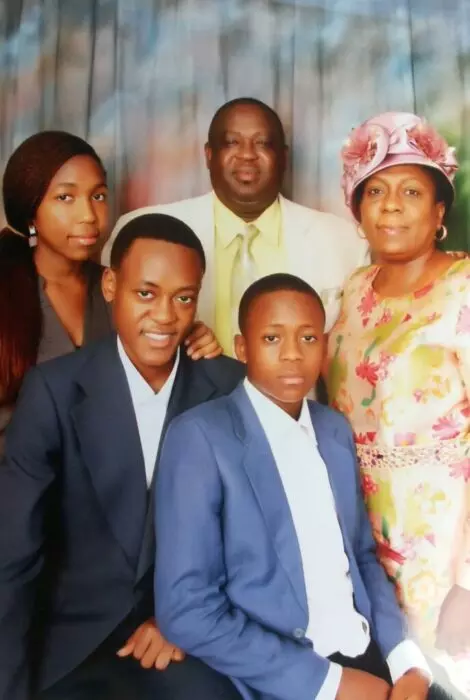
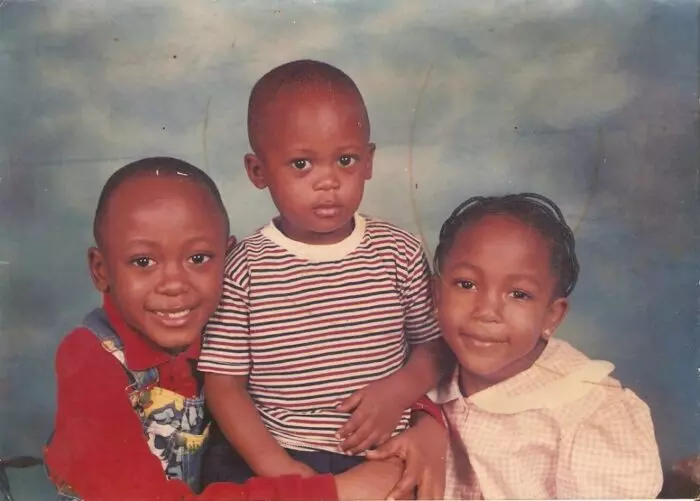
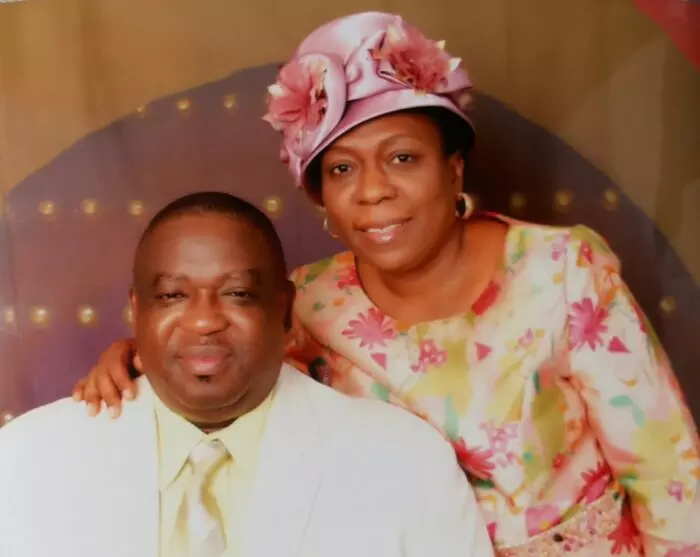
Caleb Manasseh Mutfwang Esq. is married to Helen and together they have three children Timothy, Nanbam, and Enoch.
Helen Mutfwang; formally Helen Ingbo Goldie, was born in Port Harcourt, Rivers State; to John & Juliet Goldie in 1967. She hails from Brass LGA, Bayelsa State, and first made her way up North to Kaduna in 1991; for her youth service under the NYSC Scheme after she had finished her Law School in Lagos State.
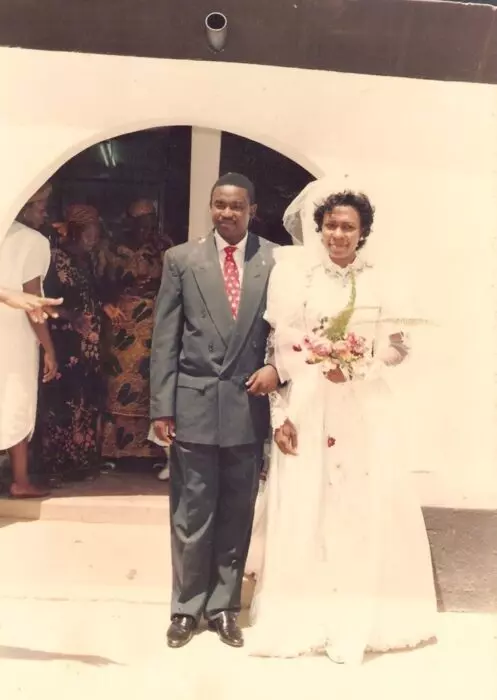
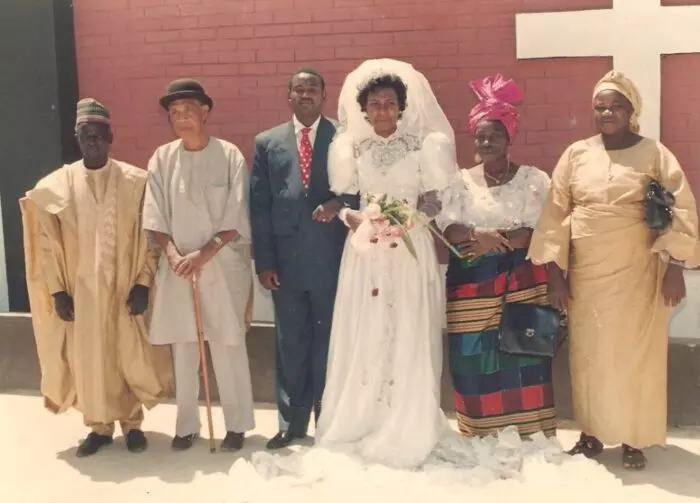
She would eventually meet Caleb in Kaduna; who as stated earlier was mandated to serve in Kaduna as well. They got married on the 13th of February, 1993, a true testament to the NYSC’s development of common ties among the youths of Nigeria; and promotion of national unity, irrespective of cultural or social background.
Caleb Manasseh Mutfwang and Helen Mutfwang Wedding Picture from 1993Caleb Manasseh Mutfwang and Helen Mutfwang Wedding Picture from 1993Family PictureOld Family PictureTimothy, Nanbam and Enoch
From secondary school to NYSC, he had several leadership positions. Served on the Endowment Fund Committee of the Karl Kumm University formed by the Church of Christ in Nations, among other positions of leadership in the Church and society (COCIN) where he worships.
Having lived outside Plateau State for a good part of his life, mostly in Kaduna State; life has taught him to appreciate the dynamics of living in a multicultural environment with the attendant challenges of managing religious and ethnic fault lines.
Over the years, this exposure has constrained him to seek solutions to these divides, in order to provide the enabling environment for mutual co-existence; while recognizing the natural boundaries of consanguinity created by history, so as to guarantee the prosperity of the diverse peoples on the Plateau, who are dear to his heart.
Barrister Caleb Manasseh Mutfwang is well-known as a committed Christian who loves humanity. He is clear-minded, credible, and capable of leading the process to raise the bar in governance; and thereby raising Plateau to a new citadel of glory, in line with our collective dreams of a peaceful and prosperous Plateau.
Dr. Nentawe Goshwe Yilwatda is a politician, philanthropist, digital system and energy engineering expert, community developer, and university scholar with the Federal University of Agriculture, Makurdi with over 29 years of experience working as a consultant with the international development partners, and the public and private sectors.
Dr. Nentawe Goshwe Yilwatda was among the Governorship contestants in Plateau State for the 2023 election, he won the APC Governorship primary ticket of the State.
Early Life and Education
Dr. Nentawe Goshwe Yilwatda was born in Dungung, Kanke LG to the family of a clergyman, the Late Rev, and Mrs. Toma Yilwatda on the 8th of August, 1968.
Dr. Nentawe Goshwe Yilwatda’s educational career started with him passing the First School Leaving Certificate at LGED Primary School, Dungung in 1981, and GCE (O/Level) in 1986 from the prestigious Boys’ Secondary School, Gindiri.
He got his First Degree in Electrical/Electronic Engineering in 1992 from the Federal University of Agriculture, Makurdi, and his Master of Engineering and Ph.D. from ATBU Bauchi and the University of Nigeria, Nsukka respectively where he specialized in Digital systems engineering.
He was also trained by the United Nations University International Institute for Software Tech., Macau, China on Building Electronic Governance Structure.
In addition, Dr. Nentawe Goshwe Yilwatda received expert training from the Association of African Universities (AAU) on Sustainable Development in Africa using Higher Education and was part of the implementation team.
He has received specialized training from AfriNIC, Mauritius, and NetTel@Africa, Nairobi Kenya that helped in the early transition of Internet Protocol Address Users in Africa, and Capacity Building and Knowledge Exchange in ICT Policy, Regulation, and Application.
In addition, he has been trained by the MacArthur Foundation USA, KFI International, the National Universities Commission, the Association of Vice-Chancellors of Nigerian Universities, the Education Trust Fund, the UNDP, and the World Bank.
Working Career of Prof. Nentawe Goshwe Yilwatda
Dr. Nentawe Goshwe Yilwatda started his working career as an Assistant Lecturer in 1995, in the Department of Electrical/Electronic Engineering, Plateau State Polytechnic, Barkin Ladi after which he moved to the Federal University of Agriculture, Makurdi as a Graduate Assistant in 1996.
In the University system, Dr. Nentawe Goshwe Yilwatda has over 25 years of teaching, research, and project implementation in the areas of software engineering, and sustainable development using passive and active renewable energy technologies.
He served the University for 12 years as the pioneer Director of Information and Communication Technology and was a member of the University Senate in addition to serving in many committees both in the University and at the national level.
He has been honoured by the University as the best staff of the year, Best Director of the year, and also a national project award winner among many other awards.
Dr. Nentawe Goshwe Yilwatda has also graduated many Masters and Ph.D. students and has many publications to his name.
Impactful Contributions at National Level
Nentawe has participated in some of the leading ICT reforms that enhanced the transparency of government accounts and strengthened institutions.
He was part of the experts that were engaged between 2003 and 2005 as consultants to work with Alteq Ltd/European Union to conduct a needs assessment and served as a project consultant on the first Integrated Financial Management Information System for the Ministry of Finance, CBN, FOS, OAGF, Debt Management Office, OAuGF, National Planning Commission and Budget Office.
This gave him the opportunity to have a firm knowledge of the revenue and financial framework of Nigeria, the regulations, policies, and opportunities.
Dr. Nentawe Goshwe Yilwatda was also part of the team that worked on the grant by the World Bank to implement a Unified Network and ICT Solution for Nigeria’s Education and Research Network (NgREN) through the World Bank STEP-B project.
He was the lead consultant for UNICEF A – Field Office between 2005 and 2012 in a turnkey project that covered the design, training of Chain Officers and UNICEF Consultants, and installation of alternative energy sources for cold chain systems for Enugu, Cross Rivers, Rivers, Akwa Ibom, Bayelsa, Benue, Ebonyi, Imo, Abia and Anambra states.
This project in addition to the rich engineering experience exposed him to the weaknesses inherent in our health and educational infrastructure, especially in the North Central, South East, and South-South geographical zones.
Dr. Yilwatda was a member of the Federal Government Energy Research delegation to the USA and Canada on two separate occasions to negotiate technology transfer and acquisition opportunities for Nigeria.
He subsequently served in the implementation team of the Cuban Government/ECN programme that promoted energy Efficiency in the Residential and Public sector.
He was the lead consultant for the Energy Commission of Nigeria, Abuja/UNDP which conducted the Energy and Economic Audit of 34 selected factories in Nigeria in addition to his experience in assessing the economic resources of some West African countries.
He also served as a consultant for Gante Engineering on energy efficiency and power quality assessment of many factories in Nigeria.
Dr. Nentawe Goshwe Yilwatda was part of the PAWA 774 project which is a private sector-led imitative to deploy clean, eco-friendly electricity that is connected using micro-grid to communities.
He also worked with Tech-Ville USA to train 100 software and renewable energy engineers in Ondo state for international certifications and human capital export.
Dr. Nentawe Goshwe Yilwatda was appointed by Mr. President in 2017 as a Commissioner with Independent National Electoral Commission and posted to Benue State as the Resident Electoral Commissioner in July 2017.
As an INEC commissioner, Dr. Nentawe Goshwe Yilwatda championed IDP voting rights and was a member of the committee that developed the operational framework and guidelines for IDP voting in Nigeria.
He spearheaded working with International Partners and civil society organizations to innovatively set up schools for IDP kids and empowered women with skills that metamorphosed into a cooperative to reduce poverty in the camps.
He worked with the office of the United Nations Representative to West Africa and the Sahel in Senegal and other partners to hold 66 town hall meetings to negotiate peace with critical political actors in Benue state which led to the first-ever peaceful election since 1999.
Dr. Nentawe Goshwe Yilwatda was also part of the team that was sent on the study tour of the Independent Electoral Commission (IEC) of South Africa to study experiences and best practices as part of the preparation for the 2019 general election.
He was a member of the team that worked with clusters of people living with disabilities to develop operational frameworks and guidelines for PWDs.
Dr. Nentawe Goshwe Yilwatda is known for hardstand in supporting free, fair, and credible elections and has been drafted to participate in some of the most difficult elections across the country.
Among them are the Anambra state Governorship Election 2017, the Recall of Senator representing Kogi West 2018, the Osun Governorship election 2018, the Benue state Presidential and Governorship elections 2019, Rivers state Governorship and House of assembly election 2019, and the Cross River North Senatorial Election 2020.
Impacts as the Son of the Soil on the Plateau
He is a lover of the academic development of his community and is committed to building the younger generation by lifting them out of poverty.
In the last 12 years, Dr. Nentawe Goshwe Yilwatda has been providing scholarships and paying JAMB for 200 kids from Kanke and Pankshin annually in addition to hiring teachers to train them.
He supports those that pass JAMB to secure admission into higher institutions.
In 2018, he trained 100 youths from Kanke and Pankshin in animal husbandry which was anchored by Veterinary Research Institute, Vom.
All the trainees that participated in the 10 monthly internships were empowered to set up their piggeries.
In 2019, Dr. Nentawe Goshwe Yilwatda distributed 112 laptops to indigent students of higher institutions in Pankshin and Kanke.
Nentawe is also the co-founder of the Bikatki cooperative which supports rural poor farmers to access credit to expand their farms in order to reduce poverty and have a sustainable income.
Dr. Nentawe Goshwe Yilwatda has spearheaded the building of classrooms in primary schools for indigent and hard-to-reach communities, and also participated actively in the development of the community secondary school in his village.
Politics
In 2023, Yilwatda was the governorship candidate of the All Progressives Congress (APC) in Plateau State, but lost at the poll to Caleb Mutfwang of the Peoples Democratic Party (PDP).
Until his emergence as APC national chairman in 2025, Yilwatda was the minister of humanitarian affairs and poverty alleviation appointed by President Bola Tinubu in 2024. He replaced Betta Edu, who was suspended from heading the ministry in January 2024, following an allegation of diversion of a N585 million federal government grant meant for the vulnerable into private accounts.
In addition to his ministerial role, he serves as a member of the Presidential Economic Management Team and chairman of the Euro-African Dialogue on Migration and Development.
Personal Life of Prof. Nentawe Goshwe Yilwatda
Dr. Nentawe Goshwe Yilwatda is a registered Engineer with the Council for the Regulation of Engineering in Nigeria (COREN), a member Institute of Electrical and Electronics Engineers, a member of the Nigeria Society of Engineers, a member of Solar Society of Nigeria and has enjoyed many awards and recognitions in the area of ICT and electronic engineering.
A well-designed website can help your business/organization reach millions of people worldwide and make you appear professional like a global brand.
Let Morrebs help your business/organization reach an international audience with a world-class highly responsive and SEO-optimized website designed especially for you.
Attached below is a list of 10 websites developed by Morrebs ICT Solutions Limited:
A Community Blog for Inside Jos – www.insidejos.com
A Construction Engineering Website for Bakad Engineering Services – www.bakadng.com
A Book Website for Bliss Mangai – www.blissmangai.com
A Poetry Blog for My Woven Poetry – poetry.johnsonokunade.com
A website for Kolseg Design Services – www.kolseg.com
A Farm Website for Tasie Farms
An e-Commerce Website for Timranpels Collections
An NGO Website for 4H Foundation, Nigeria
Listed below are 10 Reasons why you need a Website.
YOUR CUSTOMERS EXPECT IT: your tech-savvy customers expect you to have a website to find more information about your business. As for you, your website can help you generate business, increase brand recall value, promote goodwill in front of customers and target audience, as well as deliver strong marketing messages. Having a website is not just about having an online presence. Think of it this way, your website delivers your marketing message 24 hours, 365 days a year! So, if you don’t have a website, what are you waiting for? Get one! Your customers will thank you for it.
OFFERS SOCIAL PROOF: Without a website, how will people know that you’re a real business? How will they know that you’re not just some random person operating out of their mom’s basement? A website is essential for offering social proof and establishing your credibility as a business. It shows potential customers that you’re serious about what you’re doing and that you have something to offer. Just think about it: would you be more likely to buy from a company with a website or one without? The answer is obvious.
CONTROL THE NARRATIVE: While it is difficult to control what people say about you, you can influence your brand perception by writing your own story on the website. A website is a far more efficient way than print ads when it comes to helping brands spread their message, portfolio, clientele, culture, vision, and mission. So, ensure that you’re always providing the most accurate and up-to-date information about your business or brand. If potential clients can’t find a website that gives information about what you do, guess who will get the offer, patronage or client? Definitely, not you! But that competitor next door, who has an awesome website developed by Morrebs.
MAXIMIZE ROI: If you’re running a business, one of your top priorities is probably maximizing return on investment (ROI). And if you have a website, you’re in luck, because there are a number of ways to ensure that your website is working hard to bring in maximum ROI. A website developed by Morrebs lets you be in front of thousands of more potential consumers without spending much. It can help you reach a wider target audience for promoting your services or products. The content on the website also influences buying decisions and commercial transactions, no matter which industry you are in.
WEBSITE ADDS TO COMPANY’S CREDIBILITY: Back in the day, when a company wanted to be seen as credible, they would advertise on NTA or put up a billboard. But these days, people are much more likely to research a company online before making a purchase – and that means having a website is essential. A website is like a virtual business card for a company. It’s one of the first things that potential customers will look at when they’re considering doing business with you. That’s why it’s so important to make sure that your website is professional and adds to your company’s credibility. People are likely to engage with a company they can trust, and the website is the stepping stone towards building that relationship.
HAVE MORE CONSTRUCTIVE CONVERSATIONS: Too often, conversations devolve into pointless arguments. But if you have a website, you can avoid these pitfalls by having more constructive conversations. After all, a website is simply a platform for sharing your thoughts and ideas with the world. By taking the time to craft a well-thought-out website, you’re effectively forcing yourself to have more constructive conversations. This is because you’re forced to articulate your thoughts in a clear and concise manner. A website allows you to have more constructive conversations with your clients, customers, and colleagues. Since consumers these days expect immediate gratification, at Morrebs we build website with simple and short information.
COMPETE WITH OTHER INDUSTRY GOLIATHS: Did you know that having a website gives you a fair chance to compete with the giants of your industry? At Morrebs, we build Search Engine Optimized website is created, it can rank higher and be at the right place at the right time. Not only does it give you a platform to sell your products or services, but it also allows you to reach a wider audience. And, perhaps most importantly, it enables you to compete with other industry giants – even if they have significantly more resources than you. By leveling the playing field, a website allows small businesses to thrive in today’s competitive landscape. Therefore, if you don’t dominate the Internet with your website built by Morrebs, you are giving your customers a reason to buy from the competition.
FADING SOCIAL MEDIA REACH: If you think having a page on social media is enough to attract new customers, think again. It is not enough to have a Facebook page, because every other business has one. A website is a great way to control your own content and ensure that your audience can always find you. It’s also a much more reliable platform – while social media platforms come and go, your website will always be there as long as you keep it up. It also allows you to track analytics and see who is visiting your site and interacting with your content. Plus, with user-friendly websites designed by Morrebs, it’s easier than ever to create a beautiful website that reflects your brand. So, if you’re looking to have more control over your online presence, having Morrebs ICT Solutions Limited develop a website for you is the way to go.
EXPAND YOUR WORKING HOURS: Thanks to the internet, that scenario is now a reality for many people. With a website, you can reach a global audience 24 hours a day, 7 days a week. Whether you’re selling products or services, your website will be working for you even when you’re asleep. And best of all, you can set up your website once and let it run itself; there’s no need to constantly be putting in new hours or working late nights. Having a website means that your content is available to users anytime during the day, at their convenience. So whether someone visits your website in the dead of the night or during the day, in some way you’re always interacting with them, and can say goodbye to that ‘closed for business’ sign. It also is a step towards effective customer service and relationship building, especially if you have AI-powered chatbots enabled on your website that can solve the basic problems of your customers when they need it the most.
SHOWCASE YOUR OFFERS: It cannot be stressed enough that a website is the first interaction of your target audience with your brand. How you position your business is totally in your control with a website developed for you by Morrebs ICT Solutions Limited. By featuring product information and images on your website, you can give visitors an overview of what you have to offer without bombarding them with too much information at once. A website provides a convenient platform for customers to purchase your products or services directly, without having to visit your premises in person. As such, a website can be an invaluable tool for promoting and selling your offerings. When building your website, we will also highlight your awards, testimonials, and all the features that can alleviate your visitors’ pain points. This increases the average time your customers spend on the website and perhaps influences their decision to contact you, At Morrebs, we build websites that talk for you.
Conclusion
We are Morrebs ICT Solutions Limited, your preferred ICT Solutions provide. Let’s Work Together to achieve your best! We combine creativity with innovation to make brands and individuals thrive in an age of digital evolution.
At Morrebs ICT Solutions Limited, we are committed to serving you with integrity and respect while we position ourselves as your preferred ICT solutions provider; to emerge as the backbone of ICT solutions in Nigeria and the diaspora.
We are well-posed in helping you attain sustainable and consistent growth by deploying our top-notch knowledge in technology to facilitate superior value, as well as solve real life problems by providing ICT solutions.
Contact us for your website and other ICT services.
LATE CHIEF (DR.) DAVID ADEBAYO AMAO ALATA, THE FIRST MODERN OGBOMOSO INDIGENOUS ENTREPRENEUR AND A WORLD-CLASS INDUSTRIALIST
Late Chief (Dr) David Amao Alata was a successful businessman and pioneer of manufacturing industries in Ogbomoso whose conglomerate employed over 10,000 workers and agents between the 1970s and 1990s across Nigeria and Ghana.
He was educated at C.M.S Central School, Onitsha and Commerce College, Kumasi Ghana. After his deportation from Ghana where he spent 24 years, Amao Alata also served as a co-founder of the cooperative union in Ogbomoso.
Born in 1938 into Alata Compound of Taraa Ogbomoso which is why the name Alata was added to his name. He started his business’ retail and wholesale while in Ghana, a business empire that thrived tremendously and was well recognized in Kumasi. His Booming empire was destined for greatness as he kept expanding in Ghana.
Yoruba men and women traders were in control of Ghana markets in both rural and urban centres. This prosperity equally led to the swelling size of the Yoruba population whose second generation competed with the natives over government jobs. The population of Nigerians in Ghana increased threefold from 57,400 in 1931 to over 191,802 in 1960.
The rising commercial profile of the Yoruba migrants attracted competition and indignation from Ghanaians, especially the Kowu ethnic group of the Accra region who developed a feeling of displacement from their established socio-economic position. The natives were confronted with suspicion of exploitation and domination by the migrant elements they coexisted with.
Because of this, in December 1969, Dr K. A. Busia gave a quit order to Nigerians in Ghana. David Amao Alata had no choice but to return to Nigeria with numerous other Nigerians in the same category. He relocated back to his hometown, Ogbomoso, the home of the brave with depots throughout Nigeria and Ghana.
Just as the phoenix arises from his ashes, Late Chief (Dr) David Amao Alata replicated his conglomerate business empire in Ogbomoso and it prospered even much more than when he was in Ghana. Alata became a household name with popularity not only in Ogbomoso but across the country and even Ghana.
The business conglomerate provided jobs for thousands of individuals across the nation. It was the pride of Ogbomoso, as indigenes were confident and boast of the industry’s impact on the country at large. Staffs benefited from different remunerations and Late Chief (Dr) David Amao Alata was the reason hundreds of people became the breadwinner of their families.
He succeeded in transforming his distributive trade into a manufacturing conglomerate which comprised of the following: Alata Sawmill and Furniture; Alata Hotels; Alata Motors; Alata Supermarket and Pharmacy; Alata Soap Industry; Alata Bakery; Alata Toilet Roll Industry; Alata Foam Industry; Alata Candle Industry; Confidence Brewery and Bottling Company; Alata Flour Mills.
The conglomerate produced Elephant Flour, Supa Lager Beer, Supa Cola, Alata Candle, Alata Toilet Paper, Alata Mattress and even Alata Babes Football Club that successfully brought National teams like Golden Eaglets and Flying Eagles to Ogbomoso.
Today some of the companies and business outfit still thrive. The relic of the once glorious industrial empire can be seen in Alata Flour Milling Complex, along Ogbomoso – Ilorin road, Alata Supermarket at Oja Tuntun, Hotel International and Cool Room also in Oja Tuntun amongst others.
In his lifetime, Late Chief (Dr) David Adebayo Amao Alata was Chairman Board of Directors, Ogbomoso Community Bank (Now Ogbomoso Microfinance Bank / Ogbomoso New Vision Bank), Ogbomoso and was also the Chairman, Ogbomoso Chamber of Commerce.
It is in recognition of his immense contribution to the socio-economic development of Ogbomosoland in particular Oyo state in general that he bagged the following chieftaincy titles of Obayimika of Ede by the Timi of Ede, Ariwajoye of Ilobu by Onilobu and Babalaje of Ogbomosoland by the paramount ruler of Ogbomosoland, the Soun
On the social front, he was a member of Rotary Club International, Ogbomoso Committee of Friends and a member of Ogbomoso Police/ Community Relations Committee (PCRC).
Due to his philanthropic contributions to the welfare of the people of his community and beyond and in recognition of his business genius, Oyo state gave him Oyo State Merit Award in 1987 by the state government and the Harris Memorial Award of Rotary Club International in 1985.
In the same vein, for his outstanding contributions to the industrial development of his community and his industrial acumen and skill enterprise in 1991, ST. John University, Louisiana, United States of America honoured him with a (Honoris Causa) Doctor Degree in Business Administration.
His death in 1994, led to the collapse of his business empire and inadvertently, the commercial pride of Ogbomoso. In line with Lawuyi (1997), returnees from Ghana “…play a role in shaping both historical processes and public discourse, which, more often than not, centres around their activities and thoughts… They emerge from the intensely competitive market in which individuals struggle to realise themselves in the face of extreme material and ideological dissolution as the embodiment of current values, symbol of success, and determinant of progress.”
Many insist that the business conglomerate collapsed because of the Imposition of the destructive Structural Adjustment Program (SAP) on the nation by Gen Ibrahim Babangida regime in the 1980s. The Structural Adjustment Program (SAP) made things difficult for manufacturers because of factors like the devaluation of Naira and scarcity of foreign currency amongst others.
The conglomerate needed funds to sustain itself and maintain the vast empire and thousands of employees. It was amidst all this that the great patriarch, philanthropist and businessman died which made things very hard for the business empire to thrive continuously.
Ogbomoso Community Bank a bank later known as New Vision Bank also suffered a major setback after former President Olusegun Obasanjo Regime gave a directive in December 2005 that by December 2007 the minimum capital for every microfinance bank must be N25 million.
The family of late Chief Adebayo Amao Alata was able to raise N10 million as shares but the money was rejected by the bank directors for reasons unknown to the writer. This eventually led to a lawsuit between the late Chief Adebayo Amao Alata and the shareholders led by an oil magnate, Mr Moses Oladejo Olagbende also known as “202”.
The family of late Chief Adebayo Amao Alata claimed that the directors wanted to take over the bank that was founded by their late patriarch. After the lawsuit lasted about a decade (2008 -2018) in the court, the family of late Chief Adebayo Amao Alata won ownership of the Bank Building.
Meanwhile, the Nigerian Deposit Insurance Corporation, NDIC, took over the remains of the bank, the licence was withdrawn for non-performance and other related offences. An auctioneer was found to depose-off the properties of the bank in the building.
On December 2009, a socio-political and cultural organisation of professional Ogbomoso indigenes, which focuses on the growth and development of the town in all facets of life, the Ogbomoso First Group (OFG) honoured Chief Adebayo Amao Alata for his contribution to the growth of commerce and industry in Ogbomoso.
Others that were honoured alongside this business mogul includes the late Prof. Nathaniel D. Oyerinde, for his achievements in education and documentation of Ogbomoso Heritage History, and the Baptist Mission for its immeasurable contribution in the provision of social services and infrastructure in areas of education and health in Ogbomoso and former Oyo State Governor, Chief Adebayo Alao-Akala, with the Distinguished Gold Medal Merit Award for his outstanding leadership and contribution to the socio-economic development of Ogbomosoland.
He was survived by Five Wives and eighteen children. The Business mogul also left behind brothers and sisters.
One of his children is Mr Segun Adebayo Alata who later became a state legislative member representing Ogbomoso North Local Government under Alliance for Democracy Party between 1999 and 2003.
REFERENCE
Chief Oyebisi Okewuyi (JP.) 2013, Ogbomoso in the Early Times, Modern Era and in Today’s Contemporary World, Published and printed by Johnny Printing Works, Beside Okelerin Court Area, Ogbomoso, Nigeria
Olaniyi 2015, The 1969 Ghana Exodus: Memory and Reminiscences of Yoruba Migrants
Ogbomoso Insight
I’m Johnson Ade OKUNADE, an enthusiast of indigenous culture