During the Bátẹ̀dó/Ìjàyè War from 1844 to 1846, the forces of Ìbàdàn and Ìjàyè clashed fiercely. The alliance of Ògbómọ̀ṣọ́ was also sought by both sides.
Ògúnrùnbi, a notable Ògbómọ̀ṣọ́ war chief, declared his support for Ìbàdàn without the permission of the Baálẹ̀. However, Baálẹ̀ Jayéọlá Báíyéwùwọ́n Kélébénìjà of Ògbómọ̀ṣọ́ and his council sided with Ìjàyè, alongside Abẹ́òkúta.
In response, Olúyọ̀lé, the Bashọ̀run of Ìbàdàn, sought the alliance of the Emir of Ìlọrin and the assistance of his powerful Balógun Àlí, to wage war against Ògbómọ̀ṣọ́.
To secure their support, Olúyọ̀lé sent provisions to the Ilorin troops, who were suffering from a severe food shortage, and requested that they lay siege to Ògbómọ̀ṣọ́. He also sent a contingent of infantry to aid the Ìlọrin forces.
The war that ensued became known as Asofẹ́yẹjẹ—Aso-fún-ẹiye-jẹ meaning “fruited for birds to consume”. It was clear that the war was masterminded by Ìbàdàn but executed by Ìlọrin.
The combined forces of Ìlọrin and Ìbàdàn mounted an effective blockade, striking at the heart of Ògbómọ̀ṣọ́. The people were trapped, with all gates of the town sealed from the inside.
The enemy was determined to starve the town into submission before conquering the survivors. Horsemen patrolled the walls, ensuring the blockade was complete.
It was a critical time for Ògbómọ̀ṣọ́. Famine gripped the town so severely that parents would place stones in cooking pots, telling their starving children that food was almost ready, just to keep them quiet for a while.
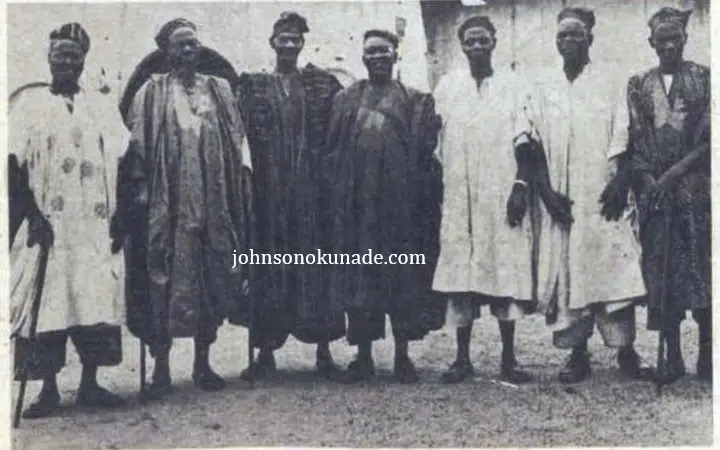
Baale of Ogbomoso, this photo was taken by 19th century European visitors to Yorubaland by the name Rev. Halligey Between 1871 and 1880
The enemies, aware of this dire situation, mocked the people of Ògbómọ̀ṣọ́, throwing melon fruits over the wall and taunting:
“Ẹ̀yin ará Ògbómọ̀ṣọ́,
Bẹ ti pọ̀ tó bẹ́ẹ̀ lẹ gọ̀ tó,
Ẹ̀ ńpa rànùn láàrin ìlú.”
(O people of Ògbómọ̀ṣọ́,
As many as you are, so is your foolishness,
You swarm aimlessly within your town.)
Fruit trees in the surrounding farms ripened, but the farmers dared not venture out to harvest them. As a result, birds feasted on the ripened fruits, giving rise to the name Asofẹ́yẹjẹ – Aso-fún-ẹiye-jẹ (fruited for birds to devour).
The situation became intolerable, prompting the Ògbómọ̀ṣọ́ war council to hold desperate meetings. Eventually, they devised a tactical offensive to break the siege.
Although Ògbómọ̀ṣọ́ was not lacking in men of valour, why the warlords allowed the situation to deteriorate so gravely remains a mystery.
The Ògbómọ̀ṣọ́ army reorganized, divided into four camps, and launched a coordinated attack from all sides. They fought valiantly against the besieging Ìlọrin forces.
The strategy paid off, as it was a well-executed defence that transitioned into a brilliant attack led by the war leaders.
Àrẹàgò, Abẹsẹ̀, and Kuola, along with their forces, advanced towards Apàké; Bameke and Ò̩gúnròmbí took the Adunrin route; Oluya and Lágbẹ̀dù were assigned to Pàkú; while the king, Kélébé, and Lálùdé took charge of Pópó.
In the end, Ògbómọ̀ṣọ́ gained the upper hand, routing and displacing the Ìlọrin marauders, driving them back to their homeland, thus winning the Asofẹ́yẹjẹ War.
However, the men of Ògbómọ̀ṣọ́ did not pursue them far, recognizing that the Ìlọrin forces were skilled horsemen and had many Sarumis (cavalry warriors) who were formidable on horseback, unlike the infantry-heavy Ògbómọ̀ṣọ́ forces.
REFERENCE
History of Yoruba by Rev Samuel Johnson
Iwe Itan Yoruba by Prof ND Oyerinde
Ogbomoso in the Early Times, Modern Era and in Today’s Contemporary World by Chief Oyebisi Okewuyi
Before Emir Abdulsalam, the son of Alfa Alimi, became the first Emir of Ilorin, the city was ruled by Láderin, Pàsín, Alùgbìn, and Àfọ̀njá.
Alfa Alimi was a traveling Islamic scholar who arrived in Ilorin to spread Islam. Although Islam had already been introduced to Yorùbáland—particularly in Ẹdẹ, Ìwó, and Ọ̀yọ́—by Islamic scholars from Mali, Alimi’s arrival marked a significant moment. Islam in Yorùbáland is often referred to as “Èsìn Ìmàle.”
Upon his arrival, Àfọ̀njá invited Alfa Alimi to stay and assist his army. Àfọ̀njá placed his trust in Alimi’s followers, known as the Jamaa, more than in his own people. However, this trust proved misplaced, as the Jamaa, under Alimi’s leadership, eventually rebelled against Àfọ̀njá, killing him and seizing control of Ilorin.
Before the Ìbàdàn warriors and the Òsogbo War, Báálẹ̀ and Ààrẹ Tóyèjẹ Àkànní, nicknamed Alébíosù, succeeded Àfọ̀njá as the Kakanfò and also served as the Báálẹ̀ of Ògbómọ̀ṣọ́.
Tóyèjẹ Àkànní, also known as Alébíosù, led several attempts to reclaim Ilorin from the Fulani:
Battle of Ogele (1824): The first attempt to recover Ilorin from the Fulani.
Mugba Mugba War (1825): The second attempt to reclaim Ilorin from the Fulani.
Battle of Pamo (1830): A battle against Adégún the Oníkòyí, who had allied with Ilorin.
Despite his efforts, Tóyèjẹ Àkànní was unable to recover Ilorin due to the lack of cooperation and treachery among other powerful Yorùbá leaders. He focused his efforts on his beloved hometown, Ògbómọ̀ṣọ́, until his death. Despite Ògbómọ̀ṣọ́’s proximity to Ilorin, the Fulani were never able to subjugate it, regardless of their efforts.
In 1840, the Òsogbo War broke out. Unable to pass through Ògbómọ̀ṣọ́, the Fulani opted to route through Òsogbo to fight and attempt to conquer Yorùbáland.
Ìbàdàn, having emerged as a formidable city of warriors after the fall of the old Oyo Empire (Ọ̀yọ́-Ilé), played a crucial role. The brave Ìbàdàn warriors fought valiantly, defeating the Fulani and preventing their advance. The surviving Fulani retreated to Ìlorin in fear of the Ìbàdàn warriors and never attempted to subjugate Yorùbáland again.
After the fall of Ọ̀yọ́-Ilé, following the death of Àfọ̀njá, Aláàfin Àtìbà decided to settle in Àgọ́, a region ruled by a powerful warrior named Ọ̀já. As the original landowners, the descendants of Ọ̀já became the Asipa, the seventh Ọ̀yọ́mèsì, when Ọ̀yọ́ relocated to Àgọ́.
Today, the present-day Ọ̀yọ́ is known as Àgọ́’dọ̀yọ́.
The BEST way to support us is by providing funding to enable us continue this good work:
Bank: Guarantee Trust Bank (GTBank)
Account Name: Johnson Okunade
Naira Account: 0802091793
Dollar Account: 0802091803
Pounds Account: 0802091810
Euro Account: 0802091827
The Egba people, often referred to as the children of Lisabi, are a prominent sub-tribe of the Yoruba who inhabit the southwestern part of Nigeria.
As the largest ethnic group within Ogun State—one of Nigeria’s 36 states—the Egbas are a significant force in the cultural and historical landscape of the region.
Nestled between their neighbours, the Lagosians of Lagos State, the Ibadans and Ibarapas of Oyo State, and the Beninoise from the Republic of Benin, the Egba people have carved out a unique identity.
They are predominantly farmers and traders, their livelihoods deeply rooted in the fertile lands they inhabit.
In matters of faith, the Egbas are diverse, with Islam and Christianity being the major religions, though a small number still adhere to the rich traditions of African traditional religion.
Culturally, the Egbas are vibrant, and their heritage is vividly expressed in their attire, cuisine, festivals, and ceremonies. At the heart of this cultural richness lies the legendary figure of Lisabi, the traditional hero of the Egba people.
Abeokuta, the capital of Ogun State and the heartland of the Egbas holds the memory of this extraordinary man close.
Lisabi was not just any man; he was a giant, both in stature and in spirit. Although he lived in Igbehin, his roots are traced back to the Egba village of Itoku.
His unmatched prowess in warfare earned the people of Igbehin the exclusive right to the prestigious title of Balogun of Egbaland, a title that resonates with the echoes of their warrior past.
During Lisabi’s time, the Old Oyo Empire, ruled from Oyo-Ile by the Alaafin, extended its influence over much of Yoruba land, including Abeokuta.
The Alaafin’s representatives, known as Ilaris, were stationed in Egba villages and wielded their power with a heavy hand, oppressing the people and demanding their submission.
While most Egba leaders accepted this fate, Lisabi was different. He could not rest until his people were free from the yoke of servitude imposed by the Oyo overlords.
The Alake of Egbaland and His Son, with Bible Presented to him by King Edward VII represented by Mr. and Mrs. J. H. Harris in 1911
Lisabi’s mind was sharp, his resolve unbreakable. He devised a plan, beginning with the formation of a mutual aid society called Egbe Aro.
This group of farmers supported each other in cultivating their lands, but Lisabi had a grander vision. He intended to transform this cooperative society into a formidable military force—and he succeeded.
Lisabi is remembered as an energetic leader who worked harder than anyone else. His dedication was such that when it was time for others to help him on his farm, he astonished them by instead declaring war on Oyo.
The members of his cooperative society were initially stunned and fearful, but they could not bring themselves to break their promises. United in their loyalty, they followed Lisabi into battle.
In 1775, Lisabi struck a decisive blow against the Oyo Empire. He began by killing the Alaafin’s representative in his village of Igbehin. This act sparked a revolt that saw about six hundred imperial agents slain in a matter of moments.
Anticipating swift retribution, Lisabi acted swiftly. He relocated the women and children to a hidden ravine known as Ogbun Melegun, while he and his small army took cover in another part of the same ravine.
When the Oyo forces arrived, they were met with a fierce and unexpected assault. Lisabi’s tactical brilliance won the day, and the Egba people basked in the prosperity that followed their hard-fought victory.
Lisabi’s legacy is monumental. He is honoured as the father of all Egba people, a title that reflects the enduring impact of his leadership.
The Alake of Egba in the late 19th Century
However, his life ended tragically when, in his old age, the nobles of the land, weary of his senile leadership, conspired to murder him.
Today, the memory of Lisabi is kept alive through the annual march to the Lisabi Sacred Forest in Oba Village, located in the Obafemi/Owode Local Government Area of Ogun State.
This event is a significant part of the Egba tradition, where sons and daughters of the land come together to honour their legendary ancestors.
The forest said to be the final resting place of Lisabi, stands as a silent witness to the bravery and sacrifice of a man who dared to defy an empire and secure freedom for his people.
The BEST way to support us is by providing funding to enable us continue this good work:
Bank: Guarantee Trust Bank (GTBank)
Account Name: Johnson Okunade
Naira Account: 0802091793
Dollar Account: 0802091803
Pounds Account: 0802091810
Euro Account: 0802091827
In 1962, Prof. Akínwùmí Ìshọ̀lá wrote his first play, Ẹfúnsetán Aníwúrà, while still a student at the University of Ìbàdàn.
The play was criticized for misrepresenting the great woman Ẹfúnsetán Aníwúrà as a wicked character, simply to make the play entertaining.
Ẹfúnsetán Aníwúrà’s family is highly reputable and prominent in Ìbàdàn. They have one of the largest compounds in Ibadanland. In fact, it is because of Ẹfúnsetán Aníwúrà that descendants of a female household can become Olúbàdàn.
Others can only become Ìyálode, not Olúbàdàn.
Ẹfúnsetán Aníwúrà’s descendants can become kings in Ìbàdàn; there were many prominent matriarchs in Ìbàdàn, but none have that privilege except for the same Ẹfúnsetán Aníwúrà who was portrayed in that manner.
In 1986, Prof. Akínwùmí Ìshọ̀lá wrote a disclaimer and apologized for misleading people with the book; it was published in the Tribune newspaper, but it was too late despite all the efforts of Ẹfúnsetán Aníwúrà’s family to control the wrong narrative about their beloved matriarch.
Before he died in 1992, Dr. Olusola Isola Ogunsola, popularly known as I-show Pepper, used Prof. Akínwùmí Ìshọ̀lá’s book to perform stage plays; after all, this is a book that a great Yorùbá man who happens to be a professor wrote.
Eventually, in 2005, the same book was used to produce the movie Ẹfúnsetán Aníwúrà, and to this day, Ẹfúnsetán Aníwúrà’s family is trying hard to restore their matriarch’s reputation.
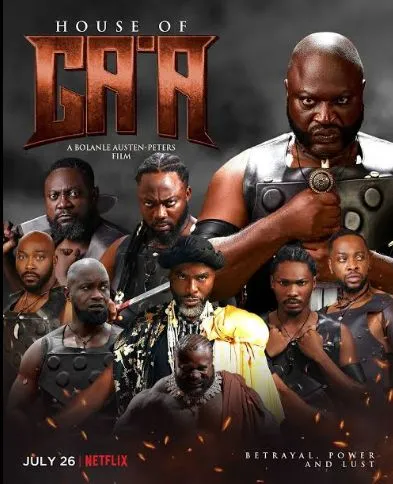
Indeed, we need people like Bọ́lánlé Austen-Peters. She’s well-respected and loved by all, and my review of House of Ga’a has nothing to do with belittling her efforts at all. We don’t have many people doing what she does, and in fact, she’s one of the few who can get this right.
We all saw the Funmilayo Ransome-Kuti movie, and it was perfect. She put a lot of research into that movie; it was just too accurate. I’m sure the Ransome-Kuti family would be very happy watching that movie.
It’s okay to entertain us with movies like this, but the consequences can be dire. Movies like Jagunjagun, Àjàkájù, and King of Thieves will not get this kind of criticism because they are not related to any true-life history. Don’t forget that Baṣọ̀run Gáà’s family still exists today; how do you think they will feel?
Baṣọ̀run Gá’à and Ẹfúnsetán Aníwúrà were necessary figures in their era. The perspectives must be well-balanced by doing proper research.
Baṣọ̀run and the remaining Ọ̀yọ́mèsì developed as a check on the Aláàfin’s power, preventing the Aláàfin from being a tyrant. Baṣọ̀run Gá’à didn’t just kill Aláàfin Agbólúajé and Májẹ́ógbé like that; they ruled for many years.
Movies like this will serve as references for years to come, and one of the hardest things known to man is to learn, unlearn, and relearn.
Our focus shouldn’t be just to entertain but to preserve and educate with the right knowledge.
I’ve seen different opinions comparing the late Baba Adébáyọ̀ Fálétí’s Basorun Gaa, with the new Jouse of Ga’a (Idile Gaa) by Bolanle Austen-Peter and here’s my opinion after watching the new House of Ga’a.
If you know history and are passionate about preserving Yorùbá culture, you won’t like House of Ga’a when compared with the Baṣọ̀run Gáà movie. Although the Baṣọ̀run Gáà movie from 2004 wasn’t entirely historically accurate either, it was far better.
From the first scene of House of Ga’a, I was already displeased with the use of Persian customs in a Yorùbá war scene. Yorùbá Ọ̀yọ́ didn’t dress like Persians for war. That’s erroneously portrayed.
Also, the Lagos accent in an Ọ̀yọ́ movie makes no sense.
The meaning of Baṣọ̀run comes from Iba-Ọṣọ̀run: Iba (Lord) that does Ọrún (Ọrún is a festival only done by the Baṣọ̀run).
In the movie, they were calling Ọrún Festival as Ọ̀run Festival. Very wrong and misleading.
Also, there was no Asipa as part of the Oyomesi at that time. The Asipa title started in the new Àgọ́ of Ọ̀já and the title was created for the Family of Ọ̀já, who was the lord of Ọ̀já that later became Oyo after the fall of Ọ̀yọ́-Ilé the seat of Old Oyo Empire.
Baṣọ̀run Gáà was produced in 2004, 20 years ago, so the camera quality of the movie is very poor compared to this new Netflix-standard House of Ga’a. Aside from that, I’ll pick the late Baba Adébáyọ̀ Fálétí’s Basorun Gaa over and over again.
Was Ibrahim Chatta a Babaláwo or an Onísègùn?
He was made to represent both, and they are two different things. Many people don’t know, and movies like this are supposed to educate people and not confuse them further about Yorùbá culture.
Ibadan was not supposed to be featured in the movie at all. Ibadan was a war camp for a very long time and became a town after the death of Afonja, so why would Gaa send an ambassador to reside there like it’s a town? Even if people were staying there I doubt if it was recognised as a settlement at that time.
Iba Olúyọ̀lé didn’t settle in Ibadan because his father, (Basorun Gaa’s brother), Olúkùóyè, was an ambassador in Ibadan from Ọ̀yọ́-Ilé. That didn’t happen in history.
Iba Olúyọ̀lé settled in Ibadan because the seat of the Old Oyo Empire, Ọ̀yọ́-Ilé, was destroyed. And Ibadan became the city of warriors and a fortress just like Ògbómọ̀ṣọ́.
They used wrong names too; I thought it was a movie about the family of Baṣọ̀run Gáà.
I love the character of Oyèmẹ́kùn, although none of Gaa’s children had that name according to history.
The son of Gaa with the character of Oyèmẹ́kùn is Òjó Àgùnbánbáru, and he fled to the Ibariba country, not Ilorin. Also, there was no Emir in Ilorin at that time, as the movie portrays.
It was recorded that Òjó Onísekúse, Láderin, Pàsín, Alùgbìn, and Àfọ̀njá ruled in Ilorin before Emir Abdulsalam, Alfa Alimi’s son, became the first emir of Ilorin. Baṣọ̀run Gáà was around during the time of Pàsín as Lord of Ilorin.
Ilorin had its first emir after the death of Àfọ̀njá in 1824. Baṣọ̀run Gáà died in the 1770s.
The new House of Ga’a has good effects, and action, and the video quality is good, but it’s full of blunders and wrong historical information.
“Bí o bá láyà kí o se ìkà, Bí o bá rántí ikú ikú Gáà kí o se òótọ́” (if you are brave, venture into wickedness, but if you remember the death of Gáà, adhere to the truth) is a very popular adage.
Baṣọ̀run Gáà died a very painful death, which is what gave rise to that popular adage, but he was not burnt alive as portrayed in the movie.
House of Ga’a is more of Ààlọ́ than Àrọ́bá.
It’s very good, and I commend the effort, but it is misleading, and for me, it’s 5/10.
Despite the era in which they found themselves, African ancestors had left us with ancient landmarks, but we must endeavour to build upon that landmark with creativity and effective use of creativity they set as standards for human advancement, Ogun Lakaaye is far beyond a deity of worship, but a platform for black man and Africa re-emergence to global competitiveness and relevance.
Most of our ancestors were posthumously deified which connotes the name “Orisa”. Orisa (deity) means eni ti ori sa da (one whose destiny was picked and created uniquely). Most of them were inventors who had a particular skill or mastery in a specific field. They were able to make the world better than they found it hence, after death, they are being venerated as a reference or an icon who lived that particular lifestyle of greatness in totality.
Introduction
Ogun Lakaaye is a prominent deity(orisa)/ancestor in Yoruba indigenous cosmology. He is renowned and might not require the introduction needed for some other deities in Yorubaland. In Yoruba mythology; Ogun is referred to as “Oshin Imole” – the leader of the deities because he once led the other deities to earth. This is the reason he is frequently referred to as “Olulana” (path-finder) and given this superior position among deities.
Thus, Ogun Lakaaye remains the leader and path-finder of other deities which include but are not limited to Osun, Oya, Ifa, Obatala, Osanyin, Sango, and Yemoja, as he is acclaimed to have cleared the path, being a warrior and a blacksmith, and led the deities to earth.
In affirming this and reiterating the heroic deeds of Ogun, Ofeimun stated:
“Whether from the standpoint of a creation myth in which Ogun is the path-maker who cleared the way from the gods to humankind, or the entrepreneur who produced the fire of civilization to lift humanity from barbarism, or the war-monger who protects the weak but could also devour them in sheer gore-mongering…Ogun had become a twentieth Century deity, who superintended not only over iron foundries that gave rise to modern civilization but also other scientific pursuits, beyond metallurgy, in electricity, electronics and related feats”.
Variations in the Identity of Ogun Lakaaye
To different people at different levels of life and spiritual understanding, Ogun Lakaaye is portrayed differently. When an Abrahamist (Christian or Muslim) hears “Ogun Lakaaye”, what comes to his/her mind is an idol that is being worshipped by onisese (traditionalist).
But to an Onisese (traditionalist) Ogun is one of the greatest inventors the world has ever seen. Ogun remains one of the greatest patriarchs of the Yorubas who can also be seen as an ancestor or deity (orisa) whose lifestyle in his days represents valour, creativity, energy, industry, hunting, and warfare.
During the slave trade era, Ogun Lakaaye travelled abroad in the hearts of Yoruba people who were taken as slaves and the existence of Ogun Lakaaye has not only survived but thrived in those countries even more than in Yorubaland where he originated from.
Ogun Lakaaye has taken, within syncretic formations, a new name in the Americas. It is St. George in Rio de Janeiro and St. Anthony in Bahia, Brazil. For those in Trinidad, it is St. Michael. To the Fon people of Benin Republic; Gu, in Brazilian Candomble; Ogum, in Haitian Vodou; Papa Ogou.
Chief Falola Okunade in his words said, that Ogun is and was never the god of Iron, but iron is an iconic representation and interpretation of his skills, inventions and power. Even other tribes like the Benin and Nupe have high regard for the deity represented as ‘the god of iron,’ being the first person to cast iron into cutlasses and hoes for farming in Yorubaland or any town that so took its origin from the cradle of the Yoruba race, ‘Ile Ife’.
Taking Ogun as an embodiment of the religion of Yoruba masses par excellence, Prof Wole Soyinka describes Ogun as an essential god for the protection of orphans and a symbol of transcendental, humane, but rigidly restorative justice.
However, by focusing on the name and the functions of Ogun within the Yoruba social structure, in contrast, Prof Wole Soyinka likens Ogun Lakaaye to Dionysius, the Greek god of war.
Yet, on the same function and name, those who take the native ascription as truth would argue that, although of lesser significance than Olodumare, the supreme God, Ogun is a leader, a pathfinder: he has two matchets, one which prepares the farm, the other which clears the road.
Without Ogun, there is no way to the divinity. There is, in addition, no way to wealth. And, of course, the path to civilization is paved with dangers.
It’s important to emphasise that Ogun Lakaaye lived in an era that solely relied on crude implements and technology for economic activities while we are in an era of modernity that relies and automated and innovative technology.
Regarding Ogun as a deity of valour, creativity, energy, and industry, connotes more than being object of worship, but is a way of respecting and honouring a great ancestor.
The Identity Of Ogun Lakaaye
In Yoruba myths, Ogun is a human being with royal blood acquired through his connection, as a son to Oduduwa, the autochthonous founder of the Yoruba race. The descent confers authority. Had Ogun wanted, he could have become a king over one of the Yoruba sub-kingdoms that traced its origin to Oduduwa. Instead, he served as the Commander-in-Chief of Oduduwa’s army.
In one myth he returned to Ire, a town in Yoruba land, after one of his military exploits and saw the people drinking and merry-making. Nobody would give him any attention. No drink or food was offered to him.
In anger, he drew his sword to kill the people. The son, however, emerged in time with wine, food, dogs, snails, and palm oil to cool his temper. This myth resembles many others in plot and character. It establishes the status of Ogun as a leader; it also gives insight into his character.
It thus persuades feelings in a certain direction which gradually crystallizes in other myths. In one such myth about Ogun, he was returning home as Oduduwa’s Commander-in-Chief when he met a beautiful lady who emerged from the forest. Ogun became interested in her and requested her hand in marriage.
She agreed and followed him to Ile-Ife. In Ile-Ife, Oduduwa also developed an interest in the lady. He asked if Ogun had slept with her. Ogun lied and thus paved the way for Oduduwa’s engagement to the lady.
Later, when she had a son who was a half-cast, it was discovered, through consultation with the gods, that Ogun had slept with her.
The marriage broke up and Ogun married the lady. The child was named Oranmiyan. He became the founder of the Oyo Empire. Oyo People to date still believe Ogun to be Okanbi.
Ogun’s wife also had another son for him named Ogundaunsi. He was an excellent cook. Whenever the father returned from war, he cooked for him a delicacy of dog, oil, snail, mice, fish, and other meats.
Ogun was so pleased with this delicious dish that he decided to set up a kingdom for him. He went into the forest and searched and searched without finding a suitable kingdom.
He decided to go back to Ife and rest. Upon arrival, he discovered that his people were no longer there. He went back to the forest and continued to search for a kingdom for Ogundaunsi.
While still searching, however, he saw a small party of people sitting and drinking. He was hungry and thirsty but nobody would give him any drink or food. In anger, he took out his sword and killed all of them. To his chagrin, those killed were his people so he committed suicide.
According to another Yoruba mythology, the gods once lived in union here on earth with human beings, and their relationship with mortals was marked by camaraderie and mutual regard for one another.
However, either through rebellion or disobedience on the part of mortals, the gods withdrew into the heavens.
A long isolation from the world of mortals brought about an “immense chaotic growth which had sealed off reunion [between mortals and the gods]” The gods tried unsuccessfully to demolish this impassable barrier, until Ogun, “armed with the first technical instrument which he had forged from the ore of mountain-wombs” triumphantly hacked a passage through the chaotic growth to reunite the gods with humans.
He thus earned the appellation “the first creative energy, the first challenger and conqueror of transition”
In the Panegyric of Ogun, some verses maintained that Ogun is originally from Saki, a town in the Oke-Ogun region the present-day Oyo state.
Other evidence points that Ogun Lakaaye inhabited Ile-Ife in the present-day Osun state, the most obvious evidence and establishment identified to belong to Ogun in Ile-Ife is the Oke Mogun Shrine which is said to be Ogun Lakaaye’s Blacksmith workshop while he was staying in Ile-Ife, hence dedicated to him as a Yoruba deity.
Tinuoye in Itan Ogun Onire affirms that Ogun, who is often erroneously believed to be a descendant of Oduduwa and given birth to in Ile-Ife, was a foreigner who journeyed to Yorubaland. His father’s name was Tabutu; his mother’s name was Orororiran and he is said to have lived around 1383-1475 AD.
Ogun during his lifetime was a skilled and renowned warrior, craftsman, hunter, blacksmith and medicine man who had a passion for war and was always ready for war.
Ogun Lakaaye is the progenitor of hunters, butchers, barbers, farmers, blacksmiths, carpenters, sculptures, warriors and general allied professions; hence he is referenced by all that deals with Iron/metallic substance.
Ogun Lakaaye is also portrayed as the instigator of beginnings, founding and innovations. Ogun is like a friend and an enemy, a representation of order and of chaos.
The Yoruba represent this character in the dog, Ogun’s sacrificial object. Ogun’s philosophy is that we must act with courage and heroism in living and dying while serving the needs of our immediate environment.
He was more than skilled and renowned at war; he was an enthusiastic warlord, who delighted in war. Odu Ogunda Meji, an Ifa verse buttressed Ogun’s tenacity and preparedness for war. It states that:
Ile nimoti jade wa Ona mi nimo n to A dia fun Ogun Ejemu Oluwonron Adigirigiri re bi ija.
Tinuoye further stated that Ogun was deified after his demise and he is presently being worshipped in the Yoruba nation and beyond, as far as Cuba and Brazil.
Ogun Lakaaye’s Relationships with the Following:
Ogun Lakaaye’s relationship to Osoosi and Ija: Osoosi and Ija are both deities in the Yoruba pantheon. Both Osoosi and Ija lived together with Ogun Lakaaye during his days on earth as a human. We could say they were siblings or followers of Ogun Lakaaye; to date, the three deities share common personalities.
Ogun Lakaaye and Iron (Irin): The Iron Age remains the beginning of humankind’s progressive leap into modern technology which has ushered us into a modern era. Ogun Lakaaye mastered the art of metallurgy to the extent that irons became his representation after he was posthumously deified. Ogun invented cutlass, knives, swords, bullets, guns, and countless other metallic inventions.
Ogun Lakaaye and Plutonic Igneous Rock (Ako Okuta): The Stone Age was a broad prehistoric period during which stone was widely used to make tools with an edge, a point, or a percussion surface. The Stone Age preceded the Iron Age which Ogun Lakaaye is famous for, Ogun Lakaaye reportedly made use of ako okuta due to the nature of the object in most of his inventions. A very good example of Ogun Lakaaye’s usage of ako okuta is still seen in blacksmith workshops to date, irons are being hammered and processed on ako okuta. Aside from that, the ako okuta found in blacksmith’s workshops is a representation of Ogun Lakaaye and “Ogun” serves as a synonym for such plutonic igneous rocks.
Ogun Lakaaye the Pathfinder (Olulana): Ogun Lakaaye remains the leader and the one who used one of his many inventions, cutlass to create roads for himself and other deities which include but are not limited to Osun, Oya, Ifa, Obatala, Osanyin, Sango, Yemoja, as he is acclaimed to have cleared the path, being a warrior and a blacksmith.
Ogun Lakaaye and Palm Fronds (Imo Ope): It was said that Ogun lived in seclusion at the top of the hill where he went about hunting. Tired of a secluded life, he decided to go for a settled life, which he had rejected earlier on. He came down from the hilltop on his way, he took fronds from the palm tree as clothing.
Ogun Lakaaye and Dog (Aja): Ogun’s personality is also seen as “doglike”: aggressive, able to face danger, friendly, and straightforward. Aside from that, the dog was also a friend and companion he took with him when hunting. They were very close and understood each other until the dog betrayed him and he also qualified to be “a sort of” prey that he eats as meat. Dog meat became his favourite dish and to date, dogs are offered as sacrifice when Ogun Lakaaye is to be venerated.
Ogun Lakaaye and Palm Wine (Emu): Ogun’s favourite drink is palm wine (emu). According to Prof Wole Soyinka in one of his publications titled “Dawn”, Ogun so much loved drinking palm wine on a particular day, Esu the trickster left a gourd of palm wine for Ogun Lakaaye who was very thirsty. Ogun found it exceptionally delicious and drained the gourd to the dregs. In that state, Ogun drunkenly turned his fury against his own people as well as the enemy, slaughtering friends and foes alike; a concrete lesson from this occurrence is that alcoholic beverages should be consumed moderately if consumed at all. To date, during festivals in honour of Ogun Lakaaye, Pam wine is still used as libation.
Interpretations of the Names and Panegyrics of Ogun Lakaaye
The panegyrics of Ogun are full of silent, but loud metaphoric messages to the discerning ones. Unfortunately, most of the names and Panegyrics are being misinterpreted to connote negativity.
Lakaaye | La-kari-aye (One Who Was Everywhere): This name emphasizes the global availability of Ogun Lakaaye. Though Ogun has variations in different cultural settings, he exists globally. With his skills in creating pathways, he could go anywhere in the world.
Oshinmole | Oshin-Imole | Oshin-Irumole (Chief among divinities): The leader of the deities because he led the other deities to earth. In the Yoruba religion, Ogun is given a superior position among deities/divinities.
Olulana | Olu-la-ona (The Pathfinder): Acclaimed to have cleared the path, being a warrior and a blacksmith, and led the deities to earth This is the reason he is frequently referred to as “Olulana”. Talking with Awo Fakorede Amosun, he further explained that the concept of Ogun Lakaaye as the Olulana is deep and broad in Yoruba cosmology as it encompasses all aspects of societal economy, livelihood, commerce or work. Ogun was responsible for creating the pathways leading to the market, the road to streams, and all the roads connecting the settlements together.
Ogun Alada Meji, Ofi Okan Sanko, Ofi Okan Yena (Ogun The Owner of Two Cutlass, Uses One for Making Pathway, And the Other For Farming): This illustrates Ogun Lakaaye is someone who is an expert in the art of creating pathways and at the same time farming. Ogun Lakaaye was so skilled that used to do both tasks simultaneously.
Oni Omi Ni Ile Fi Eje We (One That Has Water at Home Yet Bathe with Blood): Ogun remains the inventor of cutlass, spear, gun and many other weapons used in warfare. His inventions such as the sword are usually soaked in blood during war and iron is also seen as the representation of Ogun himself, hence the name: one that bathes with blood.
Aso Ina Lo Mu Bora (He Adorned the Cloth of Fire): Ogun Lakaaye is closely related to blacksmiths and the fiery furnace associated with a blacksmith’s workshop. Ogun himself forges his inventions in fiery furnaces and he’s an expert in the mastery of how fire is used in shaping and forging irons. Also, we mentioned earlier that Ogun himself is represented with iron and iron is always put inside a fiery furnace while being forged.
Oni Aso Ni Ile Fi Imo Ki Imo Bora (One That Has Clothes at Home Yet Adorns Palm Fronds): Earlier, I mentioned that while coming down from a hill where Ogun Lakaaye was, he needed clothes, but could only find palm fronds which he woven together and used as clothes. Ogun Lakaaye became accustomed to the palm fronds, as a way of remaining grateful to the palm fronds for serving as clothing in time of need, he stuck to using them even after he decided to wear clothes.
Agbe’le Aye, Mo se T’orun (The one on earth, yet doing heaven’s will): “Heaven” in this concept means Olodumare, the almighty supreme being. Awo Fakorede Amosun mentioned how Ogun as a divinity represents the will of Olodumare on earth, Ogun lived on earth doing the will of Olodumare as we’ve established his many roles on Olodumare’s green earth.
Seven Modifications of Ogun Lakaaye
Ogun Lakaaye is universally acknowledged as an indispensable god in the Yoruba traditional belief system. He is regarded as the owner of all iron and steel. Thus, his celebration cuts across all professions. He is also called Olulana (he who secures the road) and road users are also expected to celebrate him. Ogun is, therefore, celebrated everywhere in the Yoruba-speaking country whether by individuals or the community at large.
Again, Lakaaye, Oshinmole, Olulana or whatever name they choose to designate him refers to Ogun Lakaaye. The differences in the various brands of Ogun like Ogun Alara, and Ogun Onikola are predominantly seen in their various modes of celebration.
It is only Ogun Onire who accepts the sacrifice of a ram from the Onire because a son worships his father with a ram. Continue reading to see the relationship between the Ire Community in Ekiti state and the Onire (the first king of Ire), Dahunsi who was Ogun’s son.
The seven Oguns are part of a recurring mood and a persisting set of motivations. Each of the seven variants is a pragmatic factor in the structuring of social relations. Ogun is multifaceted and multidimensional, an Ijala (Hunter’s poetry often dedicated to Ogun) verse emphasizing the different personalities of Ogun goes thus:
Ògún méje logun mi, Ògún alára ni n gb’aja, Ògún onire a gb’àgbò, Ògún onikọla a gb’agbín, Ògún onigbajamo, irun ori nije Ògún gbenagbena oje ìgí nìí mu, Ògún wodowodo/wadowado, eja ni je Ògún alapata nije eje eran
Translation My Ògún manifest in seven different ways Ogun of Ilara accepts a dog Ogun of Ire accepts a ram Ogun of onikola (circumcision) accepts a snail Ogun of onigbajamo (barbers) eats the hair on the human head Ogun of Gbenagena (Sculptor) drinks tree sap Ogun of Wodo Wodo (fishermen) eats fish Ogun of Alapata (butcher) consumes the blood of animals
Listening further to the Ijala Ode, you’ll hear Ògún mákindé ti dogun lẹyin odi, Bi o ba gba Tapa a gb’Aboki, A gba Ukuuku a gba Kèmbèrí. (Ogun the brave that wages wars against foreign invaders, will consume either Nupe or Hausa. He consumes foreign people; He will consume the Kanuri too.)
The terms Tapa, Uku-uku, and Kemberi are designations for non-Yoruba. That is, these ethnic groups are strangers to the Yoruba-indeed they were enemies in the historic past. Their presence outside the city wall is dangerous to the stability and peace of Yoruba society.
Ogun Lakaaye and Ire-Ekiti of Ekiti State
Ire-Ekiti is a town in present-day Oye Local Government Area of Ekiti state in southwestern Nigeria. The town is also called Ire m’Ogun because of its connection to Ogun Lakaaye. The present-day Ire-Ekiti has always been unknown with the name and has not always occupied its present location. It used to be known as Oke-Ori or Igbo Irun.
During his lifetime, Ogun Lakaaye had a son called Dahunsi (who had been given the title “Onire” meaning the owner of fortune). Together with Dahunsi and his entire household travelled from Ile-Ife to Igbo Irun. Ogun Lakaaye, the newcomer, established dominance over the aborigines and established his son, Dahunsi, as the king of Igbo Irun.
Igbo Irun, having a king with the title of Onire (owner of ire) while ire means fortune, became known as Ire. Ogun Lakaaye, having established dominance over the kingdom of Ire, departed from them and embarked on a military adventure. Dahunsi, the Onire and the people of the Ire community lived contentedly till the outbreak of a smallpox epidemic.
When the Ifa oracle was consulted as regards the disease, they were instructed to go farther in the eastward direction for better living. They moved eastwards for about four miles and settled in the present site of Ire-Ekiti.
Dahunsi, Ogun Lakaaye’s son and the Onire became the first king of Ire-Ekiti. Subsequent kings of Ire assumed the title of Onire and in the common parlance, claim they were descended from Ogun. To such a degree, Ogun is believed and regarded as the father of the Onire, starting with the first to the present Onire of Ire-Ekiti in Ekiti state.
The Atunfase Awo Adimula of Oyo state, Chief Falola Adigun Okunade chanted an odu ifa that goes thus:
Pooro bayi, Aala bayi Adifa fun Aja, A bu fun Ehoro Nijo ti won ni ki won lo fi Ogun han Onire Ebo ni won ni ki won lo se Ehoro nikan ni nbe leyin tin tubo Nje pooro bayi oo, Aala bayi mo re
The odu ifa above talks about how Ogun was to be introduced to his son, Onire. The process required a sacrifice which involved the hare and the dog, after the sacrifice, only the hare survived as the dog was used as a sacrifice; an act that remains the same even to date.
This is further confirmed in Odu Idingbe, an Ifa verse which says: Aja, awo Onire lo difa fun Onire O l’ehoro l’ebo Agbo, awo Onire lo difa fun Onire O l’ehoro l’ebo Akuko, awo Onire lo difa fun Onire O l’ehoro l’ebo Ehoro, awo Onire lo difa fun Onire Nigba ti ko ri iba ile baba re mo Nje ta lo f’Ogun han Onire? Ehoro, oun lo f’Ogun han Onire Ehoro.
Translation The dog was Onire’s diviner Who cast divination for Onire And told him to sacrifice the hare The ram was Onire’s diviner Who cast divination for Onire And told him to sacrifice the hare The cock was Onire’s diviner Who cast divination for Onire And told him to sacrifice the hare The hare was Onire’s diviner Who cast divination for Onire When his father’s blessing on him was waning Who helped to reconcile Ogun and Onire? The hare was the one Who helped to reconcile Ogun and Onire
The phrases in this Ifa Verse which indicate the relationship of Ogun and Onire are:
The hare was Onire’s diviner Who cast divination for Onire When his father’s blessing on him was waning Who helped to reconcile Ogun and Onire?
This verse clearly shows that Ogun is the father of Onire. Furthermore, the writer was able to assert that dog, ram and cock are used as sacrificial items for Ogun because none of them could reconcile him and his son. But this is not the same for the hare who succeeded in the reconciliation attempt between Ogun and Onire. The hare is therefore never sacrificed in the worship or celebration of the Ogun Onire festival.
Transfiguration of Ogun Lakaaye
Legend maintains that when Ogun was returning to Ire in search of his people who had moved from their previous settlement, he came across a group of people holding Ujo Oriki (a silent meeting). Since speaking was forbidden at the meeting, they could neither greet Ogun Lakaaye nor acknowledge him.
Ogun Lakaaye got angry because he was not spoken to and was not offered palm wine his favourite drink. Ogun Lakaaye unsheathed his sword and massacred many of the people at the meeting. When the tragic news of the horrific massacre got to King Dahunsi, he recognized the perpetrator as his father – Ogun Lakaaye. The king ordered and supervised the preparation of food and drinks for Ogun.
Ogun realized he had killed his townspeople when his fury abated. He went back the way he came and met a man who appeased him with roasted yam and palm wine. After he had been appeased, Ogun invited the people and promised to come to their aid whenever he was called upon for help. He taught them how to call him, drove his sword into the ground, crouched on it and was swallowed by the earth at a place called Iju.
The man who appeased Ogun became known as Elepe – the one who, and his children after him became the custodian of Iju even till date.
Reference
Ijala Ode: Hunter’s poetry often dedicated to Ogun
Odu Ogunda Meji – Ifa Verse
Odu Idingbe – Ifa Verse
Wole Soyinka (1967), Dawn the first poem in ldanre and Other Poems.
Olatunde Bayo Lawuyi (1988), Ogun: Diffusion across Boundaries and Identity Constructions
Yaw Adu-Gyamfi (1997), Wole Soyinka’s “Dawn” and the Cults of Ogun
Olatunji Ojo (2009), ‘Heepa’ (Hail) Òrìşà: The Òrìsà Factor in the Birth of Yoruba Identity
Tinuoye, O.A. (2010), Itan Ogun Onire
Adeleye, Oluwafunke Adeola (2019), A Historical Analysis of the Interconnectivity of Ogun Onire Festival and Ire-Ekiti: Tracing the Ancestral Link
Yeye Asabioje Afenapa: An Ifa Orisa traditional Musician
Awo Fakorede Amosun: A Traditional Spiritual consultant, Ifa priest and Physiologist (BSc)
Oluwo Jogbodo Orunmila: A therapist, poet, and an Ifa priest
Baba Yooba: An African Spirituality teacher, Ifa consultant, Revolutionist and Crusader.
Chief Falola Adigun Okunade: Ifa priest, Akoda Awo of Lanlate, Atunfase Awo Adimula of Oyo state and the Alaga Egbe Orunmila Afopesoro.
Israel Ayanwuyi stands out when it comes to promoting Yorùbá culture. Through his AIF YORÙBÁ CULTURAL CENTRE (AIF YCC), he had created numerous educating and entertaining Yorùbá contents.
He holds the record for making the highest number of quality and detailed video documentaries about our beloved hometown, Ògbómọ̀ṣọ́, on YouTube.
Though we’ve never met in person, we’ve spent hours talking on the phone and deliberating on our shared passion for promoting our rich Yorùbá cultural heritage.
I am thankful to Olódùmarè and Israel Ayanwuyi, for putting together this book of great necessity entitled: “Èṣù is not Satan” and deeming it fit to gift me a copy despite the distance between us. I’m eternally grateful for the thoughtful and kind gesture.
I enjoyed every bit of the book and I’ll be stating my opinion on the masterpiece titled; “Èṣù is not Satan: Exploring the Indigenous Yorùbá Worldview.”
Preserving one’s culture entails safeguarding its narratives, ensuring they remain unchanged over time. Even when influenced, it should be the duty of all Ọmọlúàbí to consistently protect the legacies of our unsung heroes and progenitors.
Israel Ayanwuyi jẹ́ ọ̀kan lára àwọn Oníbodè àṣà àti ìṣe ilẹ̀ Yorùbá (Israel Ayanwuyi is one of the gatekeepers of the Yorùbá culture and traditions) because he is obviously committed to maintaining the essence and authenticity of the Yorùbá culture, and safeguarding our heritage for posterity.
When people are confronted with ideas that directly challenge their respective religions and what they’ve always believed in, biases can quickly cloud their judgments. Deep emotional attachment to beliefs can lead to a defensive reaction, making it difficult to objectively evaluate perspectives. But one of such cases was addressed in this book for anyone who cares about the right knowledge as they really are, irrespective of religion affiliations.
The book “Èṣù is not Satan” is for everyone. It carefully analyzed all connected subject matters as regarding the way of life in Yorùbáland before the advent of the Abrahamic religion.
The book did a fantastic job of asserting that Yorùbás in the earliest days were obviously organized and they understood the concept of Olódùmarè as the Supreme Being. The book explained the role of primordial beings and divinities, like Èṣù, as instituted and assigned to various tasks on earth by Olódùmarè.
With Bible verses and Ayahs from the Quran, the author established beyond reasonable doubts that Èṣù is totally different from Satan who is the main antagonist to God (YAHWEH) in the Abrahamic religions.
The author was able to note that Ifá is a compendium of Yorùbá wisdom, stories, culture, religion, science, politics, civilization and lots more.
Until I read the book, I don’t know that the popular Yorùbá saying: Ọjọ́ tí a bá rí ibi ni ibi ń wọlẹ̀ is from Ifá, just like many other sayings and practices we cannot jettison but use often as a people with history and way of life.
The book is a must for any Yorùbá who yearns for knowledge and is ready to learn, unlearn and relearn.
However, I was looking forward to a more detailed chapter on Bishop Samuel Ajayi Crowther.
The Bishop possibly translated Èṣù to Satan intentionally while translating the Bible, and I wish the author tried dwelling on the presumed reasons for his deliberate action. And what he hoped to achieve by this flawed and unnecessary misrepresentation.
Albeit, we can’t ignore Ajayi Crowther’s great feats of translating the Bible from English to Yorùbá amongst others during his lifetime.
Before his Bible translation, Yorùbá used to be the name of Ọ̀yọ́ people. We had Ẹ̀gbá, Ìjẹ̀sà, Ìjẹ̀bú, Ifẹ̀ and so on in a region now known as the South-West Nigeria.
By using Yorùbá Ọ̀yọ́ in his translation of the Bible, he created a premise for the unification of all Ọmọ-kúótù-aàjíire-bí to adopt the form as suggested by the Great Britain, and Yorùbá Àjùmọ̀lò/Àjùmọ̀kà became the accepted text.
Asides from translating the Bible, Ajayi Crowther wrote the first Igbo book titled Isoama – Ibo: A Primer in 1857. The book had 17 pages, with the Igbo alphabets, words, phrases, sentence patterns, the Lord’s Prayer, the Ten Commandments and translations of the first chapters of Matthew’s Gospel. In 1882, Crowther also wrote the “Vocabulary of the Ibo Language”, the first comprehensive dictionary in Igbo.
Lastly, I recommend that the author considers creating video contents and audiobooks from this great book. I look forward to us having a series of “Èṣù is Not Satan” on the AIF YCC’s YouTube Channel, something similar to what the author did with The Àrọ́bá Series Podcast. This will help him reach a much wider audience.
It’s important to understand that in today’s digital world, people prefer watching videos over reading books because videos are more fun, easily accessible and relaxing.
With so many exciting videos online, attention spans for reading have gotten shorter. This shift shows how the internet has changed the way we enjoy content, and we must take this into consideration, and then use it to our advantage as we promote our rich cultural heritage.
In conclusion, the book “Èṣù is not Satan” presents a vital correction, dispelling misconceptions that equate Èṣù, a Yorùbá deity, with the Abrahamic concept of Satan.
In the 17th century, the Yoruba kingdom was forever changed by the visionary King Ajagbo, one of the most revered Alaafin of Oyo.
Alaafin Ajagbo introduced the prestigious title of Kakanfo, accompanied by 70 elite warriors known as the Eso. This powerful duo would become the backbone of the Old Oyo Empire’s military, second in importance only to the esteemed Oyomesi.
The Kakanfo and his Eso were more than just warriors – they were guardians of the realm, tasked with protecting the kingdom from harm.
As such, they were considered noblemen of the second class, with the Kakanfo earning the honorific title of “Iba”, shared only with the respected Basorun; head of Oyomesi.
Kakanfo and the Eso title was not one of birthright or privilege; it was a badge of honour earned through military prowess and merit alone.
Only the most skilled and battle-hardened soldiers were selected for this esteemed rank, making the Kakanfo and his Eso the epitome of bravery and strength.
Each Eso wore a distinctive coronet (Akoro) and carried a symbolic staff of war, known as The Invincible, a potent reminder of their authority and fearlessness.
With no weapons in hand, they relied on their cunning, strategic thinking, and unwavering courage to protect the Yoruba Empire of Oyo-Ile from harm.
As the Kakanfo and his Eso patrolled the land, their legend grew, striking fear into the hearts of potential enemies and inspiring awe in the people they protected.
Their legacy would endure for generations, a testament to the power of courage, loyalty, and military excellence.
Sayings and Things Expected of Kakanfo and His Eso
There is a common saying which runs thus:
“Ohun meji I’o ye Eso
Eso ja o le ogun
Eso ja O ku si ogun.”
Which Translates:
One of two things befits an Eso
The Eso must fight and conquer
The Eso must fight and perish (in war).
He is never to turn his back, he must be victorious or die in war.
There is another saying :
” Eso kii gba Ofa leyin
Afi bi o ba gbogbe niwaju gangan.”
Which Translates:
An Eso must never be shot in the back
His wounds must always be right in front.
Also another saying :
” Alakoro ki isa ogun.”
Which translates:
One who wears a coronet must never flee in battle.
The Becoming and Office of Aare Ona Kakanfo
When a new Kakanfo takes office, he undergoes a transformative ritual that sets him apart from others.
His head is shaved completely, and 201 precise incisions are made on the back of his head.
Each cut is treated with unique mixtures from magical concoctions and specially prepared ingredients from 201 different portions, believed to instil fearlessness and courage.
This ancient tradition has a lasting impact, as the Kakanfo’s hair is allowed to grow long on the inoculated area, forming a distinctive tuft or pigtail.
However, this ritual also has a reputation for making Kakanfos stubborn and obstinate, potentially due to the potent ingredients used.
In battle, the Kakanfo wields no weapon, instead carrying the revered “King’s Invincible Staff,” a symbol of authority and strength.
Unyielding and unwavering, they are expected to give way to no one, not even their king.
This unyielding resolve is why Kakanfos are never appointed in the capital, but rather in other towns within the kingdom.
There can only be one Kakanfo at a time, and by virtue of their office, they are bound by a sacred duty.
Every three years, they must embark on a dangerous war-like journey to a destination chosen by the king, returning victorious or being brought back as a fallen hero within three months.
This unrelenting expectation has forged some of the most legendary warriors in Yoruba history.
The ensigns of the Aare Ona Kakanfo’s office are :
The Ojijiko: This is a cap made of the red feathers of the parrot’s tail, with a projection behind reaching as far down as the waist.
An apron of leopard’s skin, and a leopard’s skin to sit on always.
The Asiso or pigtail.
The Staff Invincible.
The 70 Esos
The Kakanfo stands out as the supreme leader among the Esos, a title that commands great respect.
The Esos are divided into two categories: 16 high-ranking and 54 lower-ranking members, totalling 70 individuals. All Esos are required to reside in the capital city.
The high-ranking Esos hold the following esteemed titles:
Gbonka
Eso Oranyan
Sagbedo
Obago
Esiele
Kogbona
Ole
Orunto
Owota
Sakin
Odigbon
Sagbua
Sadoe
Eruku
Gboingboin
Adaha
These titles are highly respected and carry significant importance.
Military personnel and others brave at heart hold this title in high esteem, and it inspires a strong sense of pride.
In fact, the descendants of an Eso feel honoured to uphold the legacy of their ancestors, known for their noble actions and bravery.
The phrase “Emi omo Eso” (meaning “me born of an Eso”) is still used today to express disdain for anything cowardly or lowly and to show courage in the face of danger or death.
Many Egba chiefs trace their roots back to the Esos of Oyo, including Okukemu, the first king of Abeokuta, who was a Sagbua.
The Kakanfo, also known as Are-Ona-Kakanfo, is a prestigious title similar to a field marshal, awarded to the most skilled and strategic soldier of the time.
The Kakanfo holds a unique position, standing at the head of the Esos. This title is a symbol of excellence and bravery, and it continues to inspire future generations.
Alaafin (Oba) of Oyo Adeyemi Alowolodu I (horseback) with his entourage, circa late 1890s
List of Past Aare Ona Kakanfo
The following are the Kakanfos who have ever borne office in the Yoruba country:
Nearly the whole of them were connected with stirring times and upheavals in the country. Listed below are some popular Aare Ona Kakanfo in History.
Oyabi of Ajase
While the Kakanfos were known for their stubbornness and sometimes tumultuous reigns, a few exceptions stood out for their remarkable leadership.
Oyabi or Oyalabi, based in the strategic garrison town of Jabata, was one such exemplary figure. During his tenure, he skillfully navigated the treacherous landscape of palace politics, keeping the kingdom safe from internal strife.
Oyabi’s wisdom and military prowess were put to the test when the cunning Osorun Gaa, prime minister at the time, began orchestrating the rapid succession of Alaafins.
Undeterred, Oyabi formed a crucial alliance with the military and together, they brought an end to Basorun Gaa’s reign of terror.
In a bold move reminiscent of Julius Caesar crossing the Rubicon River, Oyabi led the Eso into the city, and Gaa was finally brought to justice.
Hailing from Ajase, Oyabi was a steadfast and loyal servant of the Alaafin and the Oyo empire.
His remarkable longevity and unwavering dedication earned him a revered place in the annals of Yoruba history, serving as a shining example of effective leadership and wise governance.
Afonja of Ilorin
Afonja – a name synonymous with bravery, strategic brilliance, and a hint of controversy. As the Kakanfo, Afonja wielded immense power and influence, shaping the fate of the Oyo Empire.
Afonja’s rise to prominence was marked by his unwavering loyalty to the Alaafin and his unrelenting passion for military conquest.
He was the mastermind behind several successful campaigns, expanding the empire’s borders and securing crucial victories. His tactical genius and fearlessness in battle earned him the respect and admiration of his peers.
However, Afonja’s tenure was not without its challenges. His unyielding stubbornness and occasional disregard for authority led to friction with the Alaafin and other high-ranking officials.
Despite this, his military prowess and strategic acumen made him an indispensable asset to the empire.
Afonja’s legacy is complex, with some hailing him as a hero and others criticizing his actions as reckless and divisive.
Nevertheless, his impact on the Oyo Empire and the office of the Kakanfo is undeniable.
He remains one of the most fascinating and enigmatic figures in Yoruba history, a testament to the intricate and often tumultuous nature of power and leadership.
Toyeje of Ogbomoso
Toyeje Akanni’s ascension to the Kakanfo office was marked by his remarkable military campaigns, which expanded the Oyo Empire’s borders and solidified its dominance.
To be able to understand and appreciate the work and activities of Toyeje Akanni, we must examine the situation of things in Yorubaland.
The first point to note was that the peace and order that reigned during the kingship of Alaafin Abiodun was no more. The very fact was that the Nupe, the Ibariba, the Egbas, and the Dahomeans had ceased to pay allegiance to Alaafin of Oyo.
Kakanfo Afonja was already power-drunk, allied with Alimi the Fulani Mallam for spiritual assistance and military help as will be seen becoming his undoing.
Aare Afonja’s efforts to restructure the army with the aim of preventing further damage by the slave soldiers for their rapacity mobilized the slave soldiers to organize a mutiny, eventually resulted in Aare Afonja’s death making Toyeje Akanni his commander of right wing the Kakanfo.
The wars led as the Aare Ona Kakanfo of Yorubaland are:
He was of indomitable courage and spirit, which ensured that the Fulani menace which engendered the fall of the once mighty Oyo Empire was unsuccessful against his kingdom, Ogbomoso.
His unwavering dedication to the Alaafin and the Oyo Empire made him a trusted and respected figure, earning him a place among the greatest Kakanfos in history.
Kurunmi of Ijaye
Kakanfo Kurumi of Ijaye was a very spectacular Aare Ona Kakanfo. He insisted that the àrẹ̀mọ (first prince) of Ọ̀yọ́ must die with the Aláàfin according to tradition.
It was said that he had been part of an earlier conference in which that convention was abolished.
To enforce his desire, he made war on the rest of the Oyo kingdom from his garrison city in Ijaye.
His reputation as a warrior was legendary.
He is portrayed in art as a no-nonsense, nimble wit with a commanding presence.
His commanding presence and personality gave birth to the popular saying: “Ààrẹ Kúrunmí ńpè ọ́, o lóndífá lọ́wọ́. Bífá bá fọre tí Ààrẹ ò bá fọre ńkọ́?”
This means: “Aare Kurumi is calling you, yet you dare say you are busy making Ifa divinations.
What If the Ifa divinations favour you with a good response and the Aare Kurumi gives you a bad response”
There was no excuse for refusing a call from the generalissimo.
In a surgical commando strike, Ibadan special forces attacked at night his troops in Iseyin and wiped out the entire rear brigade.
All of Kurumi’s five sons who were company commanders died in the attack.
Like his name, Aare kurunmi was ruined by death, indeed.
I-K-U-R-U-M-I
Ojo Aburumaku of Ogbomoso
Ojo Olaniipa, son of Toyeje Akanni, followed in his father’s footsteps as the Aare Ona Kakanfo, a prestigious title reserved for the greatest warriors.
However, his tenure was marked by an unprecedented era of peace in Yorubaland, with no wars to fight.
Nicknamed “Aburumaku” (meaning “wicked and never dying”) due to his rebellious nature from a young age, Ojo Olaniipa was known for his unyielding spirit.
Despite the peaceful times, he craved action and sought to keep his battle skills sharp. To satiate this desire, he instigated a civil war in Ogbomoso, which he then quashed with his characteristic vigor.
Upon Ojo Aburumaku‘s passing, his son Otunla seized the throne without consensus, sparking a brief but intense power struggle.
After just six months, Otunla was removed from power, and the leadership of the Aare Ona Kakanfo was passed to Latosisa of Ibadan, who had to fight to claim the title from the Alaafin.
Latosisa’s ascension marked a new chapter in the history of the Aare Ona Kakanfo, as he brought a fresh perspective and unwavering determination to the role.
His legacy would be shaped by the challenges he faced and the battles he fought, cementing his place in the annals of Yoruba history.
Obadoke Latosisa of Ibadan
In the thriving city of Ibadan, Kakanfo Obadoke Latoosa had made a name for himself as a powerful warrior.
He had put an end to the cruel reign of the notorious slave trader, Efunsetan Aniwura, bringing relief to the people.
In a surprising move, Latoosa took his own life after being confronted by his own generals. He had been criticized for his leniency towards a slave who had disrespected him and his deputies.
When the slave insulted his deputy, Balogun Ibikunle, Latoosa’s response was surprisingly calm. He asked the slave to explain himself, as if they were equals. Ibikunle was outraged and beheaded the slave on the spot.
Latoosa then turned to Ibikunle and asked if he was ready to take over as leader. Ibikunle agreed, and the other generals present didn’t object.
Latoosa had misjudged his own popularity and was taken aback by the turn of events. In a final act of defiance, he took poison and lay down, covering himself as if he was going to sleep.
Latoosa’s story is a reminder that even the most powerful people can fall victim to their own mistakes. His legacy is complex, marked by both triumph and tragedy, a reminder that life can be unpredictable.
Samuel Ladoke Akintola of Ogbomoso
Samuel Ladoke Akintola (1910-1966) was a Nigerian politician and lawyer who served as the last Premier of the Western Region. He was a prominent figure in pre-independence and post-independence politics.
Akintola implemented development projects, established the University of Ife, and was a skilled orator and charismatic leader. He advocated for federalism and regional autonomy.
In 1965, he was appointed Aare Ona Kakanfo (Field Marshal) of Yoruba land, a prestigious title reserved for respected warriors and leaders. Tragically, he was assassinated in a military coup on January 15, 1966.
Akintola’s legacy inspires Nigerians, and his contributions to development and democracy are still celebrated. His commitment to federalism and regional autonomy remains an important part of Nigeria’s political heritage.
MKO Abiola of Abeokuta
Chief Moshood Kashimawo Olawale Abiola (1937-1998) was a Nigerian businessman, publisher, politician, and aristocrat from the Yoruba Egba clan. He held the prestigious title of Aare Ona Kankafo of Yoruba land.
Abiola ran for president in 1993, but the election results were annulled by General Ibrahim Babangida due to allegations of corruption and unfairness.
Despite being a friend and supporter of Babangida, Abiola was later arrested and detained by General Sani Abacha.
In recognition of his contributions to democracy, Abiola was posthumously awarded the GCFR (Grand Commander of the Federal Republic) on June 6, 2018, by President Muhammadu Buhari. Additionally, Nigeria’s Democracy Day was changed to June 12 in his honour.
Abiola’s presidential campaign had gained widespread support across different regions and religious groups, a rare feat for a politician at the time.
Tragically, he died in military custody after declaring himself president due to his landslide victory in the June 12, 1993 election.
He became an unlikely symbol of democracy, and his legacy continues to inspire Nigerians to this day.
Conclusion
The Kakanfo and his Eso warriors were the epitome of bravery and strength in the Yoruba kingdom, serving as the backbone of the Old Oyo Empire’s military.
With a rich history and legacy, the title of Kakanfo has been held by only the most skilled and battle-hardened soldiers, earning the respect and admiration of their people.
From Iba Kokoro-Gangan to Iba Gani Adams, the list of past Aare Ona Kakanfo is a testament to the enduring power of courage, loyalty, and military excellence.
Their stories are a reminder of the importance of honour, duty, and sacrifice, and continue to inspire future generations to strive for greatness.
The Kakanfo’s unwavering resolve and unrelenting expectation to return victorious or be brought back as a fallen hero has forged some of the most legendary warriors in Yoruba history.
The office of Kakanfo and his 70 brave Eso is that of the enduring spirit of the Yoruba people and the significance of preserving our cultural heritage.
The legacy of the Esos continues to inspire and motivate, serving as a beacon of hope and strength for generations to come.
Baale/Kakanfo Ojo Aburumaku Olannipa Adio (1865 – 1869)
Baale Alamu Otunla (1869 (6 MONTHS)
Baale Gbagungboye Ondugbe Ajamasa Ajagungbade I (1870 – 1877)
Baale Laoye Atanda Orumogege (1877 – 1901)
Baale Majengbasan Ajibola Elepo I (1902 – 1908)
Baale Adegoke Atanda Olayode I (1908 – 1914)
Baale Itabiyi Ande Olanrewaju (1914 – 1916)
Baale Afolabi Bello Alabi Oyewumi Ajagungbade II (1916 – 1940)
Baale Amao Oyetunde (1940 – 1944)
Baale Olaoye Oke Olanipekun (1944 – 1952)
Oba Olatunji Alao Elepo II (1952 – 1966)
Oba Olajide Olayode II (22/07/1966 – 01/07/1969)
Oba Salami Ajiboye Itabiyi (06/04/1972 – 06/02/1973)
Oba Oladunni Oyewumi Ajagungbade III (14/12/1973 – 12/12/2021)
Oba Afolabi Ghandi Olaoye (2023 Till Date)
Introduction
Without any doubt, Aale, a Nupe Hunter, was the first to settle at a place now known as Okelerin (literarily meaning a place where elephant resides or a high place where elephants were found in abundance) before 1614.
According to Ayo Adelowo, Aale was using arrows to kill elephants at Okelerin.
The second in the series of early arrivals was Ohunsile, an Egba man (of Awori extraction) who left Ota due to a succession dispute and settled down in Ijeru quarters. It is said that Alaafin Abipa gave Ohunsile a daughter in marriage.
The third man among their earliest settlers was Orisatolu. Orisatolu was a skilful hunter but more importantly, an Ifa oracle diviner who combined herbal medicine to cure women’s and children’s ailments. Orisalu settled down at Isapa.
Baale of Ogbomoso and Wives in the 19th CenturyBaale of Ogbomoso, this photo was taken by 19th century’s European visitors to Yorubaland by the name Rev. Halligey Between 1871 and 1880Baale of Ogbomoso, this photo was taken by 19th-century European visitors to YorubalandGroup of Carriers and Natives at Ogbomoso in the 19th CenturyMeeting at Ogbomoso in the 19th Century, Baale of Ogbomoso on the LeftMeetings in front of Baale’s House at OgbomosoOne of the Gates of Ogbomoso in the 19th Century
The fourth in the series of the earliest settlers was Akandie who settled in Isale Afon, coinciding with that of Orisatolu whose settlement date was estimated to be around 1640.
It should be remembered that up till the said time, Ogbomoso had not gained much size more had it come into the limelight.
The last in the series of the five early arrivals to complete the settlement configuration of founding Ogbomoso is the arrival of Ogunlola Ogundiran (Aisa Agbe) who is said to have arrived in 1650.
There are written Evidence and oral versions of accounts of the arrival of Soun Ogunlola who settled in his place of Ajagbon Area.
One oral version says that many thought he was a great hunter on a hunting expedition but was also searching for his elder brother and sojourned both in Igbon and Aresa territories before settling down at the Ajagbon area of Igbo Igbale, the place that Ogbomoso palace is located today.
Five distinct discernible areas in the abode to be known as Ogbomoso had been inhabited or settled, namely: Okelerin, Ijeru, Isapa, Isale Afon and Ajagbon (Igbo Igbale); where Ogunlola Ogundiran settled.
Unlike many Yorùbá towns, which are founded by one individual and are of Yorùbá stock, as Oyo was founded by Oranmiyan or Ede by Timi Agbale Olofa ina or Ilaro by Aro, Ogbomoso was founded by five contemporaneous of original settlers of which each was on his adventure.
If it is said or argued that old Oyo became known to the outside world in the 1600s and Ogbomoso as being discussed was established in that century, Ogbomoso can also be said to have begun from the beginning of “Oyo-Ile” (Old Oyo Empire).
It is also said that Ogunlola Ogundiran who was the last to settle in the area noticed smoke oozing from other locations and settlements probably took courage and approached the other four settlers, thus the five settlers formed “Egbe Alongo” (Alongo Society).
“Egbe Alongo” (Alongo Society) became a sort of military pact to ward off any attacker or for defence against Sunmomi (or slave raiders) that was growing at this time. Ogunlola Ogundiran stood up against the slave traders and defeated them for good.
Ogunlola Ogundiran was also lucky to have a wife named Lorungbekun Eesuola. Lorungbekun Eesuola, the wife of Ogunlola Ogundiran, was equally found not to be only enterprising in terms of preparing good meals or food and drinks (of the Sekete wine) prepared from sorghum or millet or guinea corn but also very accommodating to those who visited her husband, Ogunlola Ogundiran (Soun).
One is not sure but it is likely that because Ogunlola provided some leadership quality, the Alongo society and indeed other later arrivals began to recognize his leadership style and suzerainty, or maybe because of his wife’s skills of selfless hospitality that used to compel people to gather at Ogunlola Ogundiran’s place to settle eat, drink and settled disputes, or was there a consensus agreement to make him assume leadership roles?
At any rate, what became obvious and certain was that he was recognized as their leader and probably because he married Aresa’s daughter and gave birth to a baby, Aresa sent his emissary to Igbo-Igbale, his son-in-law’s place with the message: “Ile gbogbo, Ile Owo ni, Awa o ma sehin, ki eyin ma se ohun”meaning “Anywhere you stay is okay. You take care or to take charge of the place and we shall take care of this place.”
To a large extent, this was the beginning of the turning point of favourable development to favour Soun. Thus from the onset of Soun’s arrival, historical development began to turn to his side.
“…ki eyin ma se ohun” meaning “You take care or to take charge of the place” would later become Soun.
According to some historians, the “ki eyin ma se ohun” saga happened to Ogunlola Ogundiran’s father known as Gboorungunle. They insist that it was Soun’s father, Gboorungunle that married Aresa’s Daughter.
A LIST OF SOUN (KINGS) OF OGBOMOSO FROM THE BEGINNING TILL DATE
1. Baale Olabanjo Ogundiran Ogunlola (1650s)
There are two versions of the stories on the murder case on Ogunlola. One version of the story was that passers-by on a trade mission via his hut quarrelled and in what followed Ogunlola took sides with one of the parties and killed an Ijesa man.
The other story was that Ogunlola’s wife, Lorungbekun Esuola was indebted to an Ijesa itinerant trader and eventually trouble ensued between the Ijesa itinerant creditor and Ogunlola, Ogunlola subsequently killed the Ijesa itinerary creditor.
The incident was reported to Olugbon as it was the practice then, who in turn sent Ogunlola to the Old Oyo Empire (Oyo – Ile) to face the consequences since the murder case was decided by Alaafin.
While Ogunlola was serving his prison punishment, he heard about the notorious, dreaded Elemeso who was terrorizing and interrupting the free flow of trade in the Oyo territory. Ogunlola promised to defeat Elemesoif given the chance, which he did when he faced Elemoso at the Ogbooro war.
This prowess amazed Alaafin Ajagbo, who agreed to forgive Soun Ogunlola of his offence when he got rid of the troublesome Elemoso. It is said he even asked Ogunlola to stay in Oyo but he declined and he returned to his settlement.
In compensation, Alaafin ordered Soun Ogunlola to control his former abode, and Soun’s request to stay yonder was granted, thus, “Ido eniti o gbe ori Elemoso” literarily meaning: “the abode of one who carried Elemoso’s head,” later contracted to “Ogbori Elemeso” now Ogbomoso.
Thus, Ogunlola Ogundiran became the first Soun (king) of Ogbomoso. Aale, Ohunsile, Orisatolu, and Akandie and their offsprings either lost out or completely failed to exercise their authority in all forms at this time in question. Before the death of Soun Ogunlola, his wife was said to have established the worship of a deity known as “Orisa Popo”
The first Soun Of Ogbomoso gave birth to many children including Lakale, Kekere Esuo, Eiye Agunnaganna, Arapasoso, and Jogioro. Soun also had a daughter called Saderin.
2. Baale Lakale
Lakale the first son of Ogunlola succeeded his father as the second Soun (king) of Ogbomoso.
3. Baale Kekere Esuo
One after the other, Kekere Esuo succeeded his brother Lakale as the third Soun (king) of Ogbomoso. He ruled for a very short period.
4.Baale Eiye Agannaganna
After Kekere Esuo was Eiye Agannaganna. He was the fourth Soun (king) of Ogbomoso. He also ruled for a very short time.
5. Baale Erinsaba Alamu Jogioro (1730 – 1774)
Jogioro became the fifth Soun after their father and progenitor, Soun Ogunlola. It is said that Jogioro gained fame and constantly embarked on military expeditions, probably this is why he was the first Baale (Mayor) in Yorùbá history to be greeted as Aare.
Jogioro was a master planner so much so that his sons and immediate successors were called by his name. It was during his time that the political administration of Ogbomoso took a defined shape to consolidate the track record of invincibility created by the first Soun Ogunlola.
Two of Jogioro’s sons were Oluopo and Olusemi Kumoyede Larinkose and Ologolo.
6. Kumoyede Olusemi Ajao (1774 – 1804)
It was said that Kumoyede kept the town intact, even though he travelled extensively, he was admired by all. Kumoyede the sixth Soun (king) of Ogbomoso as an astute leader nurtured five sons, from his five wives, to learn and master the intricacies of statecrafts very well that through him the constitutional order by which Ogbomoso kingship succession is being followed to date.
Thus, Baale Kumoyede is regarded as “the father of the ruling Houses of Ogbomoso Royal dynastical Lineage”. They were and still are Toyeje, Oluwusi, Baiyewuwon, Bolanta, and Odunaro.
However, Kumoyede was not immediately succeeded by any of his sons but by his younger brother, Ologolo.
7. Baale Ologolo Orisa-Materu
Ologolo was said to have participated in the Oyo military campaign against Borgawa in the early 1780s.
Ologolo equally led the army of Alaafin of Oyo against Ijesa at Ede. Thus, because of Ologolo’s earlier sojourn in foreign lands particularly in Ibariba, he was nicknamed Ologolo. That is why on getting to the throne, he took the name while his real name remains Orisa-Materu.
During this period, there was much slave trade, and Ogbomoso under Ologolo took part in trading; so captured slaves worked for the Baale and other notables and war chieftains of Ogbomoso to boost their economic wealth.
Baale Ologolo also instituted an impartial and unbiased, judgment in court matters. Ologolo Orisa-Materu’schildren included Lajide, Laege, Oyefalu, Aboyede, and Olalenmo.
8. Baale Olukan Adeniyi
Ologolo was succeeded on the throne by Olukan Adeniyi, the grandson of Lakale, the aremo (first son) of the first Soun.
Lakale was the second Soun (king) of Ogbomoso. He gave birth to Osoru-so-koto who gave birth to Olakan Adeniyi (Akanbi), the eighth Soun of Ogbomoso.
Adeniyi Olukan ruled till about 1808, when he was removed by the Alaafin as a result of mal-administration of the town, and in particular when he could not reconcile with his chiefs.
Baale Adeniyi though did practically nothing for the town, probably because his reign was just in a few months; but he was always neat in his dress on all who came his way.
Indeed, it is on record that Olukan’s short reign was not peaceful because it saw a series of local wars in Ogbomoso and its environs.
As a result of Palace politics and being unpopular among his chiefs, Baale Adeniyi Olukan was accused of murder and as a punishment exiled to Ikoyi where he eventually died.
The reign of Baale/Aare Ona Kakanfo, Toyeje Akanni nicknamed Alebiosu (one who shines like the moon) is important because his ascension to the throne of Ogbomoso had far-reaching results and effects not only on the course of the history of Ogbomoso but on Oyo Empire as a whole.
Oyabi who perfectly plotted the death of Basorun Gaa also fell apart with Alaafin Abiodun too, thus he too was unceremoniously removed for an unsatisfactory and unconvincing explanation.
Adebo and Maku who came to the throne as Alaafin made a spirited effort with no success to checkmate Afonja’s excessive inordinate ambition to gain freedom, Afonja was already power-drunk allied with Alimi the Fulani Mallam for spiritual assistance and military help as will be seen became his undoing.
Toyeje became the Otun Aare before becoming Baale of Ogbomoso. After the death of Afonja, he became the Baale of Ogbomoso and Aare Ona Kakanfo of Yorubaland.
As a shrewd, brave, forceful, strong-hearted and purposeful leader, Toyeje fought many wars some of which were: the Ogele War (1824); the First Attempt to regain Ilorin from the Fulanis, Mugba Mugba War (1825); the Second Attempt to regain Ilorin from the Fulanis, Battle Of Pamo, Battle Of Ede, etc.
Despite his war exploits, Toyeje Akanni Alebiosu died peacefully after the most distinguished renal and military achievement and Ogbomoso had become a town of more having warlords, fame, safety and security firmly put in place. Toyeje was survived by many sons, namely: Dairo, Makusanda, Lalude, Ojo Aburumaku and Oyedepo.
Baale Aremu Oluwusi’s reign immediately followed that of Aare Toyeje Akanni Alebiosu and the confusion caused by the Fulani wars was still greatly felt. His reign coincided with the time when a series of wars were still being fought and much unrest was prevalent in Yorubaland.
The Yoruba Combined forces led by the Ibariba King called Eleduwe fought to rescue the Oyo Empire from Fulani Jihadists and the Ilorin expansionist program. This war marked the end of government and rule in Oyo-Ile, thus bringing about the final collapse of the Old Oyo Empire (Oyo-Ile).
The last phase of the war had Alaafin Oluewu as the leader, assisted by Oluyole of Ibadan, Kurumi of Ijaye, Ayo of Abemo, Atiba from Ago-Oyo, and Borgu king Eleduwe. The combined force first assembled in Ogbomoso before departure to the war zone to meet Ilorin and Fulani who were backed by Sokoto soldiers.
But Yorùbás were divided for lack of cooperation and distrust, despite the assistance offered by Eleduwe the Ibariba King. Alaafin Oluewu was captured and executed; Atiba who succeeded Oluewu established Ago which was renamed Oyo. Oyo-Ile (Old Oyo Empire) was totally desolated and deserted, many Oyo towns and villages were ravaged and dislocated.
Hundreds of thousands of people fled their homes as both immigrants and refugees. This led to the founding of Ibadan, Modakeke, and Abeokuta. Also, the population of Ogbomoso was heavily augmented and it became a power bloc; home of brave warriors.
About one hundred and forty-three towns and villages and their Baale (called Olojas) fled into Ogbomoso for safety and refuge. The influx of refugees turned Ogbomoso from a minor town to a populous, strong, conglomerate, formidable city by the middle of the 19th century.
Baale Oluwusi died on 9th March 1833 just about two years three months after the Eleduwe wars. He was survived by Mamudu, Gbagun, Lawinbi. By the time of his death, the city walls earlier built by Baale Toyeje Akanni had to be extended to Kolara, Igbo Olugbodi, and Masifa to accommodate the newcomers.
11. Baale Jaiyeola Arolafin Kelebe (1841 – 1847)
The reign of Jaiyeola Baiyewuwon Kelebenija followed that of Baale Oluwusi. Like Baale Oluwusi, Baale Kelebe was also a grandson of Jogioro. During his time, the Fulanis attacked Ogbomoso or brought war to Ogbomoso’s doorsteps seventeen good times without Success.
Ilorin decided to attack Osogbo another large Yorùbá town in 1840 to divert Ogbomoso’s attention and attack them at home, in order to subjugate Ogbomoso.
However, Ogbomoso allied with Ibadan and came to the aid of Osogbo, with Balogun Oderinlo’s army contingent from Ibadan and many notable warriors of Ogbomoso, like Kuola, Ogunrounbi, Lalude, Lasemi, Bolanta, and Banjo coupled with determination with one voice, Ilorin was decisively defeated. Unlike previous wars, Ilorin tasted a big defeat.
It was said that Baale Kelebe sought advice from elders, friends and wise men of the time before taking steps on matters of the state.
Baale Jaiyeola Arolafin Kelebe Baiyewuwon as part of his major contribution towards power building and defence of Ogbomoso went a step further by asking the most powerful magicians and herbalists of his time to prepare “Ogun o Jalu” for defences and security of Ogbomoso, to create fear of invincibility among nations.
Baale Kelebe died on September 9th, 1847. Among Kelebe’s children were Lateju, Anwoo, Kosoni, Laitan, Kolawole, Oyeyinka, Farayola, Ajayi, Mobalade, and Subuloye. Of his sons was Laoye who later reigned as Soun of Ogbomoso.
12. Baale Idowu Adigun Bolanta (1847 – 1848)
With the death of Baale Kelebe in September 1847, Idowu Bolanta the fourth son of Kumoyede ascended the throne as it had become established that whoever was the eldest and whose turn was to produce the Oba, would be chosen as the new Oba.
Idowu Bolanta had no war to fight during his time. As the gateway to the southern part of Ogbomoso was already booming.
Baale Idowu Bolanta spent less than a year on the throne as Baale of Ogbomoso.
13. Baale Ogunlabi Odunaro Apaebu (1849 – 1865)
Ogunlabi Odunaro Apaebu the last son of Kumoyede whose long reign of sixteen years is remarkably remembered for good things ascended the throne.
He was born shortly before the death of his father, Kumoyede. Thus, when a vacancy existed he was picked unanimously by the kingmakers.
It was during his reign that the American Southern Baptist Convention brought Christianity and education to Ogbomoso.
Please note that: Toyeje, Oluwusi, Baiyewunwon, Bolanta, and Odunaro were the five sons of Kumoyede and hence, the five ruling houses became firmly established even to date.
14. Baale/Aare Ojo Aburumaku Olannipa Adio (1865 – 1869)
Ojo Aburumaku was also the Aare Ona Kakanfo of Yorubaland and Baale of Ogbomoso just like his father, Toyeje Akanni.
As the Kakanfo of Yorubaland, he had no war to fight but he fomented civil war against his enemies in Ogbomoso which he then put down with civility.
By the time of Baale/Aare Aburumaku’s death, his son Otunla unilaterally on his own usurped the throne.
He was removed from power after six months on the throne.
16. Baale Gbagungboye Ondugbe Ajamasa Ajagungbade I (1870 – 1877)
Ondugbe came to the throne in March 1870 by striking an agreement with the high chiefs to be open, accessible, and accommodating. He even shared positions of control of the entrance of the gate of Ogbomoso among his chieftains.
It was said that being in charge of the entrance to Ogbomoso then was lucrative and a means of becoming wealthy due to gifts given at the gate by visitors.
The commoners were allowed to wear dresses of their choice including “aran” dress was already on the increase.
It is said that Gbagun Ondugbe became Ajagungbade I after his return from the Ijesa war as his Oriki revealed after fighting and defeating a crowned king despite being a king.
This feat was supposed to automatically make the Soun stool be elevated to an Obaship but the throne of Ogbomoso officially remained that of a Baale (Mayor) until about a Century later when his grandson, Oba Dr. Jimoh Oladunni Oyewumi (Ajagungbade III) insisted that the Soun stool is not that of a baale but that of a king.
17. Baale Laoye Atanda Orumogege (1877 – 1901)
On getting to the throne, Baale Laoye Atanda Orumogege devoted his early years to reconciling with his enemies within Ogbomoso.
Therefore, he participated alongside the other Yorùbás particularly behind Ibadan in wars fought outside Ogbomoso.
Orumogege hated robbery, arson, and murder and took different measures to put a stop to the triple evils. He was close to his people, no wonder he was loved and he too loved them. As a lover of education, one is not surprised that educational development received a boost during his time. His reign was relatively peaceful.
Baale of Ogbomoso, this photo was taken by 19th century European visitors to Yorubaland by the name Rev. Halligey Between 1871 and 1880
The Baale equally provided land to Rev. C.E. Smith for the establishment of the Baptist College and Seminary in 1897.
By the time of his death in 1901, the use of cowries and money was introduced and the British colonial administration became more noticed and visibly seen in Ogbomoso like elsewhere in the country that was to become Nigeria.
18. Baale Majengbasan Ajibola Elepo I (1902 – 1908)
The first Baale at the beginning of the 20th century was Eleepo Ajibola who ascended the throne at an old age, during his seven years reign; Telegram and Telegraphic posts were installed in Ogbomoso. One Ladipo led others to re-establish Ikoyi-Ile near Ogbomoso.
Baale Ajibola Elepo’s era witnessed the arrival of American Southern Baptist Medical Doctor by the name Dr. George Green on March 18 1907 and the establishment of Baptist Hospital.
It was equally aired in Lagos at 7:00 p.m. on 24-2-1903 that Governor Sir William MacGregor at the meeting of who-is-who in government, that the town of Ogbomoso was engulfed by fire, where about 60 people died and Telegram was sent to console and sympathize with the Baale and his people. 100 pounds was given to assist and alleviate the suffering of the people concerned.
Baale Ajibola died on August 26, 1908, and was survived by Latunji, Oyedeji, Oyetunji, and Okeniyi.
19. Baale Adegoke Atanda Olayode I (1908 – 1914)
Baale Adegoke Atanda was the son of Baale Apaebu Odunaro. He was the first Baale to have a clerk cum secretary named Aribisala.
The Oba also backed the memorandum that the land dispute between Ogbomoso and Oyo actually belonged to Ogbomoso. A case eventually won by Oba Oyewumi Ajagungbade III
Baale Adegoke Atanda Olayode I, Nineteenth Soun Of Ogbomoso
He was much loved by his people because of his simplicity and accommodating posture. Probably because he didn’t give room for corruption and ineptitude, the nobility of Ogbomoso with the connivance of his half-brother Itabiyi fabricated hatched and plotted many lies and issues against him. The most common of the cases was the murder case in which he murdered his slave servant.
Alaafin became the supreme leader of the Yoruba people because It was the Alaafin who signed the peace agreement of 1893. This made Alaafin Ladigbolu very powerful.
Before the truncated false murder case on his neck, he was constantly queried for not respecting Alaafin as a superior head of the Yoruba people. When the murder case eventually came up against Baale Olayode, despite his acquittal and eventual pardon in the court of law in September 1914, he was still banished to Shaki after spending almost a year in Ibadan prison.
Since there cannot be two Obas in the town, the old man had to settle at Pafa village, a few kilometres from Ogbomoso where he died a few years later.
20. Baale Itabiyi Ande Olanrewaju (1914 – 1916)
Oba Atanda Olayode I on framed-up charges of murder with the assistance of his cousin, Itabiyi, despite his exoneration by the court in Ibadan he was still exiled in Shaki.
While Olayode was the son of Oba Odunaro, Itabiyi was the son of Baale/Kakanfo Ojo Aburumaku who ruled after the former. With the backing of Oyo and the white men in the post, Ogbomosos couldn’t talk and it was in the midst of that, that Itabiyi who plotted against his cousin came to power on the 19th May 1914.
Since Itabiyi ascended the throne through the back door, his administration came under Oyo. For the two and half years on the throne, his major achievement was that a court was established.
Baale Itabiyi lost his life on 21st January 1916.
21. Baale Afolabi Bello Alabi Oyewumi Ajagungbade II (1916 – 1940)
Baale Alabi Bello Oyewumi an ex-serviceman of a French-speaking country who speaks French was considered the best choice by the Oyewumi royal family.
Baale Oyewumi Ajagungbade II, Twenty-first Soun Of Ogbomoso
The kingmakers because of his travel experience, exposure, and because he had seen life in different perspectives and had tremendous contact with both the rich and the poor and was seen as a link between the old tradition and modernity to ascend the throne of his forebear.
During Baale Alabi Bello Oyewumi’s reign, the posting of letters came into being with the erection of a small post office around Taki being run by a man by the name of Mr. T.A. Tackey a Ghanaian by birth and was equally in charge of telegram. It is from this name that Taki and Taki Square derived its name.
22. Baale Amao Oyetunde (1940 – 1944)
Baale Alabi Bello Oyewumi was found to be a good match and a good link between old tradition and newly educated growing elites and one who shared many aspirations of his people in his heart as a modern Baale.
With his death, Ogbomosos were expecting his successor to be another progressive forward-looking, enlightened Baale. But the kingmakers were already becoming uncomfortable with the growing educated folks (the alakowes).
In March 1940, Prince Amoo Oyetunji was chosen as the 22nd Soun of Ogbomoso. But the exected lineage of the Laoye family and the opposed elites under the umbrella of Ogbomoso Progressive Union (OPU) the emerging mouthpiece of the town also publicly backed an aspirant by the name of Prince Oke Olanipekun, and jointly went to court but lost.
But eventually, in December 1943 as a result of the elevation in chieftaincy and the honour Amoo Oyetunji gave out to opposing forces as a form of reconciliation, the reign of Baale Amao Oyetunde was terminated by the London Privy Council Appeal Committee Judgement of 1944, which affirmed that ordinance and General orders should not supersede native laws and customs.
Baale Amao Oyetunde lost the battle for the throne and was deposed. As destined, so to say, Prince Oke Lanipekun, his uncle became Baale in October 1944.
23. Baale Olaoye Oke Olanipekun (1944 – 1952)
Baale Olaoye Oke Olanipekun became the 23rd Soun of Ogbomoso after his nephew was deposed.
Baale Olanipekun Olaoye, twenty-third Soun Of Ogbomoso
His major achievements within six years of reign included the provision of land for the building of Ijeru Baptist Day School in 1950 among other projects.
Baale Lawani Oke Olanipekun was also the last Baale (Mayor) of Ogbomoso. After him, it was upgraded to Oba (king) with the title of Soun of Ogbomosoland.
A gesture that didn’t stand as many Yoruba rulers and communities still insisted that Ogbomoso kings remain as Baale.
Oba Olatunji Eleepo ascended the throne of Soun in 1952. He was a grandson of Baale Ajibola.
Oba Olatunji Elepo II, twenty-fourth Soun Of Ogbomoso
He provided land for the construction of Ogbomoso Grammar School (1952)
Saja Baptist Senior Primary School (1952)
Local Authority Teacher Training College, (1954)
Local Authority School at Molete (1958)
Ogbomoso Girls High School (1959)
As it has been in the last 200 years or so, it is firmly established that five ruling houses can vie and present a candidate for the post of Soun of Ogbomoso. As listed earlier: Toyeje, Oluwusi, Baiyewuwon, Bolanta, and Odunaro.
However, the five ruling houses as they stand today are in the following order: Laoye, Bolanta, Layode, Itabiyi, and Oyewumi.
25. Oba Olajide Olayode II (22/07/1966 – 01/07/1969)
Apart from being the first literate Oba in the real sense, it seems history on him was once again repeating itself. Oba Olajide Olayode II was the son of Baale Adegoke Olayode I who was deposed as a result of an unfounded murder case.
Oba Olajide Olayode II, twenty-fifth Soun Of Ogbomoso
While Baale Adegoke Olayode I was in exile in Shaki, he gave birth to Olajide Olayode who later began his primary day school in Osupa Baptist Day School in 1928. He was well-educated and worked as a Public Health Inspector till July 22, 1966.
His major social and cultural activities before coming to the throne included the founding of Samba Music group in Ogbomoso and his joining both the Ogbomoso Parapo and Tepamose Investment Club of Ogbomoso. It is said that he opened his gates to those who wanted to counsel him on how best to run the administration.
The Agbekoya or Egbe Agbekoya literarily meaning (Farmers reject sufferings or Farmers against/reject Oppression) gave rise to farmers’ riots.
The riotous mob marched to the palace where the Oba’s head was severed off the body making him the only king to die in such a manner in the history of Ogbomoso.
Oba Emmanuel Olajide Olayode II was committed to Mother Earth on 3 July 1969 in the Christian way. In his lifetime, he was polygamous with 12 wives including inherited ones (opo sisu) and thirty-three children.
26. Oba Salami Ajiboye Itabiyi (06/04/1972 – 06/02/1973)
Oba Salami Ajiboye Itabiyi succeeded Oba Emmanuel Olajide Olayode II as the twenty-sixth Soun (king) of Ogbomoso.
Oba Salami Ajiboye Itabiyi, twenty-sixth Soun Of Ogbomoso
He ruled for a very short period of time.
27. Oba Jimoh Oladunni Oyewumi Ajagungbade III (14/12/1973 – 12/12/2021)
Prince Jimoh Oladunni Oyewumi decided by 1970 to establish a replica of his business outfit in Jos in Ogbomoso his hometown, although he was always at home on annual holidays. As he settled down in Ogbomoso, he joined the WHOT club which had been founded in 1969 at Idi-Abebe.
With the death of Oba Salami Ajiboye Itabiyi, Oba Jimoh Oladunni Oyewumi became the Soun of Ogbomoso on 23rd October 1973. He was a fulfilled and well-respected monarch. In 2002 he was conferred with the National Honour of the Commander of the Niger (CON) by President Olusegun Aremu Obasanjo.
The Soun of Ogbomoso, His Royal Majesty Oba Jimoh Oladunni Oyewumi Ajagungbade III JP, CON, joined his ancestors on the 12th of December, 2021 at the very ripe age of 95 and impactful 48 long years of serving Ogbomoso people diligently; the longest-reigning monarch of the 27 rulers Ogbomoso ever had.
On Saturday, the 2nd of September 2023, the esteemed Executive Governor of Oyo State, Engr. Seyi Makinde, bestowed his approval upon the appointment of a clergyman affiliated with the Redeemed Christian Church of God, namely Oba Afolabi Ghandi Olaoye, as the newly anointed Soun of Ogbomosoland.
This proclamation, as elucidated in an official statement disseminated by the Commissioner for Local Government and Chieftaincy Matters, Olusegun Olayiwola, emanated from the diligent adherence to the protracted procedural requisites enshrined within the legal framework.
Olayiwola, in his official communication, articulated, “His Excellency extends felicitations to the freshly appointed Soun on the occasion of his ascent to the revered throne of his forebears.”
The commissioner articulated that the elevated status of the Soun-elect bestows upon him the solemn responsibility to cultivate accord, mutual comprehension, and forbearance amongst his constituency.
Furthermore, he implored all descendants of the valiant city of Ogbomoso to collaborate harmoniously with their newly designated monarch, thereby fostering the continuation of the enduring legacy charted by his progenitors.
He stands as a devoted Pastor within the Redeemed Christian Church of God (RCCG). His academic journey culminated in the year 1982 when he acquired a Bachelor of Arts with Honors in English and Literary Studies from Obafemi Awolowo University in Nigeria, formerly known as the University of Ife.
Additionally, he attained a Master’s degree in Industrial and Labor Relations with a specialization in Human Resource Management, conferred upon him by Nigeria’s preeminent institution, the University of Ibadan, in the year 1987. Notably, his academic pursuits extend beyond these horizons.
A chapter of his life was dedicated to entrepreneurial endeavours, coupled with the role of a motivational orator, until the year 1992, when he assumed the mantle of pastoral duties within the Redeemed Christian Church of God.
Contrary to his father’s aspiration to ascend to the esteemed position of Soun of Ogbomoso in 1940, Prince Olaoye initially harboured no ambitions for regal eminence.
However, he acknowledges the inexorable hand of destiny, proclaiming, “One cannot contest against one’s royal lineage, for God has ordained it from the celestial realm.”
Referred to colloquially as “Pastor G,” Ghandi has administered spiritual guidance for over three decades, embarking upon this calling in 1992 when he commenced his pastoral responsibilities within the RCCG.
During the arduous selection and interview procedures, he vowed to extend his embrace to encompass individuals from all walks of life, irrespective of their religious affiliations, be they adherents of traditional beliefs, Christianity, or Islam. He envisioned himself as a paternal figure and shepherd to all.
Prior to his relocation to Germany, Prince Ghandi shepherded three RCCG congregations in Nigeria. Notably, he conveyed his disinclination for the throne to the General Overseer of the RCCG, Pastor Enoch Adeboye, who in turn imparted sagacious counsel, affirming that Prince Afolabi’s regal destiny was not a matter of choice but divine preordination.
In a distinct facet of his illustrious journey, Ghandi served as a member of the Board of the National Council on Privatization (NCP), which concurrently functions as the Board of the Bureau of Public Enterprise (B.P.E) from 2017 to 2021.
He further occupies a position on the Board of Trustees of the Strategy for Mentoring Initiative & Leadership Empowerment (S.M.I.L.E), a nonprofit organization dedicated to nurturing young entrepreneurship for societal development.
Additionally, Oba Afolabi Ghandi Olaoye presides as the Chief Executive Officer of Peculiar People Management (PPM) and GihonRiv Limited, both of which stand as consulting enterprises specializing in management and human resource affairs, with operational bases in Lagos, Nigeria, and Dallas, USA.
In reflection upon his life’s trajectory, Oba Ghandi conveys that he had charted a course toward a tranquil existence upon reaching the milestone of 60 years, an intention he had pronounced to his congregants within the confines of the church five years prior. Yet, fate took an unexpected turn, steering him toward the exalted position he now occupies.
28.1 Coronation and Installation as Soun
The kingmakers in Ogbomoso, led by the Areago of Ogbomoso, High Chief Sobalaje Otolorin, on 8th September 2023, installed Olaoye as the new Soun of Ogbomoso at Abata.
Governor Seyi Makinde of Oyo State officially installed Oba Ghandi Olaoye as the 21st Soun of Ogbomoso during a ceremony at Ogbomoso Township Stadium on 19th of December 2023.
The coronation was attended by distinguished personalities nationwide. Gov Makinde emphasized unity and urged Olaoye to prioritize development initiatives. He pledged to revive the State Council of Traditional Rulers and rebuild the House of Chiefs for conducive meetings.
Oba Olaoye, in his address, called for collective efforts to unlock Ogbomoso’s potential, unveiling a 25-year development plan. Transitioning from pastor to monarch, he committed to serving all residents impartially, transcending religious and cultural boundaries.
Addressing the people of Ogbomoso, Oba Olaoye emphasized inclusivity and urged support for collective progress. He called on former contenders to join hands for Ogbomoso’s development, emphasizing the significance of unity and shared destiny.
The event attracted a lot of dignitaries to Ogbomoso, including former Vice President Yemi Osibajo and Governor Ademola Adeleke, symbolizing the significance of the occasion. Representing the federal government, Olusekun Adekunle attended on behalf of the Secretary to the Government of the Federation.
The Old Oyo Empire, also known as Oyo-Ile, was a powerful and influential state that flourished from the 14th to the 19th century. Its capital, Oyo-Ile, was a centre of trade, culture, and military strength.
Alaafin of Oyo during the Oyo-Ile era (old Oyo Empire) was not a king; he was an Emperor, a deity! Even up to date, the Alaafin of Oyo’s power is paramount.
The trio phrase of; ‘IKÚ BÀBÁ YÈYÉ” which is translated as; ” THE DEATH, THE PATERNAL and THE MATERNAL” might not mean anything to us in this modern Democratic Era but in the ancient Yoruba Days, it meant a great deal.
Behind the grandeur and might of the Oyo Empire and the power of the Alaafin was a unique political institution that played a pivotal role in its governance – the Oyomesi.
Yet, as powerful as the Alaafin was and still is, the system of government in Yorubaland is considerate and gives room for “check and balance”. The Alaafin’s power can be checked and cautioned by the Oyomesi.
The Oyomesi developed as a check on the Alaafin’s power, preventing the Alaafin from being a tyrant; the Oyomesi compelled many Alaafin of the old Oyo Empire to commit suicide during the 17th and 18th centuries through AROKO, a non-verbal system of communication. The Aroko in this case is usually an empty calabash presented to the king, once this happens, the Alaafin must commit suicide in response, and it means the Oyomesi wants the Alaafin’s head in an empty calabash.
The Oyomesi can be regarded as kingmakers. Oyomesi consists of the seven most noble and honourable councillors of the state. The consent of the Oyomesi is required before the Alaafin can make any reasonable decision.
The position of each of the seven state councillors, Oyomesi is hereditary in the same family but not necessarily from father to son; it is within the king’s rights to select which of the members of the family is to succeed the title or he may alter the succession altogether.
The Oyomesi represent “the voice of the nation”; on them devolves the chief duty of protecting the interest of the empire. The king is also expected to take counsel from them whenever any important matter affecting the state occurs.
Each of them has his state duty to perform, and a special deputy at court every morning and afternoon whom they send to the Alaafin at all times when they are unavoidably absent.
According to Samuel Johnson in his book: The History of the Yorubas, the Seven Oyo Mesi are of the following order:
Basorun
Agbaakin
Samu
Alapini
Lagunna
Akiniku
Asipa
The Seven Oyomesi
https://www.youtube.com/watch?v=EmVe7K_fEQY
Basorun: The Osorun or Iba Osorun
First on the list of the Seven Oyomesi is Basorun, The Osorun or Iba Osorun may be regarded as the Prime Minister and Chancellor of the kingdom and something more. He is not only the president of the council but his power and influence are immeasurably greater than those of the other six members of Oyomesi combined.
His’ is the chief voice in the election of a King, the King as supreme is vested with absolute power, yet, that power must be exercised within the limit of the unwritten constitution, but if he is ultra-tyrannical and unconstitutional or unacceptable to the nation it is the Basorun’s prerogative as the mouth-piece of the people to move the Alaafin’s rejection as a King in which case His Majesty has no alternative but to take poison and join his ancestors.
The Basorun is next to the Alaafin in authority and power; he often performs the duties of a King. He takes precedence over all provincial kings and princes.
There were times in the history of Oyo when the Basoruns were more powerful than the Alaafin himself. A good example isBasorun Gaa.
Some points of similarities may be noted between Alaafin and his Basorun. The Alaafin is “Oba” (a king) he is “Iba” (a lord). The Alaafin’s wives are called “Ayaba“, and the Basorun’s “Ayinba”.
The Alaafin is known to have his crown, his throne, and his “Ejigba” around his neck. The Osorun has a specially made coronet of his own, a special ornament skin called “Wabi” on which he sits, and a string of beads (Ileke) around his neck also like “Ejigba”.
Although the title is hereditary in the same family, it is within the King’s power to change the line of succession when necessity demands that he do so.
Agbaakin
The Agbaakin comes second. He is also powerful and well respected but not up to Basorun. Agbaakin is a noble title, just as the name implies: Àgbàlagbà akin which means “elderly brave one”.
Agbaakin can be assigned to perform responsible roles. He is well respected and highly esteemed.
In history, Agbaakin has been known to be in charge of the festivities and worship of Oranmiyan, the founding father of Oyo.
Samu
Samu is another notable member of the Oyo Mesi that is hereditary within a single lineage. Although not as powerful as the Basorun, he is also a force to reckon with.
Just like the Agbaakin, Samu can also be assigned to perform responsible roles as a member of the Oyomesi council.
His presence is expected in meetings and contributions needed in a crucial decision that affects the kingdom.
According to unverified claims, although now dormant, it was said that the Samu was known as the sacrificial minister during the days of Oyo-Ile (Old Oyo Empire); whenever an emperor died, the Samu was obligated to commit ritual suicide and thereby escort him to the afterlife
Alapinni
Then there is the Alapinni, who is the head of the Egungun mysteries, and as such, he is the head of religious affairs in general.
He has the charge of the famous Jenju, the head Egungun of the old Oyo Empire; He is both a religious and a secular nobleman.
The Alapinni shares with the other traditional priests all religious matters and secular matters with the noblemen of his class.
Alapinni is a religious and highly spiritual figure.
Lagunna
The Lagunna, roving ambassador is another reputable member of the Oyomesi. Aside from taking part in the decision that affects the kingdom, he is also the kingdom’s representative.
The main duty of the Lagunna amongst the Oyomesi is to act as the state ambassador in critical times. By default, his oratory skills are top-notch and he can influence the citizens.
Akiniku
Akiniku is another notable member of the Oyomesi. Although not as powerful as the Basorun, he is also a force to reckon with.
Also referred to as the chief of defence staff, Akiniku can also be assigned to perform responsible roles as a member of the Oyomesi council.
His presence is expected in meetings and contributions needed in a crucial decision that affects the kingdom.
Asipa
Lastly on the list is the Asipa, the Oyomesi tasked with distributing whatever presents are given to the Oyomesi.
Asipa is referred to as the “Ojuwa” i.e. the one who distributes whatever presents are given to the Oyo Mesi. This makes Asipa very close to the remaining six Oyomesi on a personal and individual level.
It should also be noted that when the Old Oyo seat of power was shifted by Alaafin Atiba, from the former and razed location of Oyo-Ile (Old Oyo Empire) to the current location of Ago Oja or Ago D’oyo, the Son of Oja who was the son of the founder of the town was also acknowledged to be the master of the town, hence having the chief voice in all municipal affairs in addition to being the Asipa.
This makes the Asipa to be also referred to as the “mayor of the capital”, hereditary within a single lineage that is descended from the ancestral rulers of Ago-Oja – the town that eventually became the present Oyo
Asipa is also well respected and usually plays an active role in serving the kingdom.
Functions of the Oyomesi
Rare photo of the 7 Oyomesi who voted for Prince Lamidi Adeyemi to become Oba Lamidi Adeyemi III, Alaafin of Oyo
Select a new Alaafin
One of the functions of the Oyomesi is the selection and replacement of the Alaafin or king when he died or abdicated his throne.
The Oyomesi take part in the selection and the replacement of the new Alaafin when the Alaafin is dead or abdicated from the throne. It is said that: “Ifa ko nii yan Oba L’oyo, Oyomesi nii f’oba je”.
This means: “the Ifa is not responsible for the selection of new kings in Oyo, the Oyomesi are the kingmakers”.
Installation of a new Alaafin
Another function of the Oyomesi is to install a new king after a candidate has been successfully selected to be Alaafin.
The installation of kings was one of the high points in the administration of the empire and the Oyomesi made sure they partook in all its activities.
Initiate laws
In addition, the Oyomesi had the power to initiate laws for consideration and subsequent adoption if deemed necessary for the efficient administration of the empire.
Checks on the powers of the Oba
It is also well known that the Oyomesi served as a check on the powers of the Alaafin. Led by the Bashorun, the Oyomesi could dethrone the Alaafin if the people lost confidence in his administration.
Ensure policies were implemented
In addition to the functions of Oyomesi mentioned above, they were tasked with ensuring that the policy decisions taken by the state were implemented throughout the empire.
This was to ensure that there was full compliance.
Religious functions
It was the duty of the head of the council of Oyomesi, the Bashorun, to consult the Ifa oracle for the approval of the deities and deified past kings.
Though the appointment of a new king was the duty of the Oyomesi, the new Alaafin was seen as an appointment by the divinities and deities.
Advise Alaafin on good governance
Lastly, the Oyomesi must advise the Alaafin on matters of good governance.
Conclusion
Thus, the system of governance of the Yorubas seems to be a system of checks and counter-checks, and it has over the centuries worked well for the Old Oyo Empire until the coming of white men.
When the British came and saw how well organized the system of governance at Oyo-Ile was, they were intrigued and impressed, seeing the Alaafin as the Executive arm of government and head of administration, the Oyomesi led by the Basorun as the Legislative arm of government, the Ogboni Religious Cult as the Judicial Arm of Government and the Eso-Ikoyi headed by the Aare Ona Kakanfo, as the Military arm of government.
The white colonists went ahead to relegate the beautiful and well-structured monarchy system yet went ahead and integrated a system of governance very similar to what the Old Oyo Empire used to have by having a replica of Basorun as their prime minister. They maintained a well-structured monarchy system and then introduced what we now have as a system of governance.
The Oyomesi faced numerous challenges, navigating the complexities of politics, external threats, and internal strife. The delicate balance they sought to maintain was tested during the fall of the old Oyo empire, the periods of war, succession disputes, and diplomatic crises.
Through it all, the Oyomesi remained resilient, a steadfast pillar in the ever-enduring history of the Oyo Empire.
Today, the legacy of the Oyomesi lives on in the hearts and minds of the Yoruba people. The principles of checks and balances, justice, wisdom, and collective governance that defined the Oyomesi continue to shape the cultural and royal successions of the region.
As we reflect on the history of the Old Oyo Empire and the indomitable spirit of the Oyomesi, Let us recognize the enduring impact of their contributions to the rich heritage of African history.
Rev Samuel Johnson; The History of the Yorubas from the Earliest Times to the Beginning of the British Protectorate, CMS (Nigerian) Bookshops Lagos, 1921, Pg. 70-73