Domkat Yah Bali was loyal to his country and he spent decades in active service proving just that. Bali served as minister of defence and member of the supreme military council, and the armed forces ruling council of 1985 to 1990. He was joint chief of staff between 1984 and 1985 when President Muhammadu Buhari was head of state.
Early Life
Born on February 27, 1940, in Zamko, Langtang, Plateau State, to the family of Hassan Bali Tabut and Yinkat Bali, he attended elementary schools at Mban and Langtang and the Provincial Secondary School, Kuru, from 1955 to 1960. His military career began when he entered the Nigerian Military Training College, Kaduna in April 1961.
Domkat Bali was 20 years old when Nigeria became independent. As a young man, he saw the new nation’s transition from colonial rule through internal self-government and finally its attainment of full sovereignty as a republic.
His decision to join the Nigerian Army in 1961 could be said to have been influenced by patriotism which ensued from internal self-satisfaction and the joys inherent in the nationhood of his fatherland.
He later attended the Royal Military Academy, Sandhurst, England from 1961 to 1963 earning his commission as a lieutenant in 1964 and had further military training at the Gunnery Staff Course, Larkhill, the UK in 1968; Staff College, Camberley, Surrey, and the Royal College of Defence, Cowdon, UK.
Career as a Military Man
Bali joined the Nigerian Army in 1961 when he joined the Nigerian Military Training College. He rose through the rank and became a lieutenant and troop commander in 1964, and a captain in 1965.
He undertook further military courses at Camberley, London. In 1966, as mentioned above. He was battery commander during the Nigerian Civil War and was made major in 1968.
Between 1970 and 1971, Bali was commander, of the Corps of Artillery and later became a colonel at the Second Infantry Division in Ibadan.
In 1973, he was posted to Akure as the commander of the 9th Infantry Brigade, he was adjutant general Nigerian army in 1975, commander Corps of Artillery in 1976 and in 1978, he was the GOC of the First Infantry Division, Kaduna.
He was Commandant of the Nigerian Armed Forces Command and Staff College from 1981 to 1983 and later director of army training and operations and was made Defense Minister in 1985.
Domkat Bali was one of the arrowheads of the December 31, 1983, coup led by then General Muhammadu Buhari, which truncated the second republic headed by Shehu Shagari of the defunct National Party of Nigeria (NPN). He also played an active role in the August 27, 1985 coup led by Ibrahim Babangida that toppled Buhari’s regime.
The General Who Broke Taboo in Nigeria’s Military
In December 1989, the then military head of state General Ibrahim Babangida, reshuffled his cabinet and removed Bali as minister of defence and chief of defence staff, two positions he had combined since 1984.
While Domkat Bali was on holiday in Jos, it was announced that Babangida has moved Bali to the Interior Ministry. He felt his new position was a demotion and decided to quit, rather than bear the indignity and remaining in office.
Major General Domkat Bali did what many officers dared not do in those days. He wrote a letter of resignation and couriered it to Babangida in Lagos, his resignation was announced by Babangida himself.
It was taboo in those days for a military officer to walk out on the military head of state, the practice at the time was that you must wait to be kicked out but Bali opted out and nothing happened to him. The heavens did not fall and the military lords did not hound him.
Domkat Bali will also be remembered for offering a reflection on one of the phantom coups that occurred during the Babangida years and the carnage that followed.
It was the so-called Mamman Vatsa plot said to have been uncovered in late 1985, in which at the end of some trial in 1986, Vatsa and many young military officers were executed. Bali, as chief of defence staff, made the announcement of guilt and execution.
Many years later, Bali harboured doubts about whether the action was right. He did not hesitate to voice his concern.
“To be very frank with you, the Ministry of Internal Affairs is a very important ministry, but that was not my problem.
My problem was that as a military officer, I was senior both to Babangida and Buhari, but I served under both as Minister of Defence and Chairman, Joint Chiefs of Staff.
I could accept that they were heads of state. You cannot remove the fact that I was a senior to both of them. And when Babangida came, he said, ‘ok, you are no longer Chief of Defence Staff, but Chairman, Joint Chiefs of Staff.
If I am not that, then I am also junior to all other military people other than the Head of State, which I would not accept,” Bali said in a 2006 interview with The NEWS.
“I could accept that I was junior to the Head of State but to accept that I was also junior to other junior officers to me, that was unacceptable. That was the main reason that I had to leave.
Not because I was made the Minister of Internal Affairs. Some people said it was because I was taking over from John Shagaya who was also a junior officer. Those were not the issues at all.”
“My regret is that up till now, I am not sure whether Vatsa ought to have been killed because whatever evidence they amassed against him was weak. My only regret is that I cannot say, don’t do it’. I am not so sure whether we were right to have killed him”, he said in an interview with TheNEWS in 2006.
Domkat Bali Prevented a Genocide
Speaking during Bali’s 80th birthday party in Abuja, Yakubu Gowon, former head of state, said the army general’s loyalty and discipline saved the lives of hundreds of civilians by preventing a genocide hours to the end of the Nigerian civil war of 1967 to 1970.
According to him, Gowon, who did not mention the particular military operation at the time, said that he (Gowon) called Bali and instructed him to cancel the operation after preparations were concluded for the final onslaught and he (Bali) obeyed without any argument.
“We owe Domkat Bali a lot for averting what would have been a genocide by the Nigerian army during the civil war,” Gowon said.
“His loyalty and discipline saved the lives of hundreds of civilians who would have died in the final onslaught planned to take place 24 hours before the war ended. I called him and gave him the instruction to stand down. He obeyed without any question and that was how the war ended on ‘no victor no vanquished note“
Major-General Domkat Bali, A Perfect Gentleman
Gen Bali’s former colleague and Defense Minister, Lieutenant-Gen.Theophilus Yakubu Danjuma, recalling their glorious days and how their paths crossed in service of their fatherland, said: “Domkat Bali served as my Artillery commander in 1 Brigade, Nigerian Army throughout our advance from Nsukka to Umuahia.k
“As his Brigade Commander on the war front, I had ample opportunity to observe and appreciate his military skills and capability closely. After the civil war, our paths crossed again when I became the Chief of Army Staff and Bali the Inspector of Artillery. Consequently, I can justifiably claim to have written more annual evaluation reports on Bali than anybody else throughout his military career.
“Bali is a perfect gentleman, an excellent and brave soldier. His humble and unpretentious disposition may be mistaken for docility but at critical moments, Bali’s true nature comes to the fore. He would assert himself and defend his position without mincing his words. Bali is humane and he mixes easily across religious and tribal boundaries, but he does not suffer fools gladly.
“At Army Headquarters, I found Bali as a dependable and loyal officer. He was diligent in the performance of his duty and he was honest and transparent in his handling of public funds. I rated him as a possible future Chief of Army Staff in my last and final report on him. I was not surprised when he eventually surpassed that and ended his career as a four-star general. He fully earned every one of those stars.”
Ponzhi Tarok, the paramount ruler of the Tarok People
In December 2010, Bali emerged as Ponzhi Tarok, the paramount ruler of the Langtang in Plateau state.
Ponzhi Tarok, the paramount ruler of the Langtang in Plateau state
The Tarok People of Langtang in Plateau State are famous for producing senior military officers. The fact that the Tarok people are fond of military service is a topic that should be looked into closely and examined.
The Tarok tribe in Langtang North and South local government areas of Plateau State is said to be a tribe of warriors and known as the ethnic group with the highest number of military personnel in the North Central.
Every household/family (nuclear or extended) in Langtang has military personnel; it could be a senior or junior officer/other ranks, a fact that has been confirmed to be in fact true over the years.
In December 2010, he was selected by the Tarok kingmakers headed by the Madakin Langtang, HRH Daniel Lamda Bongtur to succeed the Lt. Hrm. Edward Cirdap Zhattau (OON.) as the Ponzhi Tarok, the paramount ruler of the Tarok people of the Plateau state.
In 2011, Bali rejected the national merit award of the commander of the federal republic (CFR) given to him by ex-President Goodluck Jonathan. Justifying his rejection of the honour, Bali said he had earlier been conferred a higher title, adding that accepting that of the CFR would amount to demoting him.
He said: “It makes no sense to me. I saw the recent national merit award given to me as an insult to my personality.
They told me the 2011 honour awarded me is Commander of the Federal Republic, CFR. But the Federal Government of Nigeria gave me in the past a higher national merit honour as Grand Commander of the Order of the Niger, GCON, which is the second-highest national honour in Nigeria.
So what this current government offers me in the 2011 National Merit Award is inferior to what I have before now,”
“So I said, let them give the CFR to someone else who deserves that. I don’t deserve that because I had a higher one. That was the reason why I refused to attend the programme because my appearance there in Abuja will mean my acceptance to be demoted.”
In the interview with TheNEWS, Bali was asked if he had concerns that Nigeria would witness another civil war and he said: “I honestly have none. The first one was even a mistake to have happened at all. I dread that another one should happen. I don’t know of any country that has survived too many civil wars.
“And I am a strong believer in one Nigeria. I tell you what, I come from a small tribe – the Tarok tribe in Langtang.
It is a small tribe within a small group. If the North secures independence from the rest of the country, the Hausa/Fulani will be so dominant that they will lord it over us whether we like it or not. A bigger Nigeria will check such excesses. So the bigger Nigeria is, the freer the tribe and myself will be.”
Legacy
According to President Buhari, Bali’s 30 years of record in public service were “most historic in the political and economic development of Nigeria”
President Buhari upon hearing about the death of the great man said: “the records of bravery and patriotism of Gen. Bali, the Ponzhi Tarok, will continue to inspire young military officers, while the foundation he laid in all the commands he headed will always be remembered.”
The life of General Bali holds out to emergent leaders and young Nigerians with a rich lesson that education remains the key to a progressive future. His path through academic institutions, including Junior Primary School at Mban and Provincial Middle School, Kuru, exposed his thirst for knowledge, which marked him as a bright and precocious pupil with leadership qualities.
Standing up to his father’s apparent indifference to western education with determination and perseverance, Bali’s personal sacrifices at a very young age helped him to attain lofty heights in life.
Although many people believe that Bali was an accidental soldier, given the fortuitous circumstances that propelled his enlistment into the Army, his thirst for knowledge and academic brilliance did not lose its lustre as he served with monumental distinction in his different military assignments.
In most of the pioneering and responsible positions he occupied within his 30 years of troubadour in the military, his deft application of sound character and arcane intellect bequeathed his professional calling those qualities that succeeded in making him a General’s General.
It was a mark of the popular acclaim of his shining service records that as at the time he attained 30 years in service, he shunned powerful pressures to remain by resigning from service at age 50, only to be promoted to a General after his eventual retirement.
Some of the institutions and military courses he attended that helped to shape his worldview and excellent personality include Gunnery Staff Course, Larkhill, UK, 1968-1969; Staff College Camberley, Surrey, England, 1972; Royal College of Defence Studies, United Kingdom, 1980; US Army School of Artillery, Oklahoma, USA.
His elite haul of epaulettes from a distinguished career contains the following, Grand Commander of Order of Niger (GCON), Officer of the Order of the Federal Republic (OFR), Defence Service Medal, National Service Medal, Republic Service Medal, General Service Medal and Forces Service Star, among others.
Domkat Yah Bali has been listed as a noteworthy military officer by Marquis Who’s Who.
After his resignation from the Army in 1990, Bali became the Chairman of HFP Engineering, the building construction firm that gave Lagos the iconic Victoria Garden City. Now, at 80, General Domkat remains one of Nigeria’s ornaments of harmony and beauty in diversity.
Bali as a soldier was taciturn and for a long time, he was a chain smoker.
He was also not thickset like many soldiers. Like Muhammadu Buhari, Bali was a lanky officer.
But what he lacked in physical frame, he compensated for in his lion heart, his unbelievable courage as a true Tarok man
General later took up farming, Golf, reading, and chess as a hobby.
General Domkat Yah Bali (GCON) Joined his Ancestors on December 4, 2020.
Domkat Bali was married to Esther Bali an educationist who recently launched a book about the great man titled: Gen. Domkat Yah Bali As Ponzhi Tarok: A Contextual Analysis Of The Imbroglio (1990-2020). They have two children, Nanna and Ponfa.
The BEST way to support us is by providing funding to enable us continue this good work:
Bank: Guarantee Trust Bank (GTBank)
Account Name: Johnson Okunade
Naira Account: 0802091793
Dollar Account: 0802091803
Pounds Account: 0802091810
Euro Account: 0802091827
Mr. Sunday Garba Biggs hails from Panyam district in Mangu Local Government Area of Plateau State –Nigeria.
Born October 29th, 1966, the 55 Years old Permanent Secretary, Government House Administration, and Technocrat has been a great grassroots politician and civil servant for over two decades
Mr. Sunday Garba Biggs attended Ekan Primary School, Mangu, from 1975 –1981 where he obtained his First School Leaving Certificate.
After that, he then preceded to Government Secondary School Mangu, from 1981–1986 for his General Certificate of Education (GCE) O’Level.
In 1988, he went to Nasarawa State University, Keffi (NSUK) School of Preliminary Studies [SPS] where he obtained his Interim Joint Matriculation Board (IJMB) A’Level Certificate.
Thereafter, he went to the prestigious University of Jos in 1990 to study Sociology. Mr. Sunday Garba Biggs has a Master’s degree in Sociology from the University of Jos.
A better part of his work experience has been dedicated to the Plateau State Civil Service. As a technocrat, he has worked for over 20 years in the Government house thereby amassing a wealth of experience making him the right candidate for the 2023 Governorship elections.
Mr. Sunday Garba Biggs has worked tirelessly with successive administrations in the state since the restoration of democracy in 1999.
Mr. Sunday Garba Biggs
He has held various positions/offices and rose to the position of Director of Protocol and Permanent Secretary, of Government House Administration.
On Wednesday 9th of March, 2022 declared interest to contest the Plateau governorship seat at the 2023 general elections under the APC party at Mangu Local government Council of the state.
Before his declaration of interest, the mantra “Bigg Things Coming” was seen in different strategic places on posters and banners across Plateau State.
This kept many wondering what it was really about and many went ahead to check the website captured on the posters; www.biggthingscoming.org
Since Mr. Sunday Garba Biggs’ Declaration of Interest to run for the office of Governor, Plateau State, He has been trending on various websites and his use of social media portrays him as a young, “happening“, and Information Technology oriented Governorship candidate.
He told his supporters to also address other governorship candidates with respect and behave as responsible individuals in the course of campaigning and drumming for support in contesting as the next Governor of Plateau State.
Mr Garba Sunday Biggs
In His Manifesto, he said:
“My life’s work is hinged on a basic principle: no matter your start in life, you deserve an equal opportunity to succeed – a decent livelihood, a safer and promising future you can look forward to.
“As someone who was raised up in a family rooted in agriculture and caring for the land, my humble upbringing instilled in me the virtues of hard work and integrity; the values of strength in the face of challenges and adversity; diligence in loving and helping people, family, and neighbors, and pride in hard work and service.
“Given my exposure as a bureaucrat of over twenty years, I possess a good knowledge of how government works, what it takes to heal and unify our citizens, build bridges of mutual understanding and cooperation amongst and between our people, and hence the ability to reposition our state on the cusp of social and economic transformation.
“I am running for Governor because I believe in our state and the importance of making Plateau a more peaceful, secure, and safer place to live, work, and raise a family.
“I credit much of my leadership abilities and knowledge to having remarkable and wise role models who instilled in me the value of taking action, being fair to everyone, fighting for justice, while stressing the significance of first, listening with an open heart, and mind to a wide range of perspectives and ideas.“
Mr. Sunday Garba Biggs is married to Mrs. (Pharm) Dorothy S. Biggs and they are blessed with three children.
His life’s work is hinged on a basic principle:
“No matter your start in life, you deserve an equal opportunity to succeed – a decent livelihood, a safer and a promising future you can look forward to.”
The BEST way to support us is by providing funding to enable us continue this good work:
Bank: Guarantee Trust Bank (GTBank)
Account Name: Johnson Okunade
Naira Account: 0802091793
Dollar Account: 0802091803
Pounds Account: 0802091810
Euro Account: 0802091827
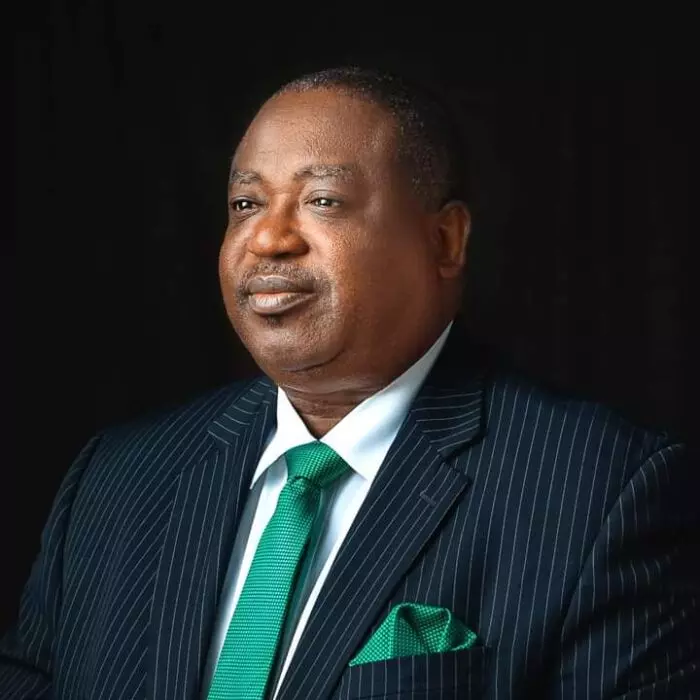
Barrister Caleb Manasseh Mutfwang was born on March 12th, 1965, in Wussasa, Zaria.
Over the years, his exposure has compelled him to seek answers across known divides in order to establish an enabling atmosphere for peaceful coexistence, while respecting the inherent borders of consanguinity imposed by history, in order to ensure the prosperity of the Plateau’s varied peoples.
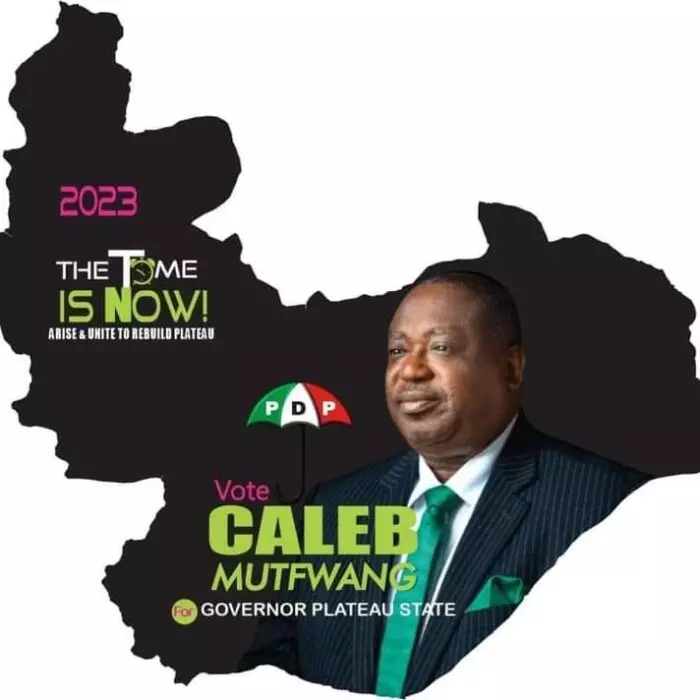
He is the former chairman of Mangu Local Government Area of Plateau State, and also a Barrister Caleb Mutfwang was among the Governorship contestants in Plateau State for the 2023 election, he won the Peoples Democratic Party, PDP, governorship primary ticket of the State.
After finishing from Boys Secondary School, Gindiri in 1982, he worked briefly with the then Federal Office of Statistics and the defunct Nigerian Bank for Commerce of Industry (NBCI) before continuing his educational pursuit at the School of Preliminary Studies, Keffi from 1983 to 1984.
He then attended the University of Jos from 1984 to 1988 and the Nigerian Law School from 1988 to 1989, after which he was admitted to the Nigerian Bar as a Solicitor and Advocate of the Supreme Court on December 14, 1989.
Caleb Mutfwang Career
From 1990 until 1995, he worked as a private and active lawyer for the Kaduna-based law company BYOMA, ICHABA & CO (FIDELITY CHAMBERS).
On the 21st of March, 1996, he founded Caleb Mutfwang & Co, a firm of legal practitioners registered with the Corporate Affairs Commission.
From 2002 to 2004, he worked as the Deputy General Manager, Legal & Secretarial Services at Peugeot Automobile Nigeria Limited in Kaduna.
From 2003 to 2004, he served as Acting Company Secretary. The Nigerian Bar Association, particularly the Section on Business Law, the International Bar Association, the Christian Lawyers’ Fellowship of Nigeria, the Christian Legal Society of America, and the Nigerian Institute of Management are among the professional bodies to which he belongs.
He’s also a graduate of Hawaii’s famous Haggai Institute for Leadership Development. In addition to serving on the boards of various firms, he provides legal services to individuals, corporations, federal ministries, international agencies, and governments.
Barr Caleb Mutfwang Served the mandatory National Youth Service Corps (NYSC) programme in Kaduna State during which he was elected by his colleagues as the President of the Nigerian Christian Corpers’ Fellowship in Kaduna State.
From secondary school to NYSC, he had several leadership positions. Served on the Endowment Fund Committee of the Karl Kumm University formed by the Church of Christ in Nations, among other positions of leadership in the Church and society (COCIN).
Caleb Mutfwang: The Great Politician
In pursuit of this noble objective; to guarantee the prosperity of the diverse peoples on the Plateau, in 2011 he offered to represent the good people of Mangu/Bokkos in the House of Representatives, under the platform of the Peoples Democratic Party (PDP).
Mutfwang narrowly lost the primary election to the eventual winner, however in furtherance of his belief in politics without bitterness, and in demonstration of team spirit; he actively mobilised resources for the eventual victory of his opponent at the primaries, as well as other PDP candidates in the general elections which enhanced his popularity greatly.
Unsurprisingly, he was literarily called upon by the great people of Mangu Local Government Area in 2014, to run for the office of the Chairman of the Local Government Council; which he overwhelmingly won in all but two of the polling units with an unprecedented vote margin of over 70 thousand votes!
He was elected as the Secretary of the Association of Local Governments (ALGON) in Plateau State, a body that has remained cohesive within the PDP in the State.
On March 10, 2022 in Mangu Local Government Area, he declared his intention to run for the governorship election under the Peoples Democratic Party (PDP) in Plateau to provide enduring security that will stabilize the economy of the state for the prosperity of the people.
He encouraged Plateau people to remain united and chase the All Progressives Congress (APC) out of power in Plateau and at the national level in 2023. He noted that the Plateau people will not be disappointed if given the mandate to lead them in 2023 as their governor.
The Plateau PDP had 18 gubernatorial aspirants of which Dr. Timothy Golu, Chief Latep Dabang, Pastor Vincent Nanle, and Mr. Jack Yakubu Pam withdrew from the contest.
Bode Ogunmola, the returning officer who declared the result, claimed that Mr. Mutfwang received 252 votes to win the governorship primary over the other 13 candidates that ran in the election.
Mr. Ogumlnmola made the announcement that Kefas Ropshik received 113 votes and finished in second place. He also noted that 604 delegates were scheduled to take part in the election; however, only 601 of them showed up and cast their votes.
In addition to this, he mentioned that out of the total votes cast, 593 were genuine votes while only eight were invalid votes.
He made the announcement, “Mr. Caleb Mutfwang having scored the highest votes is today declared governorship candidate of the Peoples Democratic Party in Plateau.” [He] said this because Mr. Mutfwang received the most votes.
According to the results that were revealed, Alfred Damial finished in third place with 92 votes, which was followed by Dauda Gotiring who received 88 votes, and Jonathan Akuns who received 16 votes. Nine people voted for Satu Jewun, while four people voted for Shedrack Best and four people voted for Bagudu Hirse.
On June 22, 2022, Mrs. Josephine Piyo, a grassroots politician is a former Chairperson of Riyom local government area of the State as well as a former lawmaker in the state house of assembly was unveiled as Barr Caleb Mutfwang running mate ahead of the 2023 general elections.
The Achievements (Feats) of Caleb Mutfwang
His term in office was unfairly shortened by the APC-led government after he was elected for a three-year term. Despite this move backward, during his brief term of one year and three months, he was able to accomplish the following:
Purchased from a source and dispersed over 30 trucks of fertilizer to farmers in polling units, with a subsidy of 40% off the market price;
Over 30 law school students received allowances, and one impoverished Mangu LGA law school student received full tuition;
Assisted a number of others, including Mangu LGA extraction PhD students.
Long vacation lessons were organized for Mangu LGA SSCE students.
Backlog of worker leave and study allowances has been cleared;
About 50 kilometers of rural roads were graded;
12 youngsters were sponsored to attend the Peugeot Training School with the goal of establishing a modern mechanic village in Mangu;
Several women and girls were sponsored for skill acquisition training in Mangu and Jos.
The LGA’s Chairman’s Guest House was remodeled;
Within Mangu town, I was in charge of supervising and ensuring the completion of a 5-kilometer road network;
Transformers were purchased to improve rural energy supply to several locations;
Planned and hired consultants for the construction of a new ultra-modern agro-allied market in Mangu as part of a public-private partnership;
Contractors have been selected and mobilized for the construction of a one-thousand-seat multi-functional theater in Mangu town.
Initiated proposals for the Mangu and Panyam Districts’ Town Planning Surveys.
Personal Life
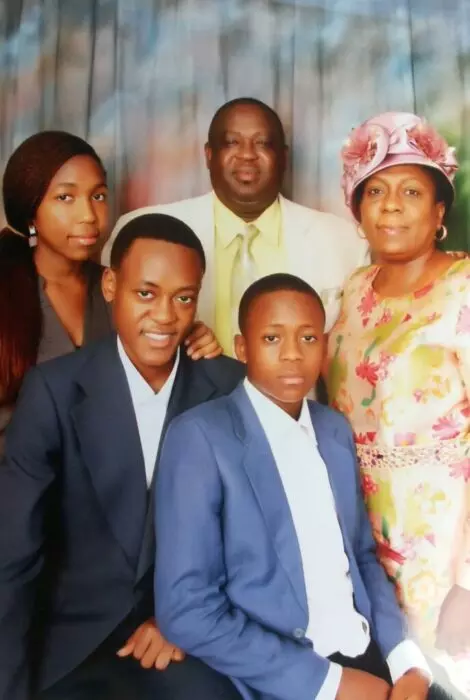
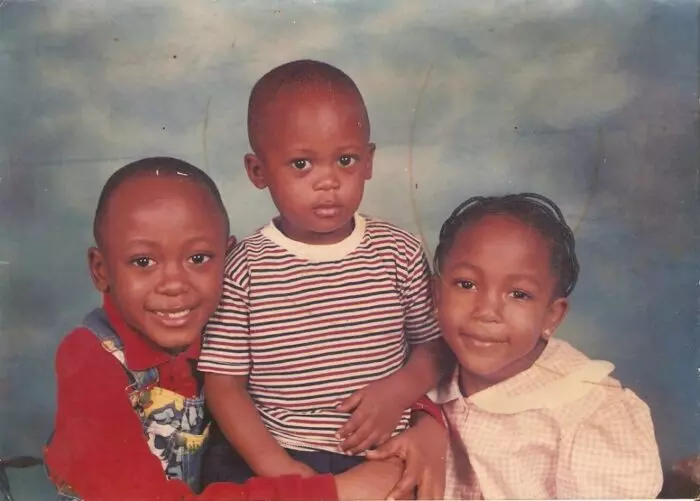
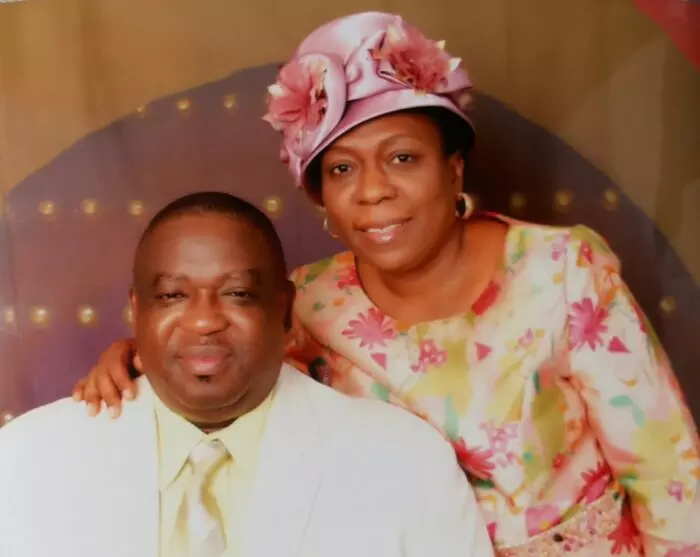
Caleb Manasseh Mutfwang Esq. is married to Helen and together they have three children Timothy, Nanbam, and Enoch.
Helen Mutfwang; formally Helen Ingbo Goldie, was born in Port Harcourt, Rivers State; to John & Juliet Goldie in 1967. She hails from Brass LGA, Bayelsa State, and first made her way up North to Kaduna in 1991; for her youth service under the NYSC Scheme after she had finished her Law School in Lagos State.
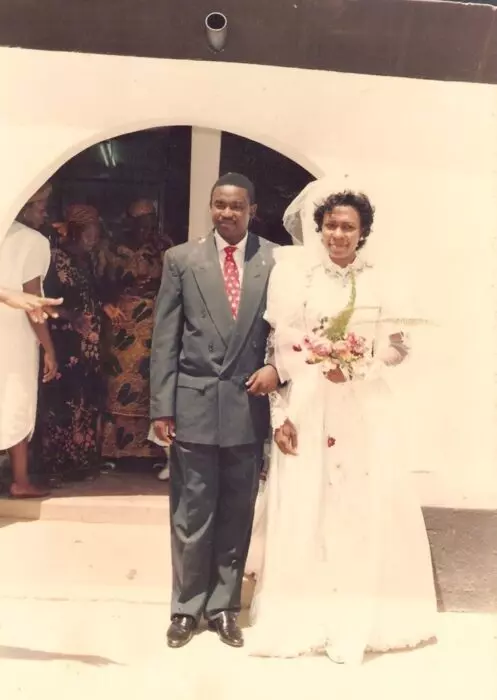
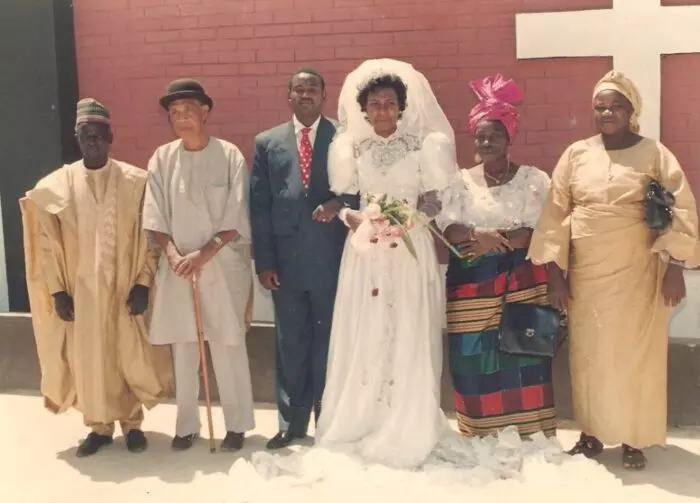
She would eventually meet Caleb in Kaduna; who as stated earlier was mandated to serve in Kaduna as well. They got married on the 13th of February, 1993, a true testament to the NYSC’s development of common ties among the youths of Nigeria; and promotion of national unity, irrespective of cultural or social background.
Caleb Manasseh Mutfwang and Helen Mutfwang Wedding Picture from 1993Caleb Manasseh Mutfwang and Helen Mutfwang Wedding Picture from 1993Family PictureOld Family PictureTimothy, Nanbam and Enoch
From secondary school to NYSC, he had several leadership positions. Served on the Endowment Fund Committee of the Karl Kumm University formed by the Church of Christ in Nations, among other positions of leadership in the Church and society (COCIN) where he worships.
Having lived outside Plateau State for a good part of his life, mostly in Kaduna State; life has taught him to appreciate the dynamics of living in a multicultural environment with the attendant challenges of managing religious and ethnic fault lines.
Over the years, this exposure has constrained him to seek solutions to these divides, in order to provide the enabling environment for mutual co-existence; while recognizing the natural boundaries of consanguinity created by history, so as to guarantee the prosperity of the diverse peoples on the Plateau, who are dear to his heart.
Barrister Caleb Manasseh Mutfwang is well-known as a committed Christian who loves humanity. He is clear-minded, credible, and capable of leading the process to raise the bar in governance; and thereby raising Plateau to a new citadel of glory, in line with our collective dreams of a peaceful and prosperous Plateau.
Dr. Nentawe Goshwe Yilwatda is a politician, philanthropist, digital system and energy engineering expert, community developer, and university scholar with the Federal University of Agriculture, Makurdi with over 29 years of experience working as a consultant with the international development partners, and the public and private sectors.
Dr. Nentawe Goshwe Yilwatda was among the Governorship contestants in Plateau State for the 2023 election, he won the APC Governorship primary ticket of the State.
Early Life and Education
Dr. Nentawe Goshwe Yilwatda was born in Dungung, Kanke LG to the family of a clergyman, the Late Rev, and Mrs. Toma Yilwatda on the 8th of August, 1968.
Dr. Nentawe Goshwe Yilwatda’s educational career started with him passing the First School Leaving Certificate at LGED Primary School, Dungung in 1981, and GCE (O/Level) in 1986 from the prestigious Boys’ Secondary School, Gindiri.
He got his First Degree in Electrical/Electronic Engineering in 1992 from the Federal University of Agriculture, Makurdi, and his Master of Engineering and Ph.D. from ATBU Bauchi and the University of Nigeria, Nsukka respectively where he specialized in Digital systems engineering.
He was also trained by the United Nations University International Institute for Software Tech., Macau, China on Building Electronic Governance Structure.
In addition, Dr. Nentawe Goshwe Yilwatda received expert training from the Association of African Universities (AAU) on Sustainable Development in Africa using Higher Education and was part of the implementation team.
He has received specialized training from AfriNIC, Mauritius, and NetTel@Africa, Nairobi Kenya that helped in the early transition of Internet Protocol Address Users in Africa, and Capacity Building and Knowledge Exchange in ICT Policy, Regulation, and Application.
In addition, he has been trained by the MacArthur Foundation USA, KFI International, the National Universities Commission, the Association of Vice-Chancellors of Nigerian Universities, the Education Trust Fund, the UNDP, and the World Bank.
Working Career of Prof. Nentawe Goshwe Yilwatda
Dr. Nentawe Goshwe Yilwatda started his working career as an Assistant Lecturer in 1995, in the Department of Electrical/Electronic Engineering, Plateau State Polytechnic, Barkin Ladi after which he moved to the Federal University of Agriculture, Makurdi as a Graduate Assistant in 1996.
In the University system, Dr. Nentawe Goshwe Yilwatda has over 25 years of teaching, research, and project implementation in the areas of software engineering, and sustainable development using passive and active renewable energy technologies.
He served the University for 12 years as the pioneer Director of Information and Communication Technology and was a member of the University Senate in addition to serving in many committees both in the University and at the national level.
He has been honoured by the University as the best staff of the year, Best Director of the year, and also a national project award winner among many other awards.
Dr. Nentawe Goshwe Yilwatda has also graduated many Masters and Ph.D. students and has many publications to his name.
Impactful Contributions at National Level
Nentawe has participated in some of the leading ICT reforms that enhanced the transparency of government accounts and strengthened institutions.
He was part of the experts that were engaged between 2003 and 2005 as consultants to work with Alteq Ltd/European Union to conduct a needs assessment and served as a project consultant on the first Integrated Financial Management Information System for the Ministry of Finance, CBN, FOS, OAGF, Debt Management Office, OAuGF, National Planning Commission and Budget Office.
This gave him the opportunity to have a firm knowledge of the revenue and financial framework of Nigeria, the regulations, policies, and opportunities.
Dr. Nentawe Goshwe Yilwatda was also part of the team that worked on the grant by the World Bank to implement a Unified Network and ICT Solution for Nigeria’s Education and Research Network (NgREN) through the World Bank STEP-B project.
He was the lead consultant for UNICEF A – Field Office between 2005 and 2012 in a turnkey project that covered the design, training of Chain Officers and UNICEF Consultants, and installation of alternative energy sources for cold chain systems for Enugu, Cross Rivers, Rivers, Akwa Ibom, Bayelsa, Benue, Ebonyi, Imo, Abia and Anambra states.
This project in addition to the rich engineering experience exposed him to the weaknesses inherent in our health and educational infrastructure, especially in the North Central, South East, and South-South geographical zones.
Dr. Yilwatda was a member of the Federal Government Energy Research delegation to the USA and Canada on two separate occasions to negotiate technology transfer and acquisition opportunities for Nigeria.
He subsequently served in the implementation team of the Cuban Government/ECN programme that promoted energy Efficiency in the Residential and Public sector.
He was the lead consultant for the Energy Commission of Nigeria, Abuja/UNDP which conducted the Energy and Economic Audit of 34 selected factories in Nigeria in addition to his experience in assessing the economic resources of some West African countries.
He also served as a consultant for Gante Engineering on energy efficiency and power quality assessment of many factories in Nigeria.
Dr. Nentawe Goshwe Yilwatda was part of the PAWA 774 project which is a private sector-led imitative to deploy clean, eco-friendly electricity that is connected using micro-grid to communities.
He also worked with Tech-Ville USA to train 100 software and renewable energy engineers in Ondo state for international certifications and human capital export.
Dr. Nentawe Goshwe Yilwatda was appointed by Mr. President in 2017 as a Commissioner with Independent National Electoral Commission and posted to Benue State as the Resident Electoral Commissioner in July 2017.
As an INEC commissioner, Dr. Nentawe Goshwe Yilwatda championed IDP voting rights and was a member of the committee that developed the operational framework and guidelines for IDP voting in Nigeria.
He spearheaded working with International Partners and civil society organizations to innovatively set up schools for IDP kids and empowered women with skills that metamorphosed into a cooperative to reduce poverty in the camps.
He worked with the office of the United Nations Representative to West Africa and the Sahel in Senegal and other partners to hold 66 town hall meetings to negotiate peace with critical political actors in Benue state which led to the first-ever peaceful election since 1999.
Dr. Nentawe Goshwe Yilwatda was also part of the team that was sent on the study tour of the Independent Electoral Commission (IEC) of South Africa to study experiences and best practices as part of the preparation for the 2019 general election.
He was a member of the team that worked with clusters of people living with disabilities to develop operational frameworks and guidelines for PWDs.
Dr. Nentawe Goshwe Yilwatda is known for hardstand in supporting free, fair, and credible elections and has been drafted to participate in some of the most difficult elections across the country.
Among them are the Anambra state Governorship Election 2017, the Recall of Senator representing Kogi West 2018, the Osun Governorship election 2018, the Benue state Presidential and Governorship elections 2019, Rivers state Governorship and House of assembly election 2019, and the Cross River North Senatorial Election 2020.
Impacts as the Son of the Soil on the Plateau
He is a lover of the academic development of his community and is committed to building the younger generation by lifting them out of poverty.
In the last 12 years, Dr. Nentawe Goshwe Yilwatda has been providing scholarships and paying JAMB for 200 kids from Kanke and Pankshin annually in addition to hiring teachers to train them.
He supports those that pass JAMB to secure admission into higher institutions.
In 2018, he trained 100 youths from Kanke and Pankshin in animal husbandry which was anchored by Veterinary Research Institute, Vom.
All the trainees that participated in the 10 monthly internships were empowered to set up their piggeries.
In 2019, Dr. Nentawe Goshwe Yilwatda distributed 112 laptops to indigent students of higher institutions in Pankshin and Kanke.
Nentawe is also the co-founder of the Bikatki cooperative which supports rural poor farmers to access credit to expand their farms in order to reduce poverty and have a sustainable income.
Dr. Nentawe Goshwe Yilwatda has spearheaded the building of classrooms in primary schools for indigent and hard-to-reach communities, and also participated actively in the development of the community secondary school in his village.
Politics
In 2023, Yilwatda was the governorship candidate of the All Progressives Congress (APC) in Plateau State, but lost at the poll to Caleb Mutfwang of the Peoples Democratic Party (PDP).
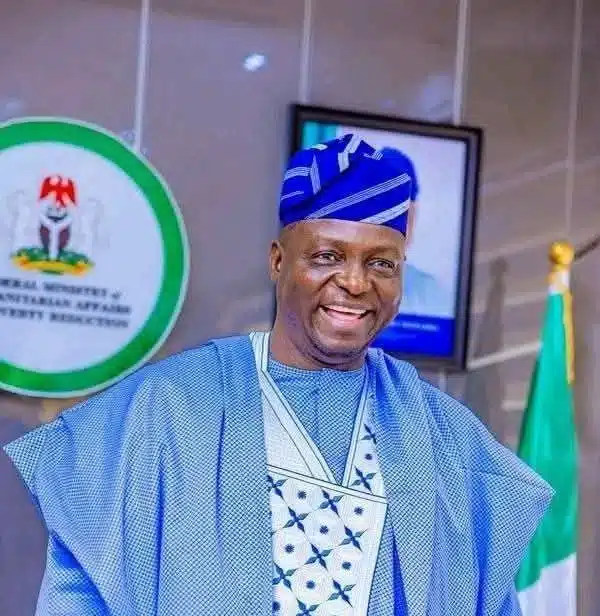
Until his emergence as APC national chairman in 2025, Yilwatda was the minister of humanitarian affairs and poverty alleviation appointed by President Bola Tinubu in 2024. He replaced Betta Edu, who was suspended from heading the ministry in January 2024, following an allegation of diversion of a N585 million federal government grant meant for the vulnerable into private accounts.
In addition to his ministerial role, he serves as a member of the Presidential Economic Management Team and chairman of the Euro-African Dialogue on Migration and Development.
Personal Life of Prof. Nentawe Goshwe Yilwatda
Dr. Nentawe Goshwe Yilwatda is a registered Engineer with the Council for the Regulation of Engineering in Nigeria (COREN), a member Institute of Electrical and Electronics Engineers, a member of the Nigeria Society of Engineers, a member of Solar Society of Nigeria and has enjoyed many awards and recognitions in the area of ICT and electronic engineering.
In 1971 Alaafin Adeyemi III became king. He succeeded Alaafin Gbadegesin Ladigbolu II during the governorship of Colonel Robert Adeyinka Adebayo, after the end of the Nigerian Civil War. In 1975, the Head-of-State, General Murtala Ramat Mohammed included Oba Adeyemi in his entourage for the hajj. He was chancellor of Uthman dan Fodiyo University in Sokoto from 1980 to 1992. In 1990 President Ibrahim Babangida appointed him Amir-ul-Hajj in recognition of his commitment to the consolidation of Islam in Nigeria.
Alaafin Adeyemi was a lover of boxing, as he was a boxer before becoming Alaafin. He remains the first educated Alaafin to date.
Oyo city today is the centre of a flourishing civilization from its inception under the children of Atiba, Adelu, Adeyemi I, Agogo Ija, Ladigbolu I, Adeyemi II, Ladigbolu II, and Adeyemi III.
Great economic strides, two universities, several tertiary institutions, and health, and industrial facilities adorn the town in its march to a greater height.
The new express road is a marvel, and Oba Adeyemi III, C.F.R., J.P, LL.D, S.A.P), has assumed the legend of his ancestors with a perfect grasp of the perplexed maze of political, monarchical and economic vicissitudes of the age; an enigma and incarnation of the wholesome attitude of Oluaso.
Lamidi Olayiwola Adeyemi III the immediate past Alaafin of Oyo was born on the 15th of October 1938, to Raji Adeniran Adeyemi the former Alaafin of Oyo who was deposed and exiled in 1954 for sympathizing with the National Council of Nigerian Citizens (NCNC).
Childhood and Education
Lamidi Adeyemi III began his education at a Quranic School in Iseyin, a city not too far from Oyo town. He then went back to Oyo Town where he stayed with the headmaster, of St. Andrews Primary School proceeding thereafter to live with the Alake of Egba, Oba Oladepo Ademola, in his palace.
His education met a temporal end after Oba Ademola was forced to abdicate his throne to live in exile at Osogbo due to the 1947-48 demonstration of Egba women against “Tax without representation” led by Mrs. Funmilayo Ransome Kuti.
His father sent for him in 1948 and later sent him to live with Sir Kofoworola Adebayo Abayomi in Keffi, Ikoyi, Lagos. While in Keffi, he attended Obalende Modern School, He later attended Tinubu Methodist School.
After his primary education, He was offered admission into Igbobi College and St. Gregory’s College, Obalende. He chose to attend St. Gregory’s College Obalende.
He left St. Gregory’s College with very good grades and had chosen to study Law, however, his quest for Law was halted as his father was deposed as the Alaafin on the 14th of February 1946.
Lamidi was then offered a job at the Royal Exchange Assurance in Lagos, while working at the Royal Exchange He wrote articles under pen names in newspapers, writing about himself and his experience.
One of his numerous articles was entitled” I SHALL BE GREAT” in 1968 and a year later, he wrote yet another one: “I shall be the next Alaafin”. He wrote critiques of how the Nigerian teachers were treated, having been inspired by the state in which he saw one of his old teachers in a tattered shirt and tie. He wrote yet another entitled. “Women Liberation: A misnomer in Yoruba land”.
Shortly after his stay at the Royal Exchange Assurance, he was promoted to the 14 Floor into the specialist area of obligatory Facultative Insurance and Internal memo drafting.
He began to earn lots of money but his father gave strict instructions that he must invest every penny that came his way, therefore, venturing into business buying wrecked cars to repair and resell.
The Alaafin’s Ascension to the Throne
The Alaafin, Lamidi Adeyemi III was coronated as the traditional ruler of Oyo in 1970 succeeding Alaafin Gbadegesin Ladigbolu II during the governorship of Colonel Robert Adeyinka Adebayo, after the end of the Nigerian Civil War.
As the usual practice in the selection of the new Alaafin, after the death of Alaafin Bello Gbadegesin, the Oyomesi contacted Oranlola (Baba Iwo) of Alowolodu to become the Alaafin.
He then called for a meeting within the royal family. He informed them of his meeting with Oyomesi and that he suggested his son, Sanda ‘Ladepo.
All the members of the family agreed to this except Baba Salami Dudu. Baba Salami Dudu suggested Prince Lamidi Adeyemi a son to Alaafin Adeyemi Adeniran ll.
The contention for the throne of the Alaafin became more intense to the extent that some of the princes from the larger royal families in Oyo became contenders. Among these were Aremo Sanni Gbadegesin, Prince Olanite Ajagba, Prince Afonja Ilaka, and Prince Sanda ‘Ladepo Oranlola.
Lamidi Adeyemi was chosen by the kingmakers on November 18, 1970, and then moved into the palace after completing the necessary rites under the tutelage of the Oyomesi.
In the process, he was inducted into the mysteries of various gods like the Ifa mysteries, and the Sango mysteries. He was also made to undergo these inductions in order to be the direct representative of these deities on earth.
An impressive ceremony was held at the Durbar Stadium, Oyo town, to coronate Lamidi Adeyemi III as the Alaafin of Oyo. He was presented with the staff of office as the Alaafin of Oyo by the then military Governor of the Western State, Colonel (later retired General) Adeyinka Adebayo.
Alaafin’s Contribution To The development of Yoruba land and Nigeria.
In 1975 the head of state General Murtala Ramat Muhammed included the Alaafin in his entourage to the hajj. He was also honored with the national honor of CFR at the National Theatre, Iganmu, Lagos, in 1979.
In 1980, the Federal Government appointed Kabiyesi Alaafin Lamidi Adeyemi III as the pioneering Chancellor of the newly established University of Sokoto, now Uthman Dan Fodio University, Sokoto, for a first four-year tenure. At the expiration of that first tenure, the senate and council of the University recommended him for another term. The president and visitor to the university graciously approved the request, thus he was appointed for a second term. And at the expiration of the second term, in an unprecedented manner, has was appointed for yet another term, the third term, thus giving him a total of 12 years as the Chancellor of the university.
In January 1988, The Alaafin installed Chief MKO Abiola as the Aare Ona Kankanfo in recognition of Abiola’s contributions to the social, economic, cultural, and political development of Yoruba land and Nigeria at large.
In 1990 the Federal Government under the administration of General Ibrahim Babangida, appointed the Alaafin as the Amiru Hajj operation to lead the Muslim faithful in the 21 states of the federation in recognition of his commitment to the consolidation of Islam in Nigeria.
As one of the paramount foremost traditional rulers in Yoruba land, The Alaafin used his position to better the lots of many Obas, lifting many non-crown wearing Obas to the status of beaded crown wearers and consistently fighting for the improvement of their (the Obas’) welfare at all times.
Personal Life of Alaafin Adeyem III
The Alaafin is married to 13 wives which include Ayaba Abibat Adeyemi, his senior wife, who he used to attend most events with her, or one of the twelve junior wives that he was also married to.
His other wives are Ayaba Rahmat Adedayo Adeyemi, Ayaba Mujidat Adeyemi, Ayaba Rukayat Adeyemi, Ayaba Folashade Adeyemi, Ayaba Badirat Ajoke Adeyemi, Ayaba Memunat Omowunmi Adeyemi, Ayaba Omobolanle Adeyemi, Ayaba Moji Adeyemi, Ayaba Anuoluwapo Adeyemi, and Ayaba Damilola Adeyemi.
Death and Legacy
Alaafin Lamidi Adeyemi joined his ancestors in the late hours of Friday, 22nd of April, 2022 at the Afe Babalola University Teaching Hospital, Ado Ekiti at the age of 83
Alaafin of Oyo was the third from the Adeyemi Ruling House.
The remains of the top Yoruba traditional ruler were brought to Oyo in the early hours of Saturday 23rd of April, 2022 and traditional rites began.
He was 83 years old and the longest-reigning Alaafin ever, having ruled for 52 years.
Thanks for visiting My Woven Words. We are passionate about historical heritage and we are dedicated to supplying nearly extinct historical and cultural contents to the world on a platter of gold.
Support us on our quest with Your donations by clicking the donate button below
A well-designed website can help your business/organization reach millions of people worldwide and make you appear professional like a global brand.
Let Morrebs help your business/organization reach an international audience with a world-class highly responsive and SEO-optimized website designed especially for you.
Attached below is a list of 10 websites developed by Morrebs ICT Solutions Limited:
A Community Blog for Inside Jos – www.insidejos.com
A Construction Engineering Website for Bakad Engineering Services – www.bakadng.com
A Book Website for Bliss Mangai – www.blissmangai.com
A Poetry Blog for My Woven Poetry – poetry.johnsonokunade.com
A website for Kolseg Design Services – www.kolseg.com
A Farm Website for Tasie Farms
An e-Commerce Website for Timranpels Collections
An NGO Website for 4H Foundation, Nigeria
Listed below are 10 Reasons why you need a Website.
YOUR CUSTOMERS EXPECT IT: your tech-savvy customers expect you to have a website to find more information about your business. As for you, your website can help you generate business, increase brand recall value, promote goodwill in front of customers and target audience, as well as deliver strong marketing messages. Having a website is not just about having an online presence. Think of it this way, your website delivers your marketing message 24 hours, 365 days a year! So, if you don’t have a website, what are you waiting for? Get one! Your customers will thank you for it.
OFFERS SOCIAL PROOF: Without a website, how will people know that you’re a real business? How will they know that you’re not just some random person operating out of their mom’s basement? A website is essential for offering social proof and establishing your credibility as a business. It shows potential customers that you’re serious about what you’re doing and that you have something to offer. Just think about it: would you be more likely to buy from a company with a website or one without? The answer is obvious.
CONTROL THE NARRATIVE: While it is difficult to control what people say about you, you can influence your brand perception by writing your own story on the website. A website is a far more efficient way than print ads when it comes to helping brands spread their message, portfolio, clientele, culture, vision, and mission. So, ensure that you’re always providing the most accurate and up-to-date information about your business or brand. If potential clients can’t find a website that gives information about what you do, guess who will get the offer, patronage or client? Definitely, not you! But that competitor next door, who has an awesome website developed by Morrebs.
MAXIMIZE ROI: If you’re running a business, one of your top priorities is probably maximizing return on investment (ROI). And if you have a website, you’re in luck, because there are a number of ways to ensure that your website is working hard to bring in maximum ROI. A website developed by Morrebs lets you be in front of thousands of more potential consumers without spending much. It can help you reach a wider target audience for promoting your services or products. The content on the website also influences buying decisions and commercial transactions, no matter which industry you are in.
WEBSITE ADDS TO COMPANY’S CREDIBILITY: Back in the day, when a company wanted to be seen as credible, they would advertise on NTA or put up a billboard. But these days, people are much more likely to research a company online before making a purchase – and that means having a website is essential. A website is like a virtual business card for a company. It’s one of the first things that potential customers will look at when they’re considering doing business with you. That’s why it’s so important to make sure that your website is professional and adds to your company’s credibility. People are likely to engage with a company they can trust, and the website is the stepping stone towards building that relationship.
HAVE MORE CONSTRUCTIVE CONVERSATIONS: Too often, conversations devolve into pointless arguments. But if you have a website, you can avoid these pitfalls by having more constructive conversations. After all, a website is simply a platform for sharing your thoughts and ideas with the world. By taking the time to craft a well-thought-out website, you’re effectively forcing yourself to have more constructive conversations. This is because you’re forced to articulate your thoughts in a clear and concise manner. A website allows you to have more constructive conversations with your clients, customers, and colleagues. Since consumers these days expect immediate gratification, at Morrebs we build website with simple and short information.
COMPETE WITH OTHER INDUSTRY GOLIATHS: Did you know that having a website gives you a fair chance to compete with the giants of your industry? At Morrebs, we build Search Engine Optimized website is created, it can rank higher and be at the right place at the right time. Not only does it give you a platform to sell your products or services, but it also allows you to reach a wider audience. And, perhaps most importantly, it enables you to compete with other industry giants – even if they have significantly more resources than you. By leveling the playing field, a website allows small businesses to thrive in today’s competitive landscape. Therefore, if you don’t dominate the Internet with your website built by Morrebs, you are giving your customers a reason to buy from the competition.
FADING SOCIAL MEDIA REACH: If you think having a page on social media is enough to attract new customers, think again. It is not enough to have a Facebook page, because every other business has one. A website is a great way to control your own content and ensure that your audience can always find you. It’s also a much more reliable platform – while social media platforms come and go, your website will always be there as long as you keep it up. It also allows you to track analytics and see who is visiting your site and interacting with your content. Plus, with user-friendly websites designed by Morrebs, it’s easier than ever to create a beautiful website that reflects your brand. So, if you’re looking to have more control over your online presence, having Morrebs ICT Solutions Limited develop a website for you is the way to go.
EXPAND YOUR WORKING HOURS: Thanks to the internet, that scenario is now a reality for many people. With a website, you can reach a global audience 24 hours a day, 7 days a week. Whether you’re selling products or services, your website will be working for you even when you’re asleep. And best of all, you can set up your website once and let it run itself; there’s no need to constantly be putting in new hours or working late nights. Having a website means that your content is available to users anytime during the day, at their convenience. So whether someone visits your website in the dead of the night or during the day, in some way you’re always interacting with them, and can say goodbye to that ‘closed for business’ sign. It also is a step towards effective customer service and relationship building, especially if you have AI-powered chatbots enabled on your website that can solve the basic problems of your customers when they need it the most.
SHOWCASE YOUR OFFERS: It cannot be stressed enough that a website is the first interaction of your target audience with your brand. How you position your business is totally in your control with a website developed for you by Morrebs ICT Solutions Limited. By featuring product information and images on your website, you can give visitors an overview of what you have to offer without bombarding them with too much information at once. A website provides a convenient platform for customers to purchase your products or services directly, without having to visit your premises in person. As such, a website can be an invaluable tool for promoting and selling your offerings. When building your website, we will also highlight your awards, testimonials, and all the features that can alleviate your visitors’ pain points. This increases the average time your customers spend on the website and perhaps influences their decision to contact you, At Morrebs, we build websites that talk for you.
Conclusion
We are Morrebs ICT Solutions Limited, your preferred ICT Solutions provide. Let’s Work Together to achieve your best! We combine creativity with innovation to make brands and individuals thrive in an age of digital evolution.
At Morrebs ICT Solutions Limited, we are committed to serving you with integrity and respect while we position ourselves as your preferred ICT solutions provider; to emerge as the backbone of ICT solutions in Nigeria and the diaspora.
We are well-posed in helping you attain sustainable and consistent growth by deploying our top-notch knowledge in technology to facilitate superior value, as well as solve real life problems by providing ICT solutions.
Contact us for your website and other ICT services.
Chief Adebayo Olamilekan Israel Popularly known as Adigun Olowe Yorùbá is a 6 years old genius that has been representing the entire Yoruba land with his God’s giving endowment for his passion and preservations of Yorùbá culture.
Oloye Adigun Olowe Yoruba uploaded his first Yorùbá proverb video on all his media handles on the 4th of May 2020 when he was still struggling to understand and pronounce words at the age of 4 years.
Before the age of 5 years, he has gotten the ability to recite over 200 inspiring Yorùbá proverbs and also translate each of the proverbs to English. By the end of 2021, he went ahead to have interview sessions with over 35 notable TV and radio stations across the country.
With the support and close monitoring of his father, Mr. Adebayo Oladimeji, in 2021 at the age of 5, Oloye Adigun Olowe Yoruba started handling the microphone and speaking confidently in front of thousands of people without a single panic.
His performance at the “End SARS” protest in front of thousands of people at the age of 4 years remains evergreen and will never be forgotten in history.
Chief Adebayo Olamilekan Israel Popularly known as Adigun Olowe Yorùbá is currently a nursery two pupil of Tabitha Nursery and Primary school, Felele Ibadan.
Installation as The Odo Agbe-Asaga of Isolu Alade Kingdom, Ibeju Leki Lagos
On Saturday 14th August 2021 Lagos state was agog and History was made at the palace of Oba Babatunde Ishola Balogun, the Onisolu of Isolu kingdom, Ibeju Lekki, Lagos when the traditional ruler conferred a chieftaincy title of Agbe-Asaga of Isolu Alade on a five-year-old Adebayo Olamilekan, also known as Adigun Olowe Yoruba.
In a well-deserved ceremony, for consistently promoting the Yoruba culture, the famous Adigun Olowe Yoruba (an encyclopaedia of Yoruba proverbs), was installed as Ọdọ Agbé Àsà Gá Of Sọ́lú Aládé Kingdom, Ibeju-Lekki Lagos State.
During the installation, Onisolu, said he honoured Adigun Olowe with the chieftaincy title in recognition of his contributions to the promotion of Yoruba cultural heritage.
In response, Adigun thanked the monarch and other traditional rulers present as well as the Isolu Alade chiefs for giving him the chieftaincy title.
Adigun, a five-year-old boy from Fiditi, Oyo State is a nursery two pupil of Tabitha Nursery and Primary school, Felele Ibadan.
Youngest Traditional Title Holder In The World
In World History, it is common to have kings even before the age of 5, King Shah Shapur II of Persia was king even before birth, Alfonso XIII of Spain became a king when he was just a day old, Ivan VI of Russia became king two months old after he was born, and Henry VI of Great Britain was just nine months old when he became king.
King Rukirabasaija Oyo Nyimba Kabamba Iguru Rukidi IV of Tooro Kingdom in Uganda also held the spot of the Guinness Book of Records’ world youngest reigning monarch. He became king in 1995 at the age of 3 after the passing of his father King Kaboyo, King Rukirabasaija being the sole heir to the throne automatically became the king of Tooro Kingdom, Uganda.
In Nigeria, we have Dein Keagborekuzi I who became a king in 1979 at the age of 2 after the death of his father, He was named the world’s youngest crowned monarch in the 1980 edition of the Guinness Book of World Records and was the Chancellor of the University of Ilorin between 2006 and 2015.
Traditional Title can also be inherited but it is often earned than inherited, unlike kingship. You must have done something noticeable in a community or amongst an ethnic group before you can be conferred with a traditional title.
Adigun Olowe is a special child, in an interview with Punch in 2021 he said: “I’m 5 years old but I’m not a kid”.
Around him hangs an aura far beyond his age, he may be 5 years in age but he is Baba with his knowledge of Yoruba Tongue, Proverbs, Panegyrics, Folklore, and culture. The chieftaincy title is well deserved.
Always referred to with the appellation of: “The Youngest Chief in Africa”, Chief Adebayo Olamilekan Israel Popularly known as Adigun Olowe Yorùbá argueably remains the Youngest Traditional Title Holder in The World.
Awards, Features Etc.
He has featured on over 35 notable radio and television including:
BBC NEWS YORUBA
TVC NEWS TV
FRESH FM
SPLASH FM
LAGELU FM
AIT TELEVISION
SPACE FM
JAMZ FM
KINGS FM
INSPIRATION FM
STAR FM
SALT RADIO
PEP RADIO
IMMACULATE RADIO
KAFTAN TV
BCOS TELEVISION
32 FM
VANGUARD NEWS.
AMUTAJERO FM
AGIDIGBO RADIO
NIJAFM
NTA
STRIDE RADIO
Listed below are also few noticeable events he has performed:
• He performed at the popular Olojo festival hosted by his Imperial Majesty Ooni of Ife, ọba Adéyẹye Ogunwusi Babatunde.
• He performed at oke Ibadan festival.
• Culturalty 15th edition. LAGOS.
He has bagged 10 notable awards of recognition for his quintessential role to Yorùbá culture and 5 others to be received in the month of November.
Amongst the numbers of monarchs and celebrities, he has met are listed below.
The Ooni of ife: Ọba Adéyẹye Babatunde Ogunwusi Ẹnitan.
Ọba Muhideen Balogun Ishola bábatunde: The Onisolu of Solu Alade kingdom Ibeju Lekki Lagos. The king conferred him with a chieftaincy title.
Sometimes in June 2021, a post on LinkedIn by Nurudeen Adeyemi carrying the image of Adigun Olowe went viral. The LinkedIn post generated over 900 comments and over 15,000 reactions.
The LinkedIn post claimed that Adigun Olowe Yoruba is a groundnut seller and an orphan who was helped by the MD of FCMB bank, Ladi Balogun.
Different news platforms and blogs went on to carry the news and it went really viral. Some even claimed FCMB gave Adigun Olowe Yoruba scholarship, some claimed he was offered money which he refused.
Responding to the fake news, Adigun Olowe’s Father Mr. Adebayo Oladimeji debunked the news saying he is still much alive and his son is not hawking groundnut.
The counsel to Adigun Olowe Yoruba, Oladotun Hassan Esq said it’s a crime of identity theft he further asked FCMB to come out and address the scholarship claims in 7 days.
The MD of FCMB bank, Mr. Ladi Balogun however in a LinkedIn post distanced himself from the story and the blogger.
Conclusion
Chief Adigun Olowe Yoruba’s Father, Mr. Adebayo Oladimeji in an interview with Punch in October 2021 described his son Chief Adebayo Olamilekan Israel as an inquisitive individual, he stressed how he is always curious even at a tender age and would ask questions about anything he notices.
Father and Son
He went on to talk about how he has a sharp memory and when told a thing, he remembers effortlessly. This encouraged them to keep telling him different Yoruba Proverbs and in no time, he could conveniently recite 200 Yoruba Proverbs and still interpret them in English.
The father of Oloye Adigun Olowe, Mr. Adebayo Oladimeji further added that Adigun Olowe is not just about reciting Yoruba Proverbs and interpreting it but can also recite the anthems of different Yoruba states, and cities including that of Oyo state and Osun state.
Moreso, Adigun Olowe can recite Yoruba Poems as well as eulogize and recite different Yoruba Panegyrics such as Oriki Ibeji (Panegyric for Twins) and many more.
Oloye Adigun Olowe And Family
Also, in the same interview, the mother of Oloye Adigun Olowe, Mrs. Adebayo Olateju mentioned how joyous she was when Adigun Olowe was installed as the Odo Agbe-Asaga of Isolu Alade kingdom, Ibeju Leki Lagos because Chief Adebayo Olamilekan Israel is a miracle child.
She went on to talk about how she had stillborn children before the eventual birth of Oloye Adigun Olowe Yoruba. She appreciated Oba Babatunde Ishola Balogun, the Onisolu of Isolu kingdom, Ibeju Lekki, Lagos for deeming it fit to make Adigun Olowe a Yoruba Chief.
Oloye Adigun Olowe With Parents
She concluded by emphasizing the fact that Oloye Adigun Olowe Yoruba loves the Yoruba language and culture so much and his father noticed that on time which made it convenient for them to help him on his journey to greatness as a great Public Yoruba Figure.
The father, Mr. Adebayo Oladimeji a lover of Yoruba culture himself said he’ll be happy if many more notable Yoruba figures can do all they can in helping Oloye Adigun Olowe Yoruba keep up with the pace in his chosen line.
He said it’ll be a thing of joy for him if Adigun Olowe Yoruba grows up to become a world-class noticeable enthusiast of Yoruba culture such as Professor Oluwole Soyinka or a reputable Yoruba Professor/Academician in a tertiary institution.
Oloye Adigun Olowe Yoruba can be invited to perform in cultural activities, weddings, burials, and different kinds of events.
Adigun Olowe is open for partnership, endorsements, modeling, ambassadorial deals, and all sorts of promotional featuring both in Nigeria and abroad.
Written By Johnson Okùnadé, Content Creator | Passionate ICT Expert | Astute Blogger | Enthusiast Of Yorùbá Indigenous Culture. You can WhatsApp him on +2347036065752
The Founder of Fiditi, Fasoyin Asu being very old was more tired than any of his men. Asu looked forward and he saw one big “ARERE TREE” and he rested his back on it. He said “O RE MI PUPO” E JE KI NFI DI TI NIHIN” (I am very tired. Let me rest my bottom here).
From this statement which Asu made, the town got its name – FIDITI.
Introduction
Fiditi, the home of Fasoyin Asu, a town with awesome history, lots of human resources, a citadel of learning that has churned out lots of alumni who are holding their own globally, a town with the potentials of the Silicon Valley, a spatial location that encourages agriculture, manufacturing, warehousing, distribution, and a transport hub.
Fiditi has always been dubbed the ‘Garden of Eden’ due to the naturally located fruit cultivation, which has made the town a stopover, through the years, to purchase fruits of all types by travelers, with present potential to produce healthy fruit drinks, if willing investors and industrialists give it a thought.
FIDITI in Afijio Local Government Area of Oyo State is a small town located between Ibadan and Oyo. It is bounded in the North by Oyo and the south by Ibadan, Iware in the East, and Ijaye in the West. It is also bounded in the northwest by Ilora and in the northeast by Akinmorin and Awe.
FIDITI is located in the rainforest area. It is about thirty-eight and a half kilometers from Ibadan and about fourteen and a half kilometers from Oyo.
There are some hills and mountains that are not too far from the town, among these are Ajadi hills, Eegbe hill, and Gbenuoke hill. The town herself is situated on a “hill-form” land and there are two simple valleys in both the Southern and Northern parts of the town.
For all her achievement she is known to be a progressive town.
The Relationship Of Alaafin Atiba And Fasoyin Asu In The Nineteenth Century
FIDITI was founded by a good warrior Fasoyin otherwise known as ASU in about 1842. Asu whose presence was a menace to the Fulanis in Ika Odan was driven by the Fulanis to Ijaye.
Asu, a powerful warrior was fearful to the inhabitants of every place he lived. He was fearful to his people because he was very skillful in the use of Yoruba spiritual powers and he was always thirsting for war. By the time Asu was driven away to Ijaye by the fulanis in Ika Odan, Ijaye was under the control of the Alaafin of Oyo.
Alaafin Atiba Atobatele was on the throne by then.
The war chief of Oyo known as the Aare-Ona-kakanfo was the ruler of Ijaye. Ikurunmi was the Aare of Ijaye when Asu was driven to Ijaye.
Kurunmi of Ijaye feared the presence Asu in his town, so he went to the Alaafin of Oyo to report that he would not like Asu to remain in his town and that Alaafin could help him to drive Asu away from Ijaye.
A plan was set to assassinate Asu and that Alaafin should send for him to visit him (Alaafin) at Oyo. Asu was sent for by the Alaafin Atiba. Alaafin had employed able-bodied men to wait at the entrance of the palace for the arrival of Asu. These men were instructed to beat Asu to death as soon as they saw him around the palace.
Asu did not know the plan of the then Alaafin when he sent for him and even if he knew what was to happen, he must not refuse the call of the Alaafin.
Alaafin, the great emperor that cannot be refused by anyone.
Asu went straight to the palace. As soon as the men waiting for him saw him, they all rushed at him and raised up their hands at him to strike him on the head, but they could not raise their hands down again.
Asu got into the palace unharmed. Alaafin was surprised to see him. He made a slight discussion with him and sent him back to Ijaye.
When Asu got back to Ijaye, he was making vegetable gardens occupying lands without the permission of Kurunmi.
Asu, his son; Ogungbile, and his two slaves were behaving in ways to annoy the Aare Kurunmi. Aare-Ona-Kakanfo was never pleased with the presence of Asu in Ijaye town.
Ikurunmi went to the Alaafin again to renew their plan on how to kill Asu or drive him away from Ijaye. This time, they dug a trench in the palace and spread a beautiful mat on it.
Their plan was that as soon as Asu came to Alaafin Atiba he would be asked to sit on the mat and as soon as he sat on the mat he would fall into the trench and he would be quickly buried alive.
Asu was sent for by the Alaafin the second time. Asu did not go alone this time, he went in the company of his dog. As soon as Asu arrived at the palace he was asked to sit on the mat. He sat confidently on the mat and the mat was never sunk.
Alaafin was convinced that Asu could not be easily conquered. Impressed, and with great admiration for Asu, the Alaafin Atiba sent him back to Ijaye unharmed. Aare Kurunmi became more embarrassed when he saw Asu back at Ijaye.
Asu Founded Fiditi As His Own Settlement
One day in the same year 1842, Asu thought of founding a place by himself and his people. He consulted his ‘IFA’ on when he should leave Ijaye to find his own new settlement. He made a sacrifice that Ifa requested him to make. One man, Onipede brought the sacrifice to crossroads.
When Onipede returned from where he placed the sacrifice, there was a heavy downpour of rain. Thunder struck the horse which Onipede rode and the horse was killed.
The event which followed was that Asu and his men left Ijaye. Asu left Ijaye with one hundred and forty men and one hundred and forty women.
The Important Chief who Followed Asu From Ijaye to Fiditi Were:
Chief Ojo Gbagidi who was Abese
Chief Ojo Aikomo the Jagun (chief warrior)
Chief Aina the Baale-Agbe (head of farmers)
Chief Alade, the Ikolaba
Chief Titilola, the Iyalode
Chief Ijeba the Alapo
Chief Akanbi the Apena
Chief Remilekun Alagbara-Egungun
Chief Olufimo the Oluode (head of the hunters)
Chief Olurin the Chief Ifa priest, and
Chief Ogunbiyi, Ajana Oro.
As soon as Alaafin learned that Asu had left Ijaye to find a settlement, Alaafin Atiba sent to Asu not to settle very near him.
Asu had wanted to settle at a place called Agodongbo where the king messengers settle the food which they had collected from different farms.
Baale Agbe Aina Way
Iku Baba Yeye, Alaafin Atiba sent to Asu and instructed that he must not settle there and that he must move southwards and stay at Jobele.
Jobele had once been a very big town but war had reduced the town to a very small town.
From Jobele, hunters had been moving southwards to hunt games. From Jobele, Asu and his men moved to the hunting centre of the hunters.
Before they got to the hunting centre it was late in the evening. Every one of them was very tired.
Asu being very old was more tired than any of his men. Asu looked forward and he saw one big “ARERE TREE” and he rested his back on it. He said “O RE MI PUPO” E JE KI NFI DI TI NIHIN” (I am very tired. Let me rest my bottom here).
From this statement which Asu made, the town got its name – FIDITI.
Asu met some hunters at Fiditi. They were Lanke, Olusiyan, Olantia and Omodeni. These hunters made a small hut and they were hunting around the area.
Asu met some other huts belonging to the Egbas. The hunters earlier mentioned came to Fiditi from Ila Omodeni left Ila because of a chieftaincy conflict.
When Asu and his men arrived at Fiditi, Omodeni and his men thought that Asu and his men brought war, against them so they fled.
One of Asu’s men, Ayoola the father of Opaogun and Ogidi who had once met the hunters and himself was a hunter traced the where-about of Omodeni and his men after which he brought them back to Fiditi.
Asu then explained to them that he had come not to wage war against them but he had come to settle with them. He swore that he would live in peace with them but the people still feared Asu because Asu was interested in warfare.
At last, the hunters accommodated Asu and his people and they continued to live in peace.
The Effect Of Asu’s Departure From Ijaye
Asu’s departure from Ijaye led to a mass exodus of people from Ijaye to Fiditi – Asu’s new settlement.
Ikurunmi was not pleased with the mass exodus of his people to Fiditi. Ijaye with the help of the Oyo army waged war against Fiditi.
Asu was never embarrassed of war in fact he looked forward to fighting battles.
He had a charm which he made with a snake called ‘’OLOKETE’’. Anywhere he dropped the ‘Olokete’ snake big and small snakes – poisonous ones will be coming out from Olokete and would begin to bite the enemies. With the help of Olokete snake, Asu won every war that arose during his lifetime.
As time went by Asu became very old. After about five to seven years of Asu’s arrival at Fiditi he died at a ripe old age.
After his death, the Ibadan inherited his powerful Olokete snake. They inherited the snake because Ibadan helped Asu during the war between Ijaye/Oyo and Fiditi.
After Asu’s death, Fiditi was brought under the Administration of Ibadan on 15th August,1893.
Earliest Fiditi Rulers
Asu the founder of the town was supposed to be the first ruler of Fiditi but he spent most of his time on warfare. He was recognized as the head of his community but he never ruled his people properly as a king for long.
Ogungbile, Asu’s eldest son was supposed to rule after the death of his father but due to his failure to yield to the advice of his elders, he was killed by the enemy of his father Kurunmi of Ijaye.
Ikurunmi pretended to be a friend of Ogungbile. He sent for Ogungbile to visit him at Ijaye: The elders advised him not to go but he would never take their advice.
He visited Ijaye and as soon as Ikurunmi saw him he ordered his men that Ogungbile should be killed.
Alayeyi, The First Baale Of Fiditi
Alayeyi was the first Baale of Fiditi. He reigned from 1860 to 1893. Alayeyi was a grandson of Asu. He was the son of Asu’s daughter.
His appointment as the first Baale of Fiditi was from The Basorun of Ibadan. Alayeyi was a brave hunter. He had a friend who was a hunter like himself.
When he became the Baale of Fiditi, he sent for his friend Alade who was a native of Ogbomoso. The Baale made Alade head of his army (Balogun).
Alayeyi and Alade had been friends since the Ikoyi war in which both of them took part. Alade accepted the honor done to him by his friend. Alade left Ogbomoso for Fiditi where he became chief Balogun.
Alayeyi also nominated Olonade as his Otun (right-hand chief). Alayeyi’s reign knew no peace. There was war here and there. Alayeyi reigned for about twelve years before he died.
After Alayeyi’s death, there was confusion on who would be the next Baale. Asu’s sons remaining were young to be rulers.
Alade Of Ogbomoso
After a long period of deliberation by the kingmakers, Alade the Balogun who was Alayeyi’s friend from Ogbomoso was selected and installed the next and second Baale of Fiditi. Alade did not rule for long before joining his ancestors.
Alade ruled for a period of three years 1893-1896. When Alade died, his death was not announced until after three years.
His corpse was embalmed in the Yoruba way.
Ogbomoso: Home of The Brave
Omirinde Son of Asu
After the death of Alade, Omirinde son of Asu was selected and installed the Baale of Fiditi.
When Omirinde became the Baale, Balogun Chieftaincy moved to Alade’s house again. Adelakun son of Alade was made the Balogun.
Omirinde also reigned during the war. He went to Ikirun war where he died in about 1900. In the same year, his brother Ogundele was installed the Baale Fiditi.
Ogundele Son of Asu
Ogundele like his father, Asu, was a brave warrior, clever and skillful in Yoruba spiritual powers. Before he was finally selected as the Baale, Biodun and Lajide competed with him, both of them ran to Ibadan to gain the favour of The Basorun of Ibadan but at last Ogundele was installed.
During Ogundele’s reign, Adisa was the Balogun, Olajide was installed as the chief priest of Orisa Obanimoro and Pakuda was installed as the Otun.
Ogundele had a peaceful reign and his people loved him. He discouraged laziness and theft among his people. No thief was brave to enter his town during his time. He encouraged the religion of any choice. He died on the 13th May, 1927.
Political And Economic Achievements
When the town was founded in about 1842 it was under the administration of Alaafin of Oyo. The war which Ijaye and Oyo waged against the town, brought Fiditi to seek help from Ibadan.
Ibadan gave Fiditi the help she sought and when they won the war, Fiditi was brought under the administration of Ibadan.
In 1910 Fiditi was brought under the administration of Alaafin of Oyo with the help of Captain ROSS. However, the main road from Ibadan to the North passed through Fiditi in 1905.
In 1917, a customary court was established at Fiditi. At the same time, there was also an outbreak of fire which nearly consumed the whole of Fiditi on April 23, 1924.
Between 1924 and 1927 Baptist and Methodist churches and primary schools entered Fiditi.
Since 1910 as mentioned earlier, the Baale of Fiditi was installed from Oyo by the Alaafin of Oyo.
The Baale installed other chiefs that ruled with him. These chiefs include Balogun, Otun, Osi, Agbaakin, Baale Agbe, Ikolaba, Iyalode, Aare Ago, Apena, Ekerin, Abese, Jagun, Asipa, and Otun Balogun.
The council of these chiefs settled land disputes that arose in the town in the past. They also heard minor cases and settle all other disputes among their people.
In the early days, Fiditi paid homage to the Alaafin of Oyo. During the “Beere” festivals in Oyo, the Baale of Fiditi and his chiefs went to Alaafin with other men to cut grass for the building of thatched houses in the Palace.
Alaafin had an oil palm plantation. When the palm nuts ripe people from Fiditi went to Oyo to harvest the ripe palm nut.
The Alaafin’s first son who ruled with his father paid occasional visits to Fiditi. Anytime the Aremo visited Fiditi, the Baale and his chiefs gave him presents.
In the past, anytime the Alaafin passed through Fiditi, he sent messages to the Baale, and his chiefs lined on the road to give him a hero’s welcome to Fiditi town.
When the local councils were established in the early fifties, Fiditi son sent a representative to Oyo local council.
An illustrious son of Fiditi was also elected the chairman of the divisional council in the middle of nineteen fifties.
When the western house of Assembly was also established Chief A.O. Adeyi an illustrious son of Fiditi was a member of the house and was also a member of the cabinet.
The late Baale of Fiditi chief E. O. Oyediji was also a member of the house of chiefs in the western house of chiefs until its’s dissolution in 1966.
Economically, the town was not rich. The source of income of the people was mainly Agriculture.
The town being located in the Rainforest Zone, their land favors the growth of economic crops- such as cocoa, kola nut, palm kernel and coffee.
Fruits crop are also known in the area. Fiditi is known as the home of fruits because there is no season one could not find fruits like oranges, Guavas, pawpaws, and coconuts.
Though they sold plenty of fruits and other economic crops, the main source of their income was cocoa.
These economic crops could have brought riches to the people but they do not have sufficient land to support a large plantation by individuals.
The portion of each farmer were in little fragment of land. Apart from Agriculture work there are some craftsmen among the people.
There were blacksmiths, shoemakers, tailors, (onigbajamo)barbers, palm wine tappers, cloth designers, and some others.
Methodist Secondary School Fiditi
These craftsmen were not given a full day service to their crafts. They went to their different farms in the morning and did their crafts work in the afternoon.
Their women were also engaged in oil making, spinning, pottery, breaking of palm nuts, collecting kernels, grinding and pounding indigo leaves, petty trading, and dying.
They were also helpful to their husbands on their farms.
Neighbouring Villages And Wars Fought In The Nineteen Century
Some of the neighboring towns and villages which existed in the earliest time are no more today and some are still existing until today.
The neighbouring towns and villages are Oyo, Ilora, Ilu-Aje (Town of Witches), Awe, Akinmorin, Jobele, Abemo, Aguo, Aada, Agodongbo, Iware, Ibadan, Ijaye, Imeleke, Motunde and Iroko.
Some of these towns had existed before Fiditi but some developed after Fiditi had existed. Oyo and Ibadan had been great towns before the existence of Fiditi.
Jobele and Ijaye had also been very large towns before the advent of wars. They had been reduced to a small size. Ilora which is now almost the size of Fiditi was a hunting ground for a particular animal called “IRA”. Ilora got its name from this animal which was very common in the area.
Awe existed almost at the same time as Fiditi. Akinmorin had existed long ago before Iware, Iroko, Imeleke and Omotunde.
Asu the founder of Fiditi as it had been earlier said was a great warrior. Asu and his men fought for the Oyo during the Ibariba war.
The war was known as “ELEDUWE WAR”. It was called Eleduwe because Eleduwe was the name of the Ibariba King who waged war against the Oyo.
Since the foundation of Fiditi, Ijaye and Fiditi had been enemy because Ikurumi of Ijaye and Asu the founder of Fiditi were enemies.
When Ijaye waged war against Ibadan Fiditi allied with Ibadan to fight Ijaye. The first battle took place at Apata Ika (Ika(wicked) Rock). This Ika rock was just mid-way between Ijaye and Ibadan. At this battle the Ijaye was defeated.
Fiditi also allied with Oyo again to wage war against the same Ijaye. Ijaye was very mighty and powerful they had the support of the Egbas.
Fiditi captured many slaves. Fiditi became a terror to the surrounding towns and villages because of her activities in the above mention wars.
Agriculture in Fiditi
As earlier mentioned, above, the people were agricultural men. They were peasant farmers. They made use of local hoe and cutlasses in their different farms.
They planted food crops like yam, maize, guinea corn, groundnuts, cassava, plantain, bananas, tomatoes, pineapples, oranges, and other varieties of fruits. They were very popular in the production of yams.
Fiditi is also known as ‘’Ile Iyan’’ (The house of pounded yam). The town being located in the rainforest land, Livestock was not prominent among the people except some of them had three to four goats, sheep, and hen.
The presence of dangerous flies and animal pests did not make animal rearing possible in that area.
Every one of them kept his own farm. This made it difficult for them to get labourers, on their farms. They formed themselves into small co-operative units.
They worked as teams on their farms- when they had important work on their different farm. They were mainly farmers. They had no time to trade.
While men were at work on their farm, the women plucked the indigo leave and made them into ball-like structures, and then left them in the sun to dry. When the leaves dried, they carried them to the market for sale.
In the early days, there were no important markets. There were few markets so they carried their goods to Akesan marketplace in Oyo. Akesan market was operated every day both morning and night.
There was a minor market in the front of Baale’s Palace at Fiditi. The market was also held daily, and it was held at night after the farmers had returned from their farms.
Other minor markets which were operated during the daytime were Owode and Ita Balogun – all in Fiditi town. These last two markets did not stay long before they perished.
Religion Of Fiditi People
Asu the founder of Fiditi was a hunter and an ‘’Ogun worshipper’’. Many of his followers worshipped different gods like Sango, Egungun, Orisa Oko, Obatala, Yemoja, Orisa Ogiyan, and many others.
Ogun Lakaaye: An Early Creative Inventor and Yoruba Progenitor of Dynamic Technology
Sanni Akangbe brought Islamic religion to Fiditi in 1900. Sanni was an Oyo man he was from the family of Yahaya in Oyo.
Fiditi Central Mosque
Others who followed him to spread the religion at Fiditi were Ajadagba, Raji Ago, Lawani Atanda and Bello Sulalu. Islam was not accepted by many people in the town.
In 1902, Alao brought Christianity to Fiditi. The man did not stay long because of the hatred that the people had for him.
He brought the Methodist mission to Fiditi.
After Alao’s departure from Fiditi, an Ijebu-man called Jonah continued to spread Christianity. Jonah won some of the people to his side with his patience and persistence.
Between 1910 and 1913, Mr. Daniel Adegoke Fagbohun Oso with the help of Venerable Ladejo Stone and Tubi with Dr. Vaughan from Lagos Baptist Conference brought the Baptist church to Fiditi.
By the dint of their hard work, the mission was welcome by the masses. They brought many people into the fold by telling them it was a traditional church and that nobody was rejected from being a member.
Saint Peter’s Catholic Church, Fiditi, Oyo
Between 1914 and 1915, the Roman Catholic Church was brought to Fiditi.
The first catechist was Mr. Emmanuel Coker from Ijebu-Ode.
In 1935, there was a conflict between the members of the Baptist church. This conflict led to the establishment of the second Baptist Church known as Alaafia-Oluwa Baptist church which was established in 1935.
In the same year 1935, the Roman Catholic Church new building was consecrated to God. In 1950 the Anglican church was brought to Fiditi by Mr. J. L. Lawale.
Mr. Lawale was formerly a member of First Baptist Church and even the headmaster of the First Baptist school.
As well in 1951 Pastor E. A. Oyadiran founded Ebenezer Baptist church. He too was a member of First Baptist Church Fiditi.
First Baptist Church Fiditi
The Difference Between Fiditi Of The Past And That Of Today
Fiditi of the present day cannot be merged with that of the past. There was love and unity among the people of the earliest times.
Late Pa Samuel Olatunji Folarin in 1981 in his Book Early History of Fiditi emphasized the fact that the people from the earliest time were very active towards the progress of the town. They were engaged in different community work, construction of road, making of bridges, digging of wells for water supply, and some other social and economic behavior.
He further stressed that today there is not much unity among the people. Politics has stained the unity which the people of the past have enjoyed. As well, they are not faithful to their religious activities as their ancestors were faithful to their traditional religions.
Fiditi enjoys the supply of pipe-borne water. The electricity supply is also available. There are numerous primary schools in Fiditi unlike in the past. Also, there are lots of secondary Grammar schools.
Throughout Oyo Province or Division, Fiditi is one of the towns that has a large number of learned people, Awe is another town with high number of learned people. It is only that the number of people in Fiditi is small. But the few has made something in the field of learning.
The citizens are friendly and accommodating.
Fiditi With No King For 13 Years (2008 – 2021)
In 2021, the Youths in Fiditi community, Afijio Local Government Area of Oyo State, appealed to Governor Seyi Makinde led administration to ensure the installation of a new traditional ruler in the town for development to thrive.
The youth chairman, My Ayodele Azeez, during a peaceful rally organised by the youth to demand a new traditional ruler after the demise of Oba Amos Ogunkunle, who reigned between 1991 and 2008.
While also appealing to the immediate past Alaafin of Oyo, Late Oba Lamidi Adeyemi III, the authorities of Afijio Local Government Area headed by Honourable Gbenga Okeneye and other relevant stakeholders on the need to have a traditional ruler like other communities
The youth said the town had been neglected in socio-economic and infrastructural development due to the vacuum created by the demise of the late Oba Amos Ogunkunle.
However, the youths carried placards with inscriptions such as
‘Let peace reign, let development come’.
‘We need a monarch’,
‘All we need is a traditional ruler.’
‘No king, no story,’ among others.
The youths urged the state government to call on stakeholders in Omodeni and Asun ruling houses, that are expected to produce traditional rulers for the community and assist in resolving any crisis delaying the installation of the traditional ruler.
Since Oba Amos Ogunkunle joined his ancestors in 2008, Fiditi was without a traditional ruler. The youths in Fiditi claimed that they visited the traditional chiefs and other stakeholders on how to have a new monarch.
They even visited the Afijio Local Government for assistance on this matter repeatedly.
In 2020, the Eekerin of Fiditi, Chief John Oladiran Adegbola, urged the Fiditi youth to be peaceful in their demand, adding that they should count him as one of their staunch supporters.
“I have been trying my best to ensure that we have a new traditional ruler. There are two ruling houses in the town. All religious and opinion leaders as well as other stakeholders have appealed to them to settle any problem between them amicably so as to give room for development.
“I am appealing to you all to remain calm. Do not foment trouble but be peaceful,” he said.
Also, a community member, Mrs Adeola Ogungbenro, said the peaceful protest would draw the attention of the government.
On his own part, the Baale Agbe, Chief Adebayo Adesokan, said the prevailing situation in the town was not encouraging and urged all stakeholders to brace up and ensure peace.
Oba Oyelere Oyewole Sakirudeen
Oba Oyelere Sakirudeen Oyewole emerged as the Asu of Fiditi by the Oyo State Government, amidst jubilation by his people at the Afijio Local Government Secretariat, Jobele in Oyo town.
Speaking during the installation and presentation of staff of office to Oba Sakirudeen, the Oyo State Governor, Engr. ‘Seyi Makinde, described the process leading to the event as painstaking and relevant in legal, historical, archival because Fiditi customs and traditions were taken into consideration.
Asu of Fiditi, Oba Oyelere Oyewole Sakirudeen
The governor, represented by the Permanent Secretary, Ministry of Local Government and Chieftaincy Affairs, Dr Bashiru Olanrewaju, appreciated the importance of the critical role of a good ruler in the attainment of peace and prosperity, adding that “it is our determination to amicably resolve all disputes capable of inhibiting the state’s march from poverty to prosperity.”
He added that this is a confirmation that the Yorubas value leadership in every community aptly represented in the saying, “ilu kii wa, ki oma ni olori,” (meaning, a town cannot exist without a leader).
Governor Makinde urged the king to see his installation as a call to service, adding that “as the Oba of Fiditi town, you should appropriately consult with your brother Obas and other traditional rulers in Afijio to take an objective decision in approving appointments into the minor chieftaincies by those customarily and legally entitled to make such appointments. In a similar vein, your highness should try to understand the customary and statutory laws guiding your roles and be painstaking in embarking on activities that would complement the efforts of the present administration towards the development of Fiditi, Afijio Local Government and Oyo State in general.”
In his acceptance speech, Oba Sakirudeen appreciated Governor Makinde for giving the people of Fiditi exactly what they want and have been looking for over a decade, adding that this is a new era in Fiditi as all other things will follow.
“I appreciate the governor, every Fiditi descendant both home and in the diaspora for standing by me and I urge them all to please come home and develop our town.
“What is next for Fiditi is development; this is our first approach and because of the love that Fiditi descendants both at home and in the diaspora have been showing me since we started the struggle, I know that they are going to support me in developing Fiditi,” the new king stated.
Also speaking, the Chairman of Afijio Local Government Area, Sunday Akindele Ojo, stated that “I am one of the happiest people concerning today’s programme, I use this opportunity to thank our amiable governor, Engr Seyi Makinde for this big job he has done for us. We thank him and pray that God will continue to strengthen him.
“The stool that has been vacant for 13 years has now been filled.
“I urge our new Oba to accommodate everybody because it should be a case of everybody is a winner and there is no loser, he should try to accommodate everybody for the development of Afijio and Fiditi.”
The National President, Fiditi Progressive Union, both at home and diaspora, Samuel Kunle Adetunji, expressed delight “because, for the past 13 years, the town has suffered from a vacancy on the stool since the last king, Oba Amos Ogunkunle passed away; for the past three years that I became the chairman of the union, the burden of the town had been on me because while I don’t live in the town, I am called for every issue that comes up which would not be if we had a king
“I am going to work with the King because automatically, he is the patron of Fiditi Progressive Union.
“We will work together to move the town forward because the town is already isolated because of the vacant stool but now that we have a king, we will move forward because people are ready to work with him to move the town forward.”
Asu of Fiditi, Oba Oyelere Oyewole Sakirudeen
ALL OF US AT MY WOVEN WORDS WISH THE ASU OF FIDITI, OBA OYELERE SAKIRUDEEN OYEWOLE, A LONG, PEACEFUL, AND IMPACTFUL REIGN
KABIYESI OOO
KI ADE PE LORI OOO
Reference
Samuel Olatunji Folarin, July 1981, Early History of Fiditi
Special Thanks to Mr. Bolaji Folarin, son to Late Pa Samuel Olatunji Folarin, for providing the referenced material, a project work done by his late dad at the Institute of Education, the University of Ibadan in 1981.
Special Thanks to Prince Adeyemi Asaleye for inspiration and for emphasizing the urgent need for the publication of this history online.
My Woven Words – We Only Write What Is Right…
Written by Johnson Okunade: Content Creator | Passionate ICT Expert | Astute Blogger | Enthusiast Of Yorùbá Indigenous Culture. WhatsApp him on 07036065752
The palace of the Alaafin of Oyo is full of mysterious beings. Alaafin, himself, is a mystery and an enigma!
One of the oldest men living on earth, taken in the palace, the man whose name is Morenikeji Lasisi but popularly known as Baba Keji.
He walks briskly in and around the Alaafin of Oyo palace. He is very popular not only because of his diminutive figure but because of his humility and he does not get angry.
Some call him a man with repository of knowledge of the Palace for he has the history off-hand and some call him the Palace library or an archive.
Welcome to the life of Morenikeji Lasisi also called Baba Keji or Baba Kekere.
Pronunciation of His Name – Kéjì: For those who understand how signs are etched on words; Kéjì is pronounced “mi do”. Bàbá (do mi) Kéjì (mi do). Bàbá Kéjì (Do mi mi do). This is the correct pronunciation of Bàbá Kéjì’s name.
In his heyday, while he was relatively young, Baba Kéjì was always around the Alaafin.
He was Alaafin’s companion.
At times, he usually joined the Alaafin on brief hunting inside the palace.
That was when the palace was surrounded by bush, where you could hunt snakes and others.
He is one of the staff in the palace of His Imperial Majesty, Kabiyesi, Iku Baba Yeye, the Alaafin of Oyo.
He has the uncommon privilege of witnessing the reigns of three successive Alaafin.
He had been taking care of the late Alaafin Lamidi Adeyemi lll since his Primary school days while serving is father Alaafin Adeniran Adeyemi II.
He doesn’t know his age but sources from the palace calculated it to be 118yrs while some argue he’s up to 200 years of age.
Baba Kéjì is not up to 200 years.
While rendering his account of stewardship in the palace. He categorically stated it that he was quite young during the reign of Oba Siyanbola Ladigbolu, the 42nd Alaafin of Oyo, who reigned between 1911 and 1944.
Bàbá Kéjì, as a young man during the reign of Oba Ladigbolu, was between 25 and 35 years. Oba Siyanbola Ladigbolu joined his ancestors in 1944. That was about 80 years ago. Let’s add his age at that time to 80 years. Bàbá Kéjì is between 110 and 120 years old.
Bàbá Kéjì does not mean ‘second father’. Keji, in this context, means companion. It is just the way we pronounce Morenikeji (I’ve got a companion). Recall that his real name is Morenikeji Lasisi.
He used to be the Alaafins’ companion.
Some people are saying Baba Keji is the head of the palace servants. No, he is not.
Kudefu is officially the head of the palace servants.
In the Old Oyo Kingdom/Empire, Kudefu is a special position.
Kudefu has a dedicated quarters in the palace, just like the head of butlers in the Buckingham Palace of the ancient British Empire.
In an interview on what he does in the palace, the man laughed with full confidence, beating his chest and said ”I am one of the servants of the king, I run errands for him”, he declared with full satisfaction, happiness and pride.
Morenikeji Lasisi alias Bàbá Kekere is the oldest and shortest person in the Alaafin of Oyo’s palace.
He served Oba (Alhaji) Adeniran Alabi Afolabi Adeyemi II (the father of the Alaafin that just joined his ancestors in 2022) between 1945 and 1955.
He served Oba Bello Gbadegesin Oladigbolu II between 1956 and 1968.
He is serving Oba Lamidi Atanda Olayiwola Moroundiya Adeyemi III between 1971 and 2022.
Baba Keji, as he is popularly called, is blessed with rare longevity.
He is still healthy and agile.
Baba Keji sees and hears well.
He walks well and recollects past events vividly.
Ask him anything about past historical events, he will tell you.
Bàbá Kéjì is happily married and has four children
The name of Baba Keji’s children are-
Azeez (dead)
Fatimah
Madinah and one other child.
His wife is still with him.
Baba Kéjì is not a eunuch (impotent).
He is as fecund and potent as anything.
Baba Keji spoke about his family and said none of his children lives with him at the palace, he said his children live in the Northern part of the country while his wife lives with him at the palace.
Teased further whether he wants another wife if his wife does not take care of him very well as this reporter would give him another but the old man screamed, raising objection to it, “no, no, no, I don’t want another” while hilariously noting that he only wants money at the moment.
In conclusion, Bàbá Kéjì is a loyal steward and unrepentantly dedicated to his primary duties in the palace of His Imperial Majesty, the Alaafin of Oyo.
He performs his duties, diligently, as assigned by the Alaafin.
Baba Keji is still likely to serve a 4th Alaafin of Oyo.
THE LEGENDARY OLATERU OLAGBEGI was one of the three historical figures, whose destinies were intertwined. The other two were Chief Obafemi Awolowo and Adekunle Ajasin. Ajasin was born 1908, Awolowo 1909 and Olagbegi 1910. One year separated each other. Sir Olateru-Olagbegi II, (Olowo of Owo), born in 1910, was appointed the Olowo of the ancient city of Owo, in 1941 and ruled for 25 years, before he was deposed in 1968.
His dethronement from power and exile was a result of the fallout of the Western Regional crises, which fractionalized the Action Group into the Awolowo and Akintola camps at the Jos Conference of the Action Group Party in 1962. Members of the Akintola Group were virtually expelled from the party. The Action Group, which was launched in Olagbegi’s Palace in 1951, was led by Chief Obafemi Awolowo. A battle of wits, between the two gladiators- Akintola and Awolowo, saw Oba Olateru pitching his tent with Akintola.
Another prominent Owo citizen and acolyte of Oba Olateru-Olagbegi, Chief Michael Adekunle Ajasin, pitched his tent with the Awolowo group. Michael Adekunle Ajasin and Olateru-Olagbegi were initial colleagues, cousins, friends, soul mates, and pathfinders in the growth and development of the city of Owo. Michael Ajasin was born on the 28th of November, 1908.
OBA OLATERU OLAGBEGI II: THE KING WHO HAD OVER 140 CHILDREN
He was a teacher and a School Headmaster in Sapele, present-day Delta State before he was admitted to Fourah Bay College Sierra Leone, in 1943 where he obtained a Bachelors’ Degree in History and Economics in 1946. After a successful completion of his University Degree, he went to London, where he obtained a Post Graduate Diploma in Education in 1947.
Owo is an ancient city in the present-day Ondo state of Nigeria. The town- Owo derives its name from its first ruler named “Ojugbelu” because of his pleasant manner. He was a respectful, amiable, and humble monarch. This was how the name of the town “Owo”, which means “respectful” was derived. In Owo, there are three principal ruling families or houses- Ogunoye, Ajike, and Olateru Olagbegi.
In recent times, there were six Olowos- Olagbegi Atanneye I (1913-1938), Olowo Ajike Ogunoye (1938-1941), Olateru Olagbegi II (1941-1968), Olowo Adekola Ogunoye II (1968-1992), Olateru Olagbegi II (1993-1998), Olateru Olagbegi III (1999-2019), and the present monarch Ajibade Gbadegesin Ogunoye (2019 till date).
Olagbegi And Ajasin
Michael Adekunle Ajasin and Olateru Olagbegi were initially colleagues, friends, soul mates, and pathfinders in the growth and development of the city of Owo. Michael Ajasin was born on the 28th of November, 1908. He was a teacher and a School Headmaster in Sapele, present-day Delta State before he was admitted to Fourah Bay College Sierra Leone, in 1943 where he obtained a Bachelors’ Degree in History and Economics in 1946.
After a successful completion of his University Degree, he went to London, where he obtained a Post Graduate Diploma in Education in 1947. Olateru Olagbegi was instrumental to the community scholarship granted Ajasin to pursue his educational feats. On the 12th of September 1947, Ajasin was appointed Principal of Imade College Owo, founded by his friend Oba Olateru Olagbegi and was Principal until December 1962, when he left to become Founder, Proprietor, and Principal of Owo High School, from 1963-1975.
Micheal Adekunle Ajasin
It was Oba Olateru Olagbegi’s desire to be part of Govt at all costs that harvested trouble for him. When his Adekunle Ajasin, told Kabiyesi in 1951 of the formation of Action Group (AG), he was enthusiastic. He was young, dashing, had a good appetite for women. He was tall, gangling, athletic, loved sports & was a great tennis player. But Ajasin was the exact opposite of his cousin Kabiyesi Olagbegi. Ajasin was fastidious, a serious monogamist, and an ideologue. But opposites attract. Both were unrelenting Yoruba nationalists and loved Owo with devotion.
As Principal 0f Imade College, Michael Ajasin was still very active and prominent in the Community politics of Owo, the Regional and National Politics of the Western Region, and Nigeria respectively. Through the support and encouragement of his friend, the Olowo Olagbegi II, he was elected Member of the Federal House of Representatives, representing Owo Federal Constituency, between August 1954 and 1966, when the Military overthrew the Civilian government in the First Republic.
Political Crises and Impacts
Olateru-Olagbegi II, was certainly, not an indigent Oba. The period between 1962 and 1966 were certainly periods of the greatest political dispersals, intrigues, power play, subterfuge, innuendos, and deep hatred in the Western
Region and perhaps by extension, in Nigeria. To Obafemi Awolowo, it was a period of- “fierce and howling storms and a four-year journey through the dark and dreary tunnel”, and it certainly was. To Samuel Ladoke Akintola, he had said that in whatever circumstance, he was “content to stir the affairs of the Western Region resolutely in the opposite direction”. He said further in his broadcast speech to the people of the Western Region- “I have no apologies to offer in this regard and I am content to be judged by the outcome of events and history.”
Chief Samuel Ladoke Akintola and Chief Obafemi Awolowo
In the midst of these contending forces and political fratricidal warfare, Canon Alayande, a strong member of the Action Group and the Principal of Ibadan Grammar School, had on the 19th of February, 1962, written a letter to Chief Awolowo and advised him to be prepared to- “make extreme self-sacrifice and self-abnegation… you will need to be less inflexible and more condescending”.
The Action Group Party had its 8th Annual Congress at the African Sports Club, Jos, from the 1st of February to the 8th of February, 1962. In his opening remarks at the Congress as the President of the Party, Chief Awolowo acknowledged the existence of real and dangerous contradictions within the Party. At this Congress, due to the subterfuge, Chief S.G Ikoku, was made a Federal Secretary to the party, as against Chief Ayo Rosiji, a founding member of the party, whilst Chief Bola Ige became the Publicity Secretary. It would be recalled that earlier in 1956, Chief S.G Ikoku had contested election to the Eastern Region House of Assembly against his biological father- Chief Alvan Ikoku, who he defeated by 59 votes.
At the conference, the young Turks- Prof. H.E Ajose, S.G Ikoku, Prof Victor Oyenuga, Prof. Akin Mabogunje, Dr Onabamiro, Bola Ige, Prof. Sam Aluko etc were very prominent. Earlier, on the 30th of January, 1962, at a meeting of the Federal Executive Council in Jos, Chief Oshuntokun and Honourable Adigun, Ladoke apologists, had stirred the hornets, by looking Chief Awolowo straight in his face by challenging the Leader’s right to co-opt some members into the Executive Council. The leader and his Deputy- Chief Ladoke, were provided accommodation at the Jos Hills Station Hotel by Barrister Morohundiya, a strong member of the party. The Premier, upon his arrival in Jos, got in touch immediately with Prince Oladunni Oyewunmi, a very prominent and successful businessman in Jos and also a native of Ogbomoso, Ladoke’s hometown, (and later, the Soun of Ogbomoso).
Then Merchant Prince Jimoh Oyewumi (Later Soun Of Ogbomoso), Chief Lagbemiro (In suit) ‘Of the ADABA ONA NI ANKUN’ GBE FAME, and their business Partners
Prince Oladunni Oyewunmi immediately proceeded to the Jos station Hotel, where Ladoke was accommodated, to receive him. Chief Awolowo and S.L.A were lodged in Presidential suites 18 and 2, at the Hotel. Oladunni felt uncomfortable with this arrangement and decided to move the Premier to a different accommodation within the Hotel premises- a three-bedroom apartment. He instantly arranged for a P&T telephone line for the Premier’s Apartment and he also took over responsibility for the Premier’s comfort and hospitality while in Jos.
However, the open salvo of discord was fired when Chief Akintola took permission from the Leader to excuse himself from the congress for about two days. His mission was to go back to Ibadan to receive his brother Premier- Sir Ahmadu Bello, the Premier of the Northern Region, who was to be honoured by the naming of a Male Hostel- Sultan Ahmadu Bello Hall, after him at the University of Ibadan. The leader, Chief Awolowo felt utter disgust and repulsion about this visit. He was actually rattled. It was like adding insult to injury.
The Party did not support the visit and advised S.L.A to postpone the visit, at least, until after the Party congress that was billed to take place at the same time. The Premier felt that protocol and courtesy and the Yoruba traditional hospitality welcomed of according visitor, a befitting welcome. To some of Awolowo’s loyalists, Ahmadu Bello’s visit was seen as a ploy to scuttle the conference and perhaps prevent unsavoury decisions that might have to be taken against Samuel Ladoke Akintola at the Congress.
While Awolowo & Ajasin were going through crises, it was the best of times for Olagbegi. In the crisis that rocked AG, Akintola secured the Premiership and Awolowo was sent to prison. Oba Adesoji Aderemi resigned his Governorship and retreated to his Palace at Ile Ife. He declined to go back to the House Of Chiefs. When Alaafin Ladigbolu was offered headship of the House Of Chiefs, he declined. So Akintola offered it to Oba Olagbegi, who enthusiastically took it.
He also enthusiastically supported Premier Akintola because as he said, he did not want his salary reduced to “penny a year”, as Akintola did to Awo loyalist Odemo Of Ishara Oba Akinsanya. Then the Coup of January 1966 turned the tables! For Olagbegi, the good times were over. Akintola was killed and the First Republic was in the dustbin of history. Olagbegi was in trouble. He sought help from Lt-Col Fajuyi the new military Governor. But his troubles endured. Col Adebayo, Fajuyi’s successor also could not help. Adebayo finally deposed Oba Olagbegi in 1968.
Deposition Of Oba Olateru Olagbegi As Olowo Of Owo
Olagbegi and Ajasin as a result of the political feud became sworn enemies. Olagbegi was a prominent member and leader of Akintola’s NNDP (Demo) and Minister without portfolio, whilst Ajasin was a Federal Legislator. The Military putsch of January 1966, encouraged the Owo community to organize persistent revolts, riots, and mayhems against Oba Olateru-Olagbegi II, and this forced the Adekunle Fajuyi government to suspend him from the throne in June 1966.
A month after Oba Olagbegi’s suspension, Fajuyi was killed in a counter-coup, that also saw to the killing of the then Head of State- General Agunyi Ironsi in Ibadan, on the 29th of July, 1966. On the 15th of December 1966, the suspension order on Olagbegi was revoked by the new Governor, Brigadier Adeyinka Adebayo, but Olagbegi could not however return to his domain due to unfavourable security reports and the new government would not want to be seen as imposing Olagbegi on his people. On the 14th of February 1968, Oba Olagbegi finally made move to return to the ancient city but was violently resisted by his arch-rivals in Owo.
In the early morning of that day, Oba Olagbegi accompanied by some of his friends from Ibadan- Mr. Oduyoye Majekodumi (father of Honourable Babatunde Oduyoye, former deputy whip in the House of Representatives, National Assembly from 1999-2007 and member of the house of representatives, representing Ibadan North West and South West Federal Constituency of Oyo State.) and one Prince Ojo; but instead of allowing Oba Olagbegi’s free movement, Oduyoye, and Prince Ojo were arrested by the Police, and Olagbegi was escorted by the Police back to his home in Ibadan.
Later in the day, Governor Adebayo announced in a state broadcast, that he was instituting an inquiry into the disturbances in Owo, following Olagbegi’s return. Quite interestingly, within 24 hours of the announcement, the governor also announced an order deposing Olagbegi from the throne and banished him to Okitipupa. On February 16, 1968, Olateru-Olagbegi was taken to Okitipupa guest house where he stayed for one year and one month. He left Okitipupa on the 18th of March 1969. The government set up an inquiry led by Mr. Bode Kumapayi which up till today, has not seen the light of day. The deposition and subsequent banishment of Oba Olagbegi in February 1968 was a turning point, sad tale, and dark eclipse in the history of Owo.
How Oba Olateru Olagbegi Lost Properties to Arson
As a result of the violence, arson, and destruction in Owo, about 99 houses belonging to Olagbegi’s supporters, as well as his own personal houses were destroyed by fire.
Olagbegi’s properties that were destroyed were as follows:- Storey Building at 23, Oludasa Street Owo, worth £3000, personal effects destroyed worth £6042.2S, Properties of 15 Oloris, and other 10 Properties worth £5000, properties at Old Maternity Home-King’s Terrace worth £400, Three-Storey Building, at Olagbegi Street, Owo- Old Maternity valued at £3000 Storey Building at Oke Ogun (near Esso)-partly damaged, worth £1000, Storey building at Oke Ogun (near Imade),- partly damaged.
Storey building at Ikare Road, worth £3000, partly damaged. Storey building at St Mary’s College Road-partly burnt, also worth £3000, three Storey Building at Imalefealafia Ibadan, worth £3,500, farm huts at Isho- 12 rooms worth £500, destruction of farms worth £1000, two Land Rovers burnt worth £4000, 15 bicycles burnt worth £405. The total value of properties destroyed were valued at £36,548.2S.
As Olowo, Olagbegi’s annual salary was £1,116 a year. He, however, did not rely on this income alone, he was a big farmer and the proceeds from his plantations-cocoa, coffee, citrus and palm trees, helped him to educate his children, who were numerous, the welfare of his family and also make financial contributions to the progress of Owo. Olagbegi also, earned rents from his buildings, which he built with the sweat of his toils. He was throughout his life, a lover of table tennis and lawn tennis, which he also passed on to his children.
Sir Olagbegi’s properties and those of his relatives which were damaged, were estimated to be worth more than £100,000.
Adekola Ogunoye Emerges New Olowo
Less than a month after Olagbegi’s deposition, Oba Adekola Ogunoye, ably supported, by Chief Adekunle Ajasin emerged as the new Olowo of Owo. On the 7th of August, 1968, an instrument, titled Olowo Chieftaincy Declaration was introduced by the Western Region Ministry of Local Government, to give legal backing to the installation of Oba Ogunoye. Several administrative moves were made by Olagbegi and his supporters to restore him back to the Royal Stool quite unsuccessfully. In 1977, Olagbegi again attempted to return to Owo, but this move was also fiercely resisted by his antagonists when Ondo State was newly created.
Protests by his antagonists, went to the government, warning against the return of the ex-Olowo. Evidently, there were two schools of thought in Owo, namely: – One supporting the return of Sir Olagbegi to the throne and the other irrevocably committed to preventing his return to Owo. The military government of Wing Commander Ita David Ikpeme, set up a Commission of Inquiry, known as Ondo Chieftaincy Review Commission, headed by Justice Adeyinka Morgan, Former Chief Justice of the Western State, to undertake a review of Chieftaincy Laws of Ondo State.
Olowo Adekola Ogunoye
Other Members of the Commission were Dr Femi Anjorin- (later Professor) Department of History, University of Ife, Chief J.O Akindolire from Ile-Oluji and Bode Kumapayi-Permanent Secretary in the Civil Service of the State. The Commission began sitting in Owo on the 28th of November 1977. The Commission could not complete its assignment, due to the ill health of the Chairman-Justice Adeyinka Morgan.
Sir Olagbegi came to Owo for the first time in 11 years, to submit his Memorandum. His arch-rival and antagonists also gave evidence before the Commission. Quite interestingly, Olagbegi’s foe, former friend and soul mate, emerged as the first Executive Governor of Ondo State on the 1st of October 1979.
Chief Michael Adekunle Ajasin was a very principled, highly disciplined man, who lived a Spartan life. He was an undisputed political leader in Owo and had paid his dues in politics, rising from the lowest rank as a Ward Councillor, District Council Chairman, Deputy Council Chairman, Federal Legislator, and Vice President of the Action Group.
In 1951, he wrote a paper that was to become the Educational Policy of the Action Group advocating free education at all levels. To his singular honour, he was known never to have jostled or fought for any political position, but those offices came to him quite naturally. It can only be imagined what Owo Kingdom would have been, without the Ajasin and Olagbegi crisis?
Olagbegi, as Royal Father was influential, celebrated and dignified. It was their joint influence, (Olagbegi and Ajasin) that made the Action Group to be inaugurated in 1951 at the Olowo’s Palace. On the 6th of September, 1980, Ajasin as Governor of Ondo State, appointed Justice T.A Oluwole, to continue where Morgan in 1977, as Chairman of the Owo Chieftaincy Review Commission, stopped. Oluwole submitted his Report in February 1981, without reinstating Sir Olagbegi as the Olowo.
Sir Olateru Olagbegi On Exile And Court Battles
During his 25-year exile, Olagbegi was referred to as Sir Olateru Olagbegi because he was knighted by Queen Elizabeth II in 1960 for his services to the British Empire. On the 5th of February, 1981, Sir Olagbegi filed a suit at the Akure High Court, challenging his deposition order in 1968. He was represented by Chief Rotimi Williams S.A.N, ably supported by other lawyers, including Olagbegi’s son- Victor Folagbade Olagbegi.
He averred that the order which first suspended him in 1966 and deposed him in 1968, was unconstitutional and illegal. Olateru-Olagbegi II lost this case on the grounds that the 1979 Constitution does not have a provision to review a Right that was stale and that Olateru ought to have challenged his deposition then and not to have waited for 15 years to seek redress.
The Presiding Judge and then Chief Judge of Ondo State, Justice Olakunle Orojo struck out Olagbegi’s application, with a N1000 cost against him. Prince Folagbade Olagbegi, the lawyer son of Olateru, called to the Bar in 1968 and appealed the matter before Justice Mamman Nasir, who was the President of the Appellate Court and with other Justices- B.O Kareem S.J, Eteh S, J.A Agbaje and B. Okagbo. In the Lead Judgment of Justice Mamman Nasir, he upheld the Judgment of the Lower Court, that the 1979 Constitution had no retrospective effect to deprive the incumbent Olowo-Oba Joseph Adekola Ogunoye and the government of their right. The Appeal Court further awarded the cost of N800 against Olateru-Olagbegi as Appellant, thus ending the legal battles to secure the return of Olagbegi to the Royal stool.
Oba Joseph Adekola Ogunoye was a Monarch, believed to be endowed with mystical, mythical, and magical powers. Oba Adekola Ogunoye was a no-nonsense man. If he cursed, the same would come to pass. At a time, a man beat up his wife, at Ehin Ogbe and the wife came to report to Olowo, who invited the husband to His Palace. He came in, but stood at the entrance of the Palace and said yes!? The Palace chief then told him to kneel down in obeisance to the Olowo, but he refused, claiming that his own Oba has not returned; (apparently referring to the deposed Olagbegi). He then used abusive words against the Olowo. The Monarch, apparently angered by the blatant show of disregard and disrespect to the Royal stool, cursed him and said he would be killed by a Buffalo. On the fifth day after this statement, a Buffalo killed him.
Olowo Ogunoye in the Ugha Eyionode Ugha ila in the Palace of Owo during the 1973 Igogo Festival
The Igogo festival is usually held annually in Owo in September and lasts for about 17 days. During this festival, the Olowo dresses in Coral Beads Crown and in addition, plaits his hair like a woman and dances around the city. Olowo Ogunoye, was so frightened of the eventual comeback of Olateru-Olagbegi to the throne and would not, most times, hold the Igogo festival, because of the belief that, perhaps, whilst dancing around the city, Olagbegi would have taken over the palace. Such was the level of mutual distrust, antagonisms, and fears that pervaded the city of Owo during the 25 years of Oba Ogunoye as Olowo.
OBA OLATERU OLAGBEGI BACK TO THE THRONE AFTER 25 YEARS
Quite fortuitously and providentially, what Olateru could not achieve through legal battles, he achieved through patience, endurance, perseverance, doggedness, resoluteness, uncommon faith, and belief in his eventual return to the throne. Olowo Adekola Ogunoye died in November 1992, after reigning as Olowo for about 25 years, paving the way for Olateru to return to the throne. The Governor of Ondo State, Evangelist Bamidele Olomilua, approved of his return, which he did triumphantly in 1993. Olateru-Olagbegi, reigned again for about 5 years, until he joined his ancestors in 1998, leaving his lawyer son, Victor Folagbade Olateru-Olagbegi, to succeed him in 1999.
Owo’s next monarch after Oba Olateru Olagbegi was his son now also late, Oba Victor Folagbade Olateru Olagbegi III, born on the 26th of June 1941 was the eldest child and first son of the late Olateru Olagbegi II, whom he succeeded as Olowo of Owo in 1999. A Barrister-at-Law, he was called to bar in 1968 he had four children through his wife Barrister Bisi Olateru Olagbegi (Nee Cole) now late and until her passage, a human rights activist.
Late Oba Victor Olagbegi had his initial Law practice in the Chambers of F.R.A Williams until 1975 when he joined the Nigerian Law School as a lecturer. He was also between 1981 and 1983, Special Adviser, Legal Matters to the Second Republic Vice-President- Dr. Alex Ekweme, and after the collapse of the Second Republic, he went back to Law School, from where he retired as a reader in 1991.
Olowo Victor Olagbegi III was former Chancellor of the University of Benin, Chancellor of, the University of Abuja, and was also a Senior Advocate of Nigeria. Olowo Titus Olateru Olagbegi II initially reigned for 25 years, left the throne for about 25 years, and came back as Olowo for about five years, before he was finally succeeded by his son.
Oba Victor Olateru-Olagbegi III
The current Olowo Oba Ogunoye was selected as Olowo after garnering 14 votes from the 15 kingmakers on July 12 following the demise of the late Oba Victor Olateru-Olagbegi III on April 18, 2019. The new monarch who is a lawyer and retired Permanent Secretary in the Ondo State Public Service was elected as Olowo after defeating the other 14 contestants for the ancient stool of Owo.
Oba Olateru Olagbegi II, despite all the travails and vicissitudes of life, remained throughout his life, a distinguished Monarch. He was elegant, and dignified and throughout his chequered reign as Oba, had the carriage, poise, charisma, aura and splendour of Royalty all around him. It is now a duty call for the Owo people, to continually celebrate this unusual Monarch- a cat with nine lives!
The Olateru-Olagbegi family is one of the largest and educated families in Yoruba land. Oba Olateru-Olagbegi was reputed to have had over 140 children and about 121 are University graduates. Oba Olateru-Olagbegi’s father, Olagbegi I, was also reputed to have had about 300 wives, and by the time he passed on, five of his wives were virgins. In Yoruba land, monarchs are usually blessed with numerous wives. Polygamy is not a crime or a case of liking women but a cultural function of royalty.
It is now a duty call for the Owo people, to continually celebrate this unusual Monarch, Olateru-Olagbegi II- a cat with The Olowo’s Palace has as many as 100 Courtyards. Each courtyard had a specific function and was dedicated to a particular deity. The largest of the courtyards was said to have been about twice the size of a football field. The courtyards were beautifully paved with ornamentals and broken pottery. The palace seats about 9.5 Acres of Land.
In the palace, Oba Olagbegi II had tennis and squash courts, a soccer/golf field, a swimming pool, an orchard, a botanical garden and a mini zoo – crocodiles, varieties of fishes, ostriches and guinea fowls. For educational purposes, students from Owo and neighbouring towns frequently toured these facilities free of charge.
He wanted the best for his people. He ensured that Owo town had water, light, several banks, a recreation centre, a hospital, a maternity centre, an assembly hall, activity halls, a museum, a training centre for women, a trade centre for youth, several elementary schools, several high schools and two teacher training colleges. Not surprisingly, Owo people are some of the most educated people in Nigeria.
Oba Sir Olateru Olagbegi II, Olowo of Owo holding and admiring a massive mace that dates back to 1701, and beside him holding the mace is Plymouth Lord Mayor, Jacquetta Marshall, and beside him is Kabiyesi’s Olori. The image was taken during his visit to the UK on 25th October 1950
REFERENCE
Hon (Barr) Femi Kehinde: Former Member, House of Representatives National Assembly Abuja, representing Ayedire/Iwo/Ola-Oluwa Federal Constituency of Osun State, (1999-2003) & Principal Partner Femi Kehinde & Co (Solicitors) 84, Iwo Road, Ibadan.